
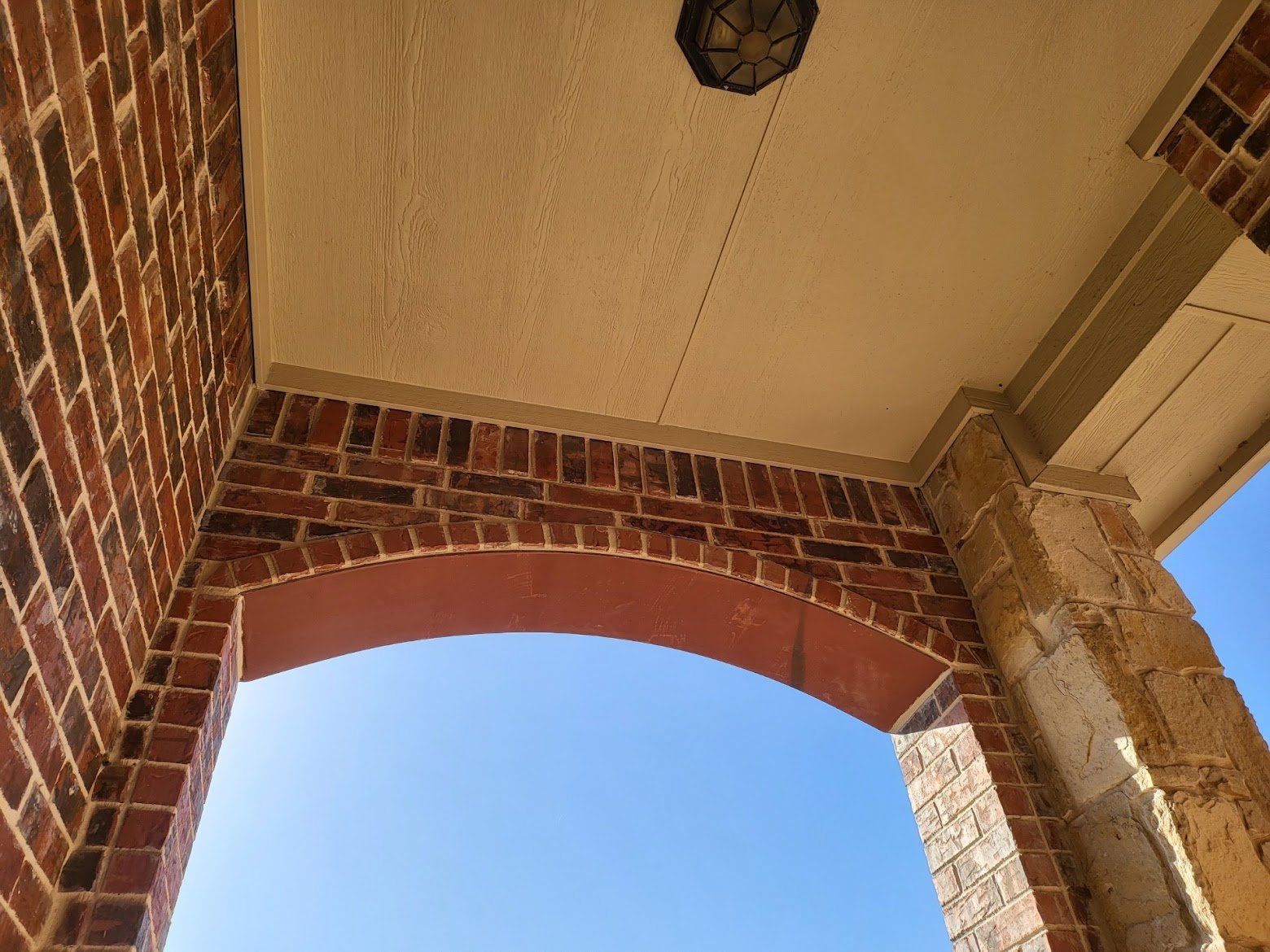
How Much to Replace My Brick Archway? DFW Pricing, Costs & Expert Guide (2026)
Updated for 2026 | Serving the Dallas-Fort Worth Metroplex
Picture this: You're walking out your front door one morning when something catches your eye. A thin diagonal crack — maybe two — radiating outward from the corner of your brick archway. Or worse, the arch itself looks like it's shifted, ever so slightly, like it's tired of holding everything up. Your stomach drops a little. Is this cosmetic? Is it structural? Is your foundation moving? And what's this going to cost you?
If you're a homeowner in the Dallas-Fort Worth area, this scenario isn't unusual — it's practically a rite of passage. With 70–80% of DFW's soil classified as expansive clay, the ground beneath your home is in a near-constant state of movement. Brick archways, beautiful and structural as they are, bear the brunt of that movement. When they start to fail, the questions pile up fast: Is this a $500 repair or a $10,000 replacement? Do I need a permit? How do I find someone who actually knows what they're doing?
This guide is your roadmap. We're going to walk through everything — what causes archway failure in North Texas, what replacement actually costs (broken down by arch type), how DFW pricing compares to state and national averages, what permits you need, how to hire the right mason, and how to protect your investment long-term. By the time you finish reading, you'll have the clarity and confidence to make a smart decision.
Key Takeaways
- Brick archway replacement in DFW costs $1,500–$15,000+ depending on arch type, span, materials, and structural complexity.
- DFW pricing runs 10–25% above national averages due to skilled labor shortages and high demand driven by expansive soil damage.
- Expansive clay soils — present under 70–80% of DFW properties — are the leading cause of archway cracking and structural failure in North Texas.
- Texas has no state masonry license, making it critical to verify insurance, business registration, portfolio, and references before hiring.
- Building permits are highly likely required for structural archway replacement in most DFW municipalities — skipping them creates serious legal and financial risk.
- A $500 repair today can escalate to a $5,000+ replacement if structural issues are left unaddressed for 2–5 years.
- Full archway replacement is often the most cost-effective solution over a 10-year horizon when structural compromise is present.
- Total project timeline from initial assessment to completion is typically 4–12 weeks for most DFW archway replacements.
Why Brick Archways Fail in DFW: Understanding the Root Causes
Before you can make a smart decision about repair or replacement, you need to understand why your archway is failing. In North Texas, the causes are almost always tied to the region's unique geology and climate — and understanding them helps you know whether your situation is urgent, what the right fix is, and whether there's a larger problem lurking beneath the surface.
The single biggest culprit behind masonry failures in North Texas is the region's expansive clay soil. According to Texas A&M AgriLife Extension and USDA soil surveys, approximately 70–80% of DFW's soil is composed of expansive clay — primarily Eagle Ford and Austin Chalk formations. These soils absorb water and swell dramatically during wet seasons, then shrink and crack during dry periods. The result? Your foundation can move 2–6 inches or more vertically in a single year. Brick, being a rigid material, doesn't flex with that movement. Instead, it cracks — and archways, which span openings and carry loads above them, are particularly vulnerable to the stress that foundation movement creates.
Beyond soil movement, several other factors contribute to archway deterioration in DFW:
- Mortar joint deterioration: Mortar is softer than brick and weathers over time. Age, freeze-thaw cycles, and DFW's extreme weather swings gradually erode mortar joints, weakening the arch's structural integrity. Once mortar fails, water infiltration accelerates the damage exponentially.
- Steel lintel corrosion: Most brick archways are supported by a hidden steel lintel — a horizontal beam that carries the load above the opening. When that steel rusts, it expands. That expansion pushes outward against the surrounding brick, causing cracking and structural compromise. In older DFW homes (built 1970s–1990s), lintel corrosion is extremely common.
- Extreme Texas weather cycles: DFW summers regularly exceed 100°F, causing thermal expansion in masonry. Occasional hard freezes create freeze-thaw cycles that crack brick faces (spalling) and break apart mortar joints. Heavy rains drive water into any existing crack, worsening deterioration with every storm.
- Improper original construction: Some archways were built with inadequate lintels, poor brick bonding patterns, or insufficient mortar coverage. These construction shortcuts compound over decades, turning minor issues into structural failures.
Understanding these root causes matters because the right repair strategy depends on what's actually driving the damage. If a failing lintel is the culprit, patching the surface cracks won't solve anything — the arch will fail again. If foundation movement is the underlying issue, you may need both a foundation assessment and a masonry replacement. Exploring common masonry repair issues in more detail can help you recognize patterns in your own home's brickwork before a small problem becomes a major one.
You're Not Alone: Archway Damage Is Common in DFW
With 70–80% of DFW soil being expansive clay and roughly 60–70% of single-family homes featuring full brick exteriors or significant brick veneers, archway damage is one of the most widespread masonry issues in North Texas. This is a well-understood, solvable problem — and you're in the right place to get the information you need to address it properly. You're not facing something rare or catastrophic; you're dealing with a challenge that thousands of DFW homeowners navigate every year.
Brick Archway Replacement Costs in DFW: A Detailed Breakdown
Let's get to the number you came here for. The honest answer is: it depends — but not in a vague, unhelpful way. The cost of replacing a brick archway in DFW depends on the type of arch, its size, the materials required, and the structural complexity of the project. Here's a transparent breakdown based on 2026 DFW market pricing.
When considering your archway design and construction options, the type of arch is the single biggest driver of cost:
- Simple flat arch (3–5 ft span): $1,500–$3,500. This is the most common arch type above standard windows and doors. The project involves removing the damaged arch, installing a new or reinforced steel lintel, and rebuilding with new brick and mortar. Relatively straightforward for an experienced mason.
- Segmental arch (curved, 5–8 ft span): $3,000–$6,000. A segmental arch has a gentle curve — more visually appealing than a flat arch but less dramatic than a full semicircle. The curvature requires more precise brick cutting, specialized forming, and careful shoring during demolition and rebuild.
- Semicircular arch (full half-circle, 6–10+ ft span): $5,000–$10,000+. Often found above grand entryways or large windows, semicircular arches are highly intricate. They demand custom formwork, exceptional craftsmanship, and often heavier structural support. This is not a project for a generalist mason.
- Gothic or pointed arch designs: $7,000–$15,000+. These architecturally significant arches are custom pieces requiring master-level masonry skills, specialized structural design, and often custom brick cutting. If your home features a Gothic arch, you need a mason with verifiable experience in this specific style.
It's worth noting that DFW pricing is typically 10–25% higher than national averages, driven by a shortage of skilled masons, strong construction demand, and the additional complexity that expansive soil conditions create. Labor rates in the DFW market have risen 10–25% over the past few years, and material costs have increased 5–15% in the same period, according to DFW masonry contractor data from 2025.
Cost Multipliers: What Pushes Your Project Higher
The ranges above are starting points. Several factors can push your specific project toward the higher end of the range — or beyond it:
- Arch span width and height: Larger spans require more materials, more labor hours, and potentially heavier structural lintels. Every additional foot of span adds cost.
- Brick type: Standard builder-grade brick is the least expensive option. Tumbled, oversized, or custom-colored brick can add $500–$2,000+ to material costs. Reclaimed or antique brick — often needed to match older homes — is the most expensive option, frequently running $2–$5+ per brick due to scarcity and the labor required to clean and prepare salvaged material.
- Structural lintel requirements: A standard steel lintel is the baseline. If your arch spans a wide opening or carries significant structural load, a custom-fabricated or heavy-duty lintel may be required, adding $800–$2,500+ to the project cost. For larger arches, a structural engineer may need to design the lintel specifically for your application.
- Scaffold and access needs: Second-story archways or those in difficult-to-reach locations require extensive scaffolding, adding $500–$2,000+ in equipment rental and setup labor.
- Surrounding brickwork rebuild: The brick immediately adjacent to the arch — called the abutments — often needs to be removed and rebuilt to ensure a proper structural connection. This adds $500–$1,500 to the project.
- Window or door removal and reinstallation: If the arch is directly above a window or door, those elements may need temporary removal and reinstallation by a carpenter or window installer, adding $300–$1,000.
Hidden Costs Homeowners Often Overlook
These are the line items that don't show up in the initial quote but can significantly affect your total project budget:
- Structural engineering assessment: $500–$1,500. For larger or severely compromised arches, a structural engineer may be required to assess the failure, design the new lintel, and confirm the surrounding masonry can safely support loads. Many DFW city permitting departments require an engineer's stamp on the plans.
- Temporary shoring and support systems: $300–$1,000. Before the old arch can be demolished, the masonry above it must be safely supported. This is skilled, specialized work — and it's non-negotiable for structural safety.
- Mortar color matching: $50–$200. Achieving a seamless match to your existing aged mortar often requires custom tinting. It's a detail that separates a professional job from an obvious patch.
- Brick sourcing for discontinued styles: $500–$3,000+. If your original brick is no longer manufactured, sourcing a close match from architectural salvage yards takes time and money. In some cases, an exact match simply isn't available, and a skilled mason will help you find the best complementary option.
- City permit fees: $50–$300 depending on project valuation and municipality.
- Debris haul-away: $100–$300 for old masonry disposal.
- Foundation-related complications: If your archway failure is a symptom of larger foundation movement, addressing that root cause is essential — and can add $1,000–$50,000+ to your overall project scope, depending on the severity of the foundation issue.
DFW Market Pricing vs. National and Texas Averages
If you've been researching brick archway costs online, you may have encountered numbers that seem lower than what local DFW contractors are quoting you. That's not a sign you're being overcharged — it's a reflection of real market differences. Here's how DFW pricing stacks up:
- National average (general brick arch repair/replacement): $1,000–$5,000+ for various complexities, per 2025 data from HomeAdvisor, Fixr, and Angi.
- Texas state average: $1,200–$6,000+, slightly above national due to strong statewide construction demand.
- DFW-specific pricing: Comparable to or slightly above the Texas state average, and typically 10–25% above national benchmarks for comparable projects.
Why does DFW cost more? Several converging factors:
- Skilled labor shortage: The DFW market has hundreds of masonry contractors, but only an estimated 20–50 highly specialized firms consistently take on archway replacement. Demand for that specialized skill significantly outpaces supply.
- Expansive soil complexity: DFW's clay soils often require more robust structural assessments, heavier lintels, and more careful shoring during demolition — all of which add cost compared to projects in geologically stable regions.
- Premium material demand: Homeowners in affluent DFW suburbs — Southlake, Trophy Club, Roanoke, Flower Mound — frequently opt for higher-end materials, custom brick matching, and premium finishes that drive costs above baseline.
- Strong regional demand: DFW is projected to reach approximately 8.48 million people by 2025, making it one of the fastest-growing metros in the U.S. That growth sustains relentless demand for masonry work at all levels.
One practical note on timing: winter months (December–February) in DFW typically see lower demand for masonry work. If temperatures stay above freezing — which is necessary for mortar to cure properly — you may find better contractor availability and potentially 5–10% lower pricing during this window. If budget is a priority, it's worth planning ahead to schedule your project during the off-season.
Not sure whether your archway needs a simple repair or a full structural replacement? A professional assessment from a qualified mason can clarify exactly what you're dealing with and help you build an accurate budget — before you commit to anything.
Explore Our Archway ServicesRepair vs. Replacement: When to Fix vs. When to Replace Your Brick Arch
This is the question most homeowners are really asking when they search for archway costs. The answer isn't always obvious, but there are clear guidelines that can help you make the right call.
Partial repair — tuckpointing, individual brick replacement, mortar repointing — makes sense when:
- Damage is purely aesthetic: surface spalling, minor mortar deterioration, or a handful of cracked bricks with no structural implications.
- The arch's structural integrity is confirmed sound by a qualified mason.
- The underlying cause of damage (if any) has already been addressed — for example, a foundation repair was completed and the soil movement has been stabilized.
- Upfront budget is the primary constraint and the damage is genuinely minor.
Full replacement is the right call when:
- Diagonal cracks radiate from the arch corners — a classic sign of structural stress, not just surface weathering.
- The arch is visibly sagging or has shifted out of its original plane.
- The steel lintel is rusted, corroded, or has expanded enough to push surrounding brick out of alignment.
- You've had the arch repaired before and the damage has recurred — a clear sign the root cause wasn't addressed.
- Water infiltration has occurred through the arch, causing interior damage.
The 10-year cost comparison makes the case clearly: a partial repair on a structurally compromised arch might cost $1,000 upfront, but if the underlying issue isn't resolved, you could be spending $500–$800 every 2–3 years on recurring repairs — totaling $3,000–$4,200 over a decade, with no guarantee of stability. A full replacement at $4,500 upfront, with minor maintenance of roughly $300 over 10 years, often proves more economical and provides a lasting solution.
The key insight: repair is only a durable solution if the root cause is also addressed. If foundation movement or lintel failure is driving the damage, patching the surface is temporary by definition. Our brick and stone repair services page walks through the full range of repair options and helps clarify when repair is sufficient versus when structural replacement is the only responsible path forward.
⚠️ The Hidden Cost of Waiting
A $500 repair today can escalate to a $5,000+ replacement if you delay 2–5 years. Every rain that hits a cracked arch drives water deeper into the structure. Every freeze-thaw cycle widens existing cracks. Every season of foundation movement adds stress to an already compromised arch. Water infiltration from a failed archway can lead to rotting wood framing, mold growth, and interior damage that costs far more to remediate than the original masonry work. A failing arch can also compromise the surrounding brick facade, potentially affecting the structural integrity of the entire wall above the opening. In extreme cases, structural collapse is a real risk. The financial and safety case for acting promptly is overwhelming.
Permits, Regulations & Licensing Requirements in DFW
Navigating the regulatory side of a masonry project can feel intimidating, but it's genuinely important — and not as complicated as it might seem once you understand the landscape.
Do you need a permit for brick archway replacement? In most DFW municipalities — Fort Worth, Dallas, Southlake, Roanoke, Keller, and others — the answer is almost certainly yes. Building permits are required when a project involves structural work, changes to existing openings, installation of new or replacement lintels, or significant masonry rebuilding. Replacing a brick archway hits all of those triggers.
Typical permit fees in DFW range from $50–$500 depending on the project's assessed value and the specific municipality. The permit process typically involves submitting plans (sometimes requiring an engineer's stamp for structural work), paying the fee, and scheduling inspections at key project milestones.
What happens if you skip the permit? The consequences are real: fines, stop-work orders, difficulty selling your home (unpermitted structural work appears on title searches and inspection reports), and potential non-coverage by your homeowner's insurance if something goes wrong. It's not worth the risk.
One important note: Texas does not have a state-specific masonry license. Unlike plumbing or electrical work, masonry is not a licensed trade at the state level through the Texas Department of Licensing and Regulation (TDLR). This means there's no central database where you can verify a mason's credentials — which makes your own vetting process critically important.
Why Texas Doesn't License Masons — And What That Means for You
Unlike plumbing or electrical work, masonry is not a state-licensed trade in Texas. There's no TDLR database to check, no license number to verify. This doesn't mean quality masons don't exist — it means the responsibility for vetting falls entirely on you as the homeowner. You must verify general liability insurance, workers' compensation coverage, business registration with the Texas Secretary of State, BBB standing, and portfolio quality directly. This extra step is non-negotiable for structural work like archway replacement.
What to Verify Before Hiring a Masonry Contractor
Because Texas has no masonry license, your due diligence checklist becomes your primary protection. Before signing any contract, verify each of the following:
- General Liability Insurance: Minimum $1,000,000 coverage to protect against property damage or injury on your property. Request a Certificate of Insurance (COI) directly from the contractor's insurance provider — not just a verbal confirmation.
- Workers' Compensation Insurance: Essential if the contractor has employees. Without it, you could be held liable if a worker is injured on your property.
- Business Registration: Verify the contractor is a registered business entity with the Texas Secretary of State. This is a basic legitimacy check that takes minutes online.
- BBB Accreditation and Ratings: Check the Better Business Bureau for rating, accreditation status, and complaint history. Look at how the company responds to any negative reviews.
- Portfolio of Archway Projects: Non-negotiable. Request photos of completed arch replacements specifically — not just general brickwork. Look for projects with similar complexity and materials to yours.
- References: Ask for contact information for recent clients and actually follow up with direct calls. A reputable contractor will provide these without hesitation.
- Written Contract: Every detail of the project — scope, materials, timeline, payment schedule, warranty, and dispute resolution — must be in writing before work begins.
Red Flags to Avoid When Hiring a Mason
The DFW masonry market, like any booming construction market, has its share of contractors who will take your money and leave you with substandard or unsafe work. Watch for these warning signs:
- No portfolio of arch work, or vague claims of experience without photos or references to back them up.
- Vague or dismissive answers about how they'll structurally support the masonry above the arch during demolition — this is a critical safety question with a specific, detailed answer.
- No written warranty on materials or labor.
- Cash-only payment requests — a strong indicator of an unlicensed or untraceable contractor.
- Dismissal of permit requirements: "You don't need a permit for that." This is either ignorance or an attempt to avoid regulatory scrutiny — neither is acceptable for structural work.
- Offering to "just patch it up" as a permanent solution to what is clearly a structural problem.
- Pressure to sign a contract immediately, without time to review or obtain other quotes.
- Unwillingness to provide proof of insurance or business registration.
Navigating permits, insurance verification, and contractor vetting can feel overwhelming — especially when you're already stressed about the damage you're seeing. Working with a fully insured, experienced masonry contractor eliminates the guesswork and ensures your project meets all local codes from day one.
Talk to a Masonry SpecialistFinancing Your Brick Archway Replacement in DFW
A brick archway replacement is a meaningful home investment — anywhere from $1,500 to $15,000+ depending on complexity. For most homeowners, that's not a number you pull from a checking account without planning. Here are the most practical financing options available in 2026:
- Home Equity Line of Credit (HELOC): A revolving line of credit secured by your home's equity. Flexible for phased projects where costs may evolve — you draw only what you need, when you need it. Interest rates are variable but typically lower than unsecured options.
- Home Equity Loan: A lump-sum loan secured by your home's equity, with fixed rates and predictable monthly payments. Good if you have a firm project cost and prefer payment certainty.
- Personal Loans: Unsecured loans with higher interest rates than home equity options, but faster access to funds. Suitable if you need to move quickly and don't want to tap home equity.
- Credit Cards: Appropriate for smaller project components — permit fees, material deposits — but high interest rates make them a poor choice for funding the full project cost.
- Contractor Payment Plans: Some masonry companies offer in-house payment plans for larger projects, though this is less common for archway replacement specifically. Always ask.
Regardless of how you finance the project, understand the typical payment structure: most reputable DFW masonry contractors require a deposit of 30–50% upfront to cover initial material costs and secure your place in their schedule. For larger projects, milestone payments are common as specific phases are completed. The final balance is due upon satisfactory completion. Never pay 100% upfront — and be wary of any contractor who asks for it.
💡 Pro Tip: Schedule Off-Season for Better Availability and Pricing
Winter months (December–February) in DFW typically see lower demand for masonry work, which can translate to better contractor availability and potentially 5–10% lower pricing. The caveat: temperatures must stay above freezing for mortar to cure properly. If budget is a priority and your timeline is flexible, planning your project for the off-season is a smart move. Contact contractors in October or November to get on their winter schedule before availability fills up.
Choosing the Right Masonry Contractor for Your Archway Project in DFW
This is arguably the most important decision in the entire project. The quality of the contractor you hire will determine whether your new archway lasts 50 years or fails again in five. Here's how to think about your options in the DFW market.
Specialized masonry contractors — like Brick & Stone Master — are the ideal choice for archway replacement. They possess the structural knowledge to understand what's actually failing and why, experienced crews who have completed similar projects, full insurance coverage, and detailed written warranties. They understand DFW's expansive soil challenges and know how to design a replacement that accounts for ongoing foundation movement.
Solo artisan masons can be highly skilled in traditional masonry techniques, but may lack structural engineering knowledge, adequate insurance coverage, or the equipment needed for larger projects. They can be excellent for purely aesthetic work but may not be the right choice when structural compromise is involved.
General contractors who subcontract masonry can work well for larger renovation projects where masonry is one component among many. The key is ensuring they subcontract to a genuinely specialized mason — not just whoever's available. A GC markup typically applies, which adds cost.
Handyman services are strongly discouraged for structural archway work. They lack the structural understanding, specialized equipment, and insurance coverage that this type of project requires. The risk of unsafe or short-lived work is too high.
The DFW market has hundreds of masonry contractors, but only an estimated 20–50 highly specialized firms consistently take on archway replacement at the level of quality and structural rigor this work demands. Finding one of those firms is worth the extra research time.
For homeowners in specific DFW communities, our guides to masonry contractors in Grapevine and surrounding DFW areas, masonry contractors in Southlake, and masonry contractors in Roanoke provide detailed local resources for comparing qualified specialists in your specific area.
Critical Questions to Ask Before Hiring
When you're interviewing masonry contractors, these eight questions will separate the professionals from the pretenders:
- "Have you completed similar brick archway replacement projects? Can I see photos of your arch work specifically?" Look for projects with similar complexity, arch type, and materials to yours. Vague claims of experience without visual evidence are a red flag.
- "How do you plan to structurally support the masonry above the arch during removal and rebuilding?" Listen for a detailed, specific explanation of shoring and temporary support systems. "We'll hold it up" is not an acceptable answer.
- "What type of new lintel will you install, and will it meet current building codes and structural requirements?" This ensures they understand the structural engineering requirements and aren't just replacing brick without addressing the underlying support system.
- "What is your process for matching the existing brick and mortar color?" A quality mason will describe their sourcing process, how they test for color match, and what options exist if an exact match isn't available.
- "Do you provide a written warranty on both materials and labor, and for how long?" Any contractor unwilling to put a warranty in writing is telling you something important about their confidence in their own work.
- "What is your estimated timeline from start to finish?" This helps you plan around disruption and sets clear expectations for both parties.
- "Are you fully insured with general liability and workers' compensation? Can you provide a Certificate of Insurance?" Non-negotiable. Request the COI directly from their insurance provider, not just a copy the contractor provides.
- "Will you handle obtaining necessary city permits, or is that my responsibility?" A professional contractor should be willing to pull permits and manage regulatory compliance as part of the project.
💡 The Questions That Separate Good Masons from Great Ones
Masons who answer the eight questions above thoroughly, confidently, and without hesitation are demonstrating the kind of expertise and transparency that protects your investment. Pay attention not just to what they say, but how they say it. A great mason will welcome these questions — they're proud of their process. A contractor who deflects, gives vague answers, or seems annoyed by your due diligence is showing you exactly who they are before the work begins.
Ready to move forward? A reputable masonry contractor will provide a detailed written estimate, clear timeline, written warranty, and proof of insurance — all non-negotiables for protecting your investment. Our archway specialists can walk you through the entire process and provide a transparent, itemized quote with no surprises.
View Our Archway Replacement ServicesThe DFW Masonry Market: Labor Shortage, Demand, and What It Means for Your Project
Understanding the market conditions you're operating in helps you set realistic expectations for pricing, availability, and timeline — and helps you recognize when a quote is fair versus suspiciously low.
DFW is one of the fastest-growing metropolitan areas in the United States, projected to reach approximately 8.48 million people by 2025. That sustained population growth — driven by corporate relocations, strong job markets, and an influx of new residents into northern suburbs like Roanoke, Prosper, Frisco, and Celina — creates relentless demand for masonry work at every level, from new construction to repair and replacement.
At the same time, the supply of skilled masons is shrinking. According to the U.S. Bureau of Labor Statistics, the average age of working masons is 45–55+, with fewer young people entering the trade. The National Center for Construction Education and Research has documented a widening skill gap in masonry, particularly for specialized work like archways. The Associated General Contractors of America Texas Chapter has flagged this as an ongoing challenge in the DFW labor market. The result: demand for specialized masons significantly outpaces supply, leading to longer wait times and higher labor costs for complex residential projects.
Practically speaking, this means:
- Wait times for reputable contractors can extend weeks to months during peak seasons (March–May and September–November), when mild temperatures make mortar curing ideal and homeowners are most motivated to schedule exterior projects.
- Suspiciously low quotes from contractors who are immediately available during peak season should raise questions about their experience level, insurance status, or the quality of materials they're planning to use.
- Extreme summer heat (100°F+ days are common in DFW) requires masons to start very early, take frequent breaks, and use mortar additives to prevent premature drying. This affects scheduling and daily productivity.
- Material costs have risen 5–15% over the past few years, and labor rates have increased 10–25%, per 2025 DFW masonry contractor data. These increases are real and are reflected in current quotes.
The takeaway: quality archway replacement in DFW takes time to schedule and costs what it costs for legitimate reasons. The contractors who can do this work well are busy because they're good. Plan ahead, get multiple quotes from specialized firms, and don't let impatience drive you toward a contractor whose availability seems too convenient.
Brick Archway Replacement Timeline: What to Realistically Expect
One of the most common sources of frustration in masonry projects is a mismatch between homeowner expectations and the actual timeline. Here's an honest breakdown of what the process looks like from start to finish.
On-site work: A typical brick archway replacement requires 3–7 full days of on-site labor for demolition, temporary shoring, structural support installation, and meticulous brick rebuilding. Larger or highly intricate arches — Gothic designs, large semicircular spans — may require 10–14+ days of labor.
Mortar curing: After the arch is rebuilt, mortar typically requires 7–14 days to reach full strength. During this period, the arch should not be loaded or disturbed. This curing time is not optional — it's a structural requirement.
Permit approval: Depending on the city and project complexity, permit approval can take 1–4 weeks. Some DFW municipalities have expedited review processes; others do not. Your contractor should be able to give you a realistic estimate based on their experience with your specific city's permitting department.
Structural engineering assessment: If required, allow 1–2 weeks for an engineer to assess the situation, design the new lintel, and provide stamped plans for the permit application.
Brick sourcing: If your project requires custom-matched, discontinued, or reclaimed brick, sourcing can take 2–6 weeks depending on availability. This is often the most unpredictable part of the timeline.
Total realistic timeline: From initial assessment to project completion, most DFW brick archway replacements take 4–12 weeks. The wide range reflects the variability in permitting timelines, brick sourcing, and project complexity. When you're planning around this project, build in buffer time — especially if you're working toward a specific deadline like a home sale or a seasonal event.
Maintenance and Long-Term Care for Your New Brick Archway
A properly replaced brick archway, built with quality materials and expert craftsmanship, should last 50+ years. But "should last" and "will last" are different things — the difference is maintenance. The good news: keeping a brick archway in excellent condition is genuinely inexpensive compared to the cost of neglect.
- Annual visual inspection (DIY, minimal cost): Once a year, walk around your archway and look for hairline cracks, mortar deterioration, efflorescence (white salt deposits indicating water movement), or any signs of brick spalling. Catching issues early is the single most cost-effective maintenance strategy available.
- Professional inspection every 3–5 years ($150–$300): A qualified mason can identify early signs of structural stress, mortar failure, or water infiltration that aren't obvious to the untrained eye. This modest investment can prevent thousands of dollars in future repair costs.
- Periodic tuckpointing every 5–15 years ($200–$800 per arch): Mortar joints naturally deteriorate over time, especially in DFW's extreme climate. Re-pointing the joints before they fail completely keeps water out and maintains structural integrity. The frequency depends on the original mortar quality and weather exposure.
- Masonry sealing every 5–10 years ($100–$300 per arch): Applying a breathable masonry sealer protects against water infiltration and the freeze-thaw damage that accelerates deterioration. "Breathable" is the key word — a sealer that traps moisture inside the brick causes more damage than it prevents. Our cleaning and waterproofing services for masonry use products specifically formulated for DFW's climate conditions.
The math is simple: annual inspections cost nothing, professional check-ups run $150–$300 every few years, and periodic tuckpointing and sealing might total $500–$1,000 over a decade. Compare that to a $5,000–$15,000 replacement driven by neglected maintenance, and the case for proactive care is overwhelming. Small issues addressed immediately don't become big problems. That's the entire philosophy behind long-term masonry ownership.
Frequently Asked Questions About Brick Archway Replacement in DFW
Can a brick arch be repaired instead of fully replaced?
Yes — minor damage like small cracks, spalled bricks, or deteriorating mortar joints can often be addressed through repointing or partial brick replacement, and these repairs can be entirely appropriate when the arch's structural integrity is confirmed sound. However, if the arch is structurally compromised — severe diagonal cracks, visible sagging, lintel failure, or recurring damage after previous repairs — repair is likely a temporary fix at best. In DFW's expansive clay soil environment, where foundation movement is ongoing, full replacement is the recommended path for long-term stability when structural compromise is present. The 10-year cost comparison almost always favors replacement over repeated repairs when the root cause hasn't been resolved.
Do I need a structural engineer before replacing a brick arch?
For a structurally compromised or large brick archway, a structural engineer's assessment is highly recommended — and is often required by DFW city permitting departments before they'll approve a permit for the work. An engineer determines the root cause of the failure, designs the appropriate new steel lintel with the correct load-bearing capacity, and confirms that the surrounding masonry can safely support the loads during demolition and after completion. This is a critical safety step, not an optional add-on. The cost — typically $500–$1,500 — is modest relative to the value of knowing the replacement is engineered correctly.
Is a cracked brick arch a sign of foundation problems with my house?
Yes — a cracked brick archway is often a strong indicator of underlying foundation movement, particularly in DFW where expansive clay soils cause 2–6+ inches of vertical movement annually. Diagonal cracks radiating from the corners of the arch, especially if they extend into the surrounding brick wall, are classic signs of differential foundation movement creating structural stress on the rigid masonry. This doesn't always mean a catastrophic foundation problem, but it does mean you should have both a qualified foundation specialist and an experienced mason assess the situation — addressing only the masonry without understanding the foundation dynamic is likely to result in recurring damage.
How do I match old brick that's no longer manufactured for my archway?
Matching discontinued brick is one of the more challenging aspects of archway replacement on older DFW homes. A skilled mason will first attempt to source salvaged or reclaimed brick from architectural salvage yards, searching for material that closely matches your existing brick in color, texture, size, and surface character. If an exact match isn't available — which is common for brick manufactured before the 1990s — a good mason will suggest a complementary blend or strategic placement of new brick that minimizes the visual contrast. Exact matches for very old, discontinued styles are genuinely rare, and a contractor who promises a perfect match without first sourcing the material should be viewed with skepticism.
How long does a brick archway replacement project typically take?
On-site work for a brick archway replacement typically takes 3–7 full days for demolition, structural support installation, and meticulous brick rebuilding — longer for larger or highly intricate arches, which may require 10–14+ days of labor. This on-site timeline doesn't include the waiting periods for permit approval (1–4 weeks), structural engineering assessment (1–2 weeks if required), brick sourcing for custom or reclaimed material (2–6 weeks), or mortar curing time (7–14 days after completion). When you account for all of these phases, a realistic total timeline from initial assessment to project completion is 4–12 weeks for most DFW archway replacements.
Should I hire a specialized mason or a general contractor for archway replacement?
For brick archway replacement, prioritize a specialized masonry contractor with documented, verifiable experience in arch work specifically. Arch replacement requires a combination of structural understanding, precise brick cutting, custom formwork, and meticulous mortar work that most general contractors don't possess — and that many generalist masons haven't developed either. If you're undertaking a larger renovation where masonry is one component among many, a general contractor can serve as the project manager, but ensure they're subcontracting to a genuinely specialized mason, not just whoever's available. The GC markup will add cost, so weigh that against the value of centralized project management for your specific situation.
Ready to Protect Your Home's Architectural Integrity?
A damaged brick archway won't fix itself — and waiting only increases the risk of cascading damage, water infiltration, and safety hazards. If you've noticed cracks, sagging, or deterioration in your archway, now is the time to act.
Brick & Stone Master specializes in complex archway replacement throughout the Dallas-Fort Worth area. We'll assess your specific situation, explain your options clearly, and provide a transparent, detailed estimate with no surprises. We understand DFW's expansive soils, local permitting requirements, and the structural demands that this region places on masonry — because we've been doing this work here for years.
You deserve to feel confident about this decision. Let us help you get there.
Get Your Free Archway AssessmentBrick & Stone Master | 3800 Haslet-Roanoke Road Suite 32, Roanoke, Texas 76262 | Serving the Dallas-Fort Worth Metroplex