
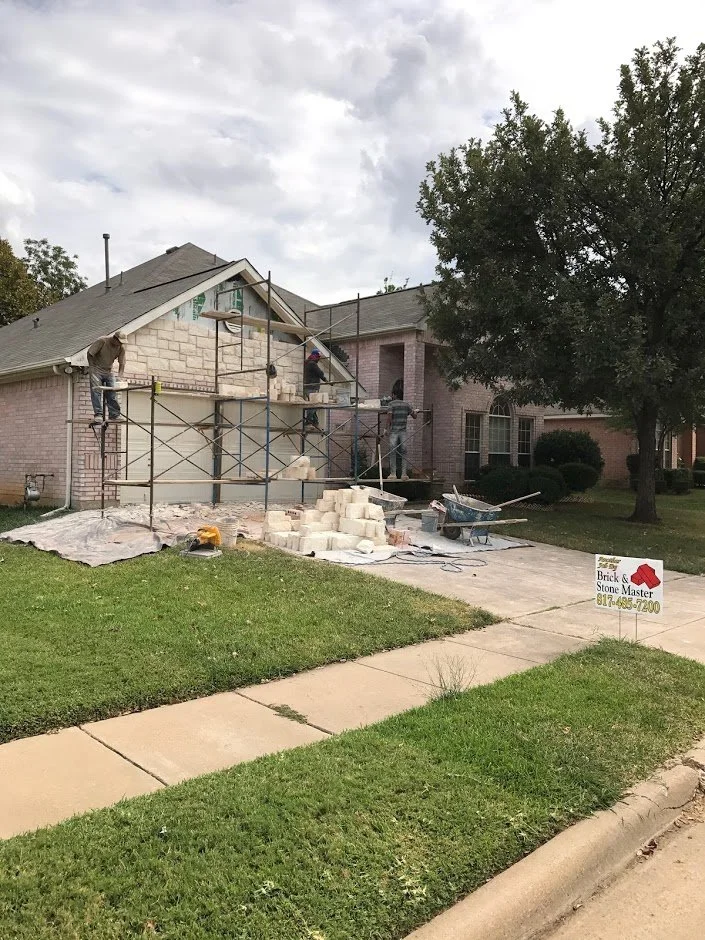
Updated for 2026 — A complete guide for Grapevine homeowners navigating brick repair, stone veneer, and custom masonry projects.
Picture this: You're walking around the outside of your Grapevine home one Saturday morning and you notice something you've been half-ignoring for a few months — a stair-step crack running diagonally across the brick near your front corner window. Your stomach drops a little. Is that a foundation problem? How bad is it? And if you call a contractor, how do you know you're getting a fair quote and not being taken for a ride?
That feeling — equal parts concern and uncertainty — is exactly what this guide is designed to address. Whether you've spotted a crack, you're planning a stone veneer upgrade, or you want to build an outdoor fireplace you've been dreaming about for years, the challenge isn't just finding a contractor. It's knowing enough to ask the right questions, spot red flags, understand what things actually cost, and feel confident when you sign on the dotted line.
This guide covers everything you need to make a smart, informed decision about masonry contractors in Grapevine, TX — including transparent pricing, local regulations, a curated list of top providers, and honest guidance on repair versus replacement decisions. Let's get into it.
Key Takeaways
- Grapevine's expansive clay soils and aging 1980s–2000s housing stock make masonry repair one of the most common home improvement needs in the area.
- Brick repair and tuckpointing typically run $10–$30+ per sq ft; stone veneer installation ranges from $18–$70+ per sq ft depending on material.
- Texas does not have a state-level masonry license — focus on business registration, insurance verification, and permit history when vetting contractors.
- Manufactured stone veneer projects in the South Central region achieve a 91.1% ROI according to the 2024 Remodeling Magazine Cost vs. Value Report.
- Always get 3–5 detailed written quotes before hiring; research typically takes 2–4 weeks for significant projects.
- Delaying masonry repairs dramatically increases long-term costs — water intrusion and freeze-thaw cycles accelerate structural deterioration fast in DFW's climate.
- The top masonry contractors serving Grapevine include specialists in brick repair, historic restoration, custom stone work, and outdoor living construction.
Why Masonry Matters in Grapevine: Local Market Insights
Grapevine isn't just a suburb — it's one of the most desirable communities in the DFW metroplex, with a population of over 57,800 and a median household income of approximately $125,000–$130,000. That's well above the DFW metro average of $85,000–$90,000, and it signals something important: homeowners here invest seriously in their properties. Masonry isn't an afterthought in Grapevine — it's a defining feature of the neighborhood's character and home values.
A significant portion of Grapevine's housing stock was built between the 1980s and early 2000s, predominantly with brick veneer exteriors. Those homes are now 20 to 40 years old — which is right in the window where tuckpointing, lintel repair, and crack remediation start becoming necessary. It's not a sign of poor construction; it's just physics and time. Mortar joints have a finite lifespan, and DFW's climate accelerates wear in ways homeowners don't always anticipate.
Here's the factor that makes Grapevine masonry uniquely challenging: North Texas sits on some of the most expansive clay soils in the country. These soils swell dramatically when wet and shrink when dry, creating constant low-grade movement beneath your home's foundation. Over years and decades, that movement transmits stress upward through the structure — and one of the first places it shows up is in the brick. Understanding the connection between masonry failures and foundation movement is essential before you call any contractor, because a cosmetic repair on top of an unresolved foundation issue is money poorly spent.
Seasonal weather compounds the challenge. DFW summers regularly hit 100°F+, and winters bring hard freezes — sometimes multiple per season. This freeze-thaw cycling is particularly destructive to mortar joints, which absorb water and then crack when that water expands as ice. Proper scheduling matters: spring (March–May) and fall (September–November) are the ideal windows for masonry work, when temperatures allow mortar to cure correctly and crews can work efficiently.
Finally, many Grapevine neighborhoods are governed by HOA covenants that mandate brick or stone exteriors — which means repairs and renovations must meet high aesthetic standards, not just structural ones. When your HOA requires that new work match existing materials precisely, you need a contractor with real expertise in material matching, not just someone with a trowel and a bag of mortar.
Understanding Masonry Costs in Grapevine: A Transparent Pricing Guide
One of the most common anxieties homeowners bring to a masonry project is not knowing whether a quote is fair. Without a baseline, every number feels arbitrary. Here's what masonry work actually costs in the Grapevine and DFW market in 2026, broken down by service type.
- Brick repair and tuckpointing: $10–$30+ per sq ft for repair areas, or $500–$2,500+ per project for localized work. Structural repairs (lintel replacement, helical tie installation) push costs higher.
- New brick veneer installation: $12–$25+ per sq ft for standard brick. Custom patterns, premium materials, or difficult access increase the cost.
- Manufactured stone veneer: $18–$40+ per sq ft installed. Lighter than natural stone, wider variety of styles, and generally easier to work with.
- Natural stone veneer: $30–$70+ per sq ft installed. Heavier, requires more skilled labor, and commands premium material costs — but offers unmatched longevity and aesthetics. Explore stone veneer applications and installation to understand the full range of options.
- Retaining walls: $30–$80+ per sq ft (face value) for block or stacked stone. Engineered walls over 4 feet, complex drainage requirements, or premium stone push costs well beyond this range. See retaining wall construction options for design considerations.
- Outdoor fireplaces: $4,000–$15,000+ depending on size, material, and features like pizza oven integration.
- Outdoor kitchens (masonry base): $5,000–$20,000+ for the masonry structure, excluding appliances. Highly variable based on scope and materials.
- Brick or stone mailboxes and columns: $500–$2,000+ per unit depending on material, size, and capstone design.
DFW masonry pricing runs comparable to slightly above the national average — the region's strong construction demand and tight skilled labor market keep prices firm. That said, you're not paying a premium for nothing: DFW masons deal with conditions (expansive soils, extreme heat, freeze-thaw cycles) that require real expertise to handle correctly.
⚠️ Understanding Hidden Masonry Costs
It's completely normal to feel blindsided when a masonry quote comes in higher than expected. Beyond the base labor and materials, here are costs that often catch homeowners off guard: permits ($50–$500+) required for structural work and new construction; engineering assessments ($400–$1,000+) for structural crack evaluations; demolition and debris removal of existing masonry; drainage modifications (French drains, regrading) to prevent future damage; and most significantly, foundation repair prerequisites ($5,000–$50,000+) if the underlying soil movement hasn't been addressed. A reputable contractor will flag these upfront — not surprise you with them mid-project.
What Drives Masonry Costs Up or Down
Understanding what moves the needle on pricing helps you evaluate quotes more critically. The biggest cost drivers in Grapevine masonry projects include:
- Material type: Natural stone is consistently the most expensive option. Manufactured stone veneer offers a more accessible price point with strong aesthetics. Standard brick falls in the middle.
- Project accessibility: Tight spaces, steep slopes, or work requiring scaffolding add substantially to labor costs. A second-story chimney repair costs more than ground-level tuckpointing for this reason.
- Structural vs. cosmetic work: Replacing a failed lintel or installing helical ties to stabilize a cracked wall is a fundamentally different scope — and cost — than cosmetic repointing of mortar joints.
- Custom design complexity: Arches, intricate patterns, and unique stone arrangements require more skilled labor and more time. That expertise has a price, and it's usually worth it.
- Demolition and removal: Hauling away old brick, stone, or debris adds to project cost. Always confirm whether this is included in your quote.
- Pre-existing conditions: Water intrusion behind the veneer or undiagnosed foundation movement can uncover additional scope once work begins. This is why thorough pre-project assessment matters.
Seasonal Pricing and Timing Strategies
Spring and fall are peak seasons for masonry work in North Texas — ideal curing temperatures and comfortable working conditions mean contractors are busy. Winter months (December–February) typically see lower demand, and while hard freezes can complicate or delay work, contractors who are slower during this period may be more flexible on pricing to keep crews active. If your project isn't urgent, scheduling during the late fall or late winter shoulder seasons and getting 3–5 competitive quotes can sometimes yield better pricing and faster availability.
Summer heat doesn't typically reduce pricing, but it can affect scheduling — crews often start earlier in the day to avoid peak heat, and mortar curing requires careful management when temperatures exceed 100°F.
Repair vs. Replacement: Long-Term Cost of Ownership
One of the most consequential decisions a Grapevine homeowner faces is whether to repair existing masonry or invest in replacement or overlay. The right answer depends on the extent of damage, the root cause, your aesthetic goals, and your long-term plans for the property. Here's how the math actually works over time.
Repairing existing brickwork is the lowest initial investment — typically $2,000–$10,000+ for widespread but non-catastrophic damage. The trade-off is ongoing maintenance. If the underlying cause (foundation movement, poor drainage, failed flashing) isn't resolved, you'll be back in 5–10 years for another round of repairs. Over a 20-year horizon, that adds up. Repair makes the most sense for localized, cosmetic issues or when the existing masonry is otherwise in good structural condition. Our brick and stone repair services cover the full range of repair scenarios, from minor tuckpointing to structural crack remediation.
Full brick veneer replacement carries a high initial cost — $15,000–$50,000+ for an average Grapevine home — but offers a fresh start with very low maintenance for decades. When damage is widespread, when the existing veneer has reached end of life, or when you want to update the home's appearance significantly, replacement often delivers better long-term value despite the upfront investment.
Stone veneer overlay is the premium option — $18,000–$70,000+ depending on stone type and square footage — but it delivers a dramatic aesthetic transformation and strong ROI. The 2024 Remodeling Magazine Cost vs. Value Report found that manufactured stone veneer projects in the South Central region (which includes Texas) achieve a remarkable 91.1% ROI. In an affluent DFW market like Grapevine, where curb appeal directly influences buyer interest and perceived home quality, that return is very real. For cosmetic issues, repair wins on cost. For widespread damage or a meaningful upgrade, replacement or overlay wins on long-term value.
Not sure whether your masonry needs repair or a full replacement? That's exactly what a professional assessment can answer — a qualified contractor can evaluate your specific situation, identify root causes, and outline your options with accurate cost estimates before you commit to anything.
Explore Brick & Stone Repair ServicesLicensing, Insurance & Regulations: What You Need to Know
Here's something that surprises many Grapevine homeowners: Texas does not have a specific state-level masonry contractor license administered by the Texas Department of Licensing and Regulation (TDLR). Masons operate as general contractors or specialized subcontractors, and there's no state exam or certification they must pass to pick up a trowel and start working on your home.
That doesn't mean there's no accountability — it just means the accountability mechanisms are different, and you need to know what to look for. The professional standards that apply across project types and scales — whether residential repair or commercial masonry and project standards — are enforced through insurance, permits, and business registration rather than a state license.
Here's what you should verify before hiring any masonry contractor in Grapevine:
- Business registration: The contractor should be a registered business entity with the Texas Secretary of State. This is a basic legitimacy check.
- General Liability Insurance (minimum $1 million): This is non-negotiable. Ask for a Certificate of Insurance (COI) directly from the contractor's insurance provider — not just a copy from the contractor — to confirm active coverage. This protects you if the contractor damages your property.
- Workers' Compensation Insurance: If the contractor has employees (not just the owner working solo), they should carry Workers' Comp. Without it, you could be liable for medical costs if a worker is injured on your property. This is serious — verify it.
- Permit history with the City of Grapevine: Reputable contractors pull permits for projects that require them. You can verify permit history with the City of Grapevine Building Department.
- References and portfolio: Not a regulatory requirement, but essential due diligence. Ask for references from similar projects and follow up on them.
Regarding Grapevine municipal code: the city requires permits for new masonry construction, structural alterations, and retaining walls over certain heights (typically 2–4 feet, depending on the specific code). Permits ensure work meets building codes and zoning ordinances, and may include inspections at various project stages. A contractor who suggests skipping permits to save money is a contractor who is putting you at legal and financial risk — not saving you anything.
Performance or payment bonds aren't state-mandated for residential masonry in Texas, but their presence is a positive signal — it indicates a financially sound contractor who stands behind their work. For HOA-governed neighborhoods, additional approval processes may apply; the HOA masonry services process is worth understanding if your neighborhood has specific exterior requirements.
Red Flags When Hiring a Masonry Contractor
🚩 Warning Signs to Watch For
Trust your instincts during the hiring process — these are the warning signs that an experienced homeowner learns to recognize:
- Can't provide proof of current insurance. General liability and workers' compensation should be verifiable directly from the insurer, not just a document the contractor hands you.
- No references or portfolio of completed work. Any contractor worth hiring has a track record. If they can't show you past projects, that's a serious gap.
- Vague or verbal-only quotes. A professional quote specifies scope of work, materials, timeline, and payment terms in writing. Verbal agreements protect no one.
- Unwilling to pull permits or suggests "cash jobs" to avoid them. This exposes you to code violations, insurance issues, and liability. Walk away.
- Pressure to pay the full amount upfront. Reputable contractors typically ask for a reasonable deposit (10–30%) with progress payments tied to project milestones — not full payment before work begins.
- Poor communication or unprofessional demeanor. How a contractor communicates during the quote process is a preview of how they'll communicate during your project.
- Significantly lower bid than all competitors without explanation. A dramatically lower quote usually means something is being omitted — materials, labor, permits, or scope. Ask specifically what's different.
Now that you know what to look for — and what to avoid — the next step is connecting with contractors who meet the standard. Our team has worked with hundreds of Grapevine homeowners on brick repair, stone veneer, and custom masonry projects, and we're happy to walk you through your options with no pressure.
Talk to a Masonry SpecialistTop 5 Masonry Contractors in Grapevine, TX: Compared and Reviewed
The DFW masonry market has hundreds of contractors, but finding one with the right combination of expertise, reputation, and fit for your specific project takes work. The following five companies are among the most highly regarded masonry contractors serving Grapevine and the surrounding area. Each has a distinct specialty profile — use this section to narrow your list before requesting detailed quotes.
1. Brick & Stone Master
Address: 3800 Haslet-Roanoke Road Suite 32, Roanoke, Texas 76262
Specialties: Brick repair, tuckpointing, custom stonework, historical brick matching, stone veneer installation
Review Summary: Consistently praised for meticulous attention to detail and an exceptional ability to match existing brick and mortar — repairs are described by customers as virtually invisible. Accurate bids and professional communication are recurring themes in customer feedback.
Notable Differentiator: Brick & Stone Master's expertise in historical brick and mortar matching sets them apart for repair projects where seamless blending with existing masonry is critical. Their work spans residential repairs, custom custom stonework installations, and specialty projects requiring both technical skill and an eye for detail.
2. DFW Brick Repair & Construction
Address: 1530 Keller Pkwy #102, Keller, TX 76248
Specialties: Residential and commercial brick repair, lintel replacement, crack repair, brick and mortar matching
Review Summary: Customers commend their responsiveness and quality work on both residential and commercial projects. Frequently recommended for lintel replacement and structural crack repair. Some reviews mention occasional delays during high-demand periods.
Notable Differentiator: Strong focus on comprehensive structural brick repairs and restoration, making them a solid choice for homeowners dealing with more serious structural issues beyond cosmetic tuckpointing.
3. Blackrock Masonry & Construction
Address: 1140 N Loop 12, Irving, TX 75061
Specialties: Custom natural stone work, outdoor fireplaces, outdoor kitchens, general brick repair
Review Summary: Praised for craftsmanship and ability to execute complex, high-end designs. Clients appreciate their attention to detail on luxury outdoor living projects. Some reviews note extended timelines for highly custom work — which is typical for premium custom projects.
Notable Differentiator: Specialization in high-end custom natural stone installations for luxury outdoor living spaces — a strong fit for Grapevine homeowners investing in premium outdoor fireplace or kitchen projects.
4. Brick Restoration Inc.
Address: 2221 E Belt Line Rd Ste 107, Carrollton, TX 75006
Specialties: Historic brick restoration, chimney repair, residential brick matching, preservation work
Review Summary: Widely recognized for expertise in historic brick restoration and chimney repair. Solid reputation for standing behind their work. Some reviews note that their specialized services come at a premium price point — which reflects the expertise required.
Notable Differentiator: Extensive experience in historic brick matching and chimney restoration — the right choice for older Grapevine homes where preserving original masonry character is a priority.
5. Metroplex Masonry
Address: 5100 N I-35 W, Justin, TX 76247
Specialties: Brick and stone repairs, new construction masonry, retaining wall installations, general masonry services
Review Summary: Frequently cited for reliable work and efficient project completion. Competitive pricing for quality work is a recurring theme. Minor complaints occasionally mention communication delays during busy periods.
Notable Differentiator: Offers a wide range of general masonry services for both new construction and repair — a practical one-stop-shop for homeowners with diverse masonry needs across a single project.
How to Choose the Right Masonry Contractor for Your Grapevine Project
Knowing who the top contractors are is a starting point — but choosing the right one for your specific project requires a structured approach. Here's how experienced DFW homeowners navigate this decision.
Start with 3–5 detailed written quotes. This isn't just about finding the lowest price — it's about understanding the scope of work each contractor is proposing. Quotes that differ significantly in price often differ significantly in what's included. A detailed quote should specify materials (including brand and grade), scope of work, timeline, payment terms, and warranty. Anything less isn't a real quote.
Budget 2–4 weeks for your research process. For significant masonry projects, homeowners who rush the hiring decision often regret it. Reviewing portfolios, checking references, and comparing quotes takes time — and that time is well spent. For complex projects involving design and consultation services, a professional design consultation can help you clarify your vision before you even start getting quotes, which makes the entire process more efficient.
Check references — actually call them. Ask specifically about projects similar to yours. Did the work hold up? Were there surprises in the final cost? How did the contractor handle problems when they arose? A contractor's response to unexpected challenges tells you more about their character than their sales pitch does.
Verify insurance directly. Ask for a Certificate of Insurance and call the insurance provider to confirm it's current. This takes five minutes and can save you from significant liability exposure.
Prioritize communication fit. You'll be working with this person for days or weeks. If they're slow to respond during the quote process, hard to reach, or vague when you ask direct questions — that pattern will continue throughout your project. Communication quality is a legitimate selection criterion.
According to consumer research from HomeAdvisor and Angi, the top factors DFW homeowners cite when making final hiring decisions are: reputation and reviews, portfolio quality, demonstrated experience with the specific type of work, clear and detailed quotes, communication, and price — in roughly that order. Price matters, but it's rarely the deciding factor for homeowners who've done their research.
What to Look for in a Masonry Contractor's Portfolio
💡 Pro Tip: Evaluating Portfolio Quality
A portfolio tells you far more than a sales pitch. Here's what to look for when reviewing a masonry contractor's past work:
- Consistency in mortar joints: Joints should be even, uniform, and match the existing masonry or design specification. Sloppy, uneven joints are a red flag regardless of how good the overall photos look.
- Precise cutting and fitting: Brick and stone should fit tightly with minimal gaps. Clean, intentional cuts indicate skilled craftsmanship; ragged edges indicate the opposite.
- Color and texture matching: For repair work especially, new masonry should blend seamlessly with existing work. Ask specifically about their matching process — it's a specialized skill.
- Clean work sites: Professional contractors maintain organized job sites. Chaos on the job site often reflects chaos in project management.
- Proper flashing and drainage details: Look for evidence of proper water management around windows, doors, and material transitions. This is where many masonry failures originate.
- Before-and-after photos: Request photos showing the full scope of work, not just the prettiest finished detail. The transformation tells you more about the contractor's capability than a single glamour shot.
Masonry Maintenance and Long-Term Care in the DFW Climate
Well-built masonry is genuinely low-maintenance — that's one of its great advantages over other exterior materials. But "low-maintenance" doesn't mean "no maintenance," especially in North Texas, where expansive soils, extreme heat, and freeze-thaw cycles work against masonry year-round. Understanding the maintenance rhythm for your masonry helps you protect the investment you've made and catch small problems before they become expensive ones.
Annual DIY inspection (free): Once a year — spring is ideal — walk the perimeter of your home and look for: new or widening cracks in brick or mortar joints; crumbling, soft, or recessed mortar; white powdery residue (efflorescence, which indicates water movement through the masonry); damaged or blocked weep holes; and any signs of water staining or moisture intrusion around windows and doors. Catching these early is the single most cost-effective maintenance action you can take.
Professional cleaning every 3–5 years ($300–$800+ for an average home): DFW's climate — humidity, heat, and periodic rain — promotes mildew, algae, and dirt accumulation on masonry surfaces. Professional cleaning with appropriate masonry cleaners (not high-pressure washing, which can damage mortar joints) keeps your exterior looking sharp and prevents biological growth from accelerating deterioration. Explore cleaning and waterproofing services designed specifically for DFW masonry conditions.
Tuckpointing every 15–30 years ($500–$2,500+ for localized work): Mortar joints have a finite lifespan. In DFW, foundation movement and temperature cycling can accelerate deterioration, so homes in areas with active soil movement may need tuckpointing sooner. Don't wait until mortar is visibly crumbling — by that point, water has likely already been infiltrating the wall cavity for some time.
Drainage is your first line of defense: Keep water moving away from your foundation through properly maintained gutters, downspouts extended at least 4–6 feet from the foundation, and positive grading away from the house. In DFW's clay soil environment, water management isn't optional — it's the primary factor determining how long your masonry stays in good condition between repairs.
Natural stone may require periodic sealing: Unlike brick, some natural stone veneers benefit from a penetrating sealer applied every few years to maintain water resistance and appearance. Ask your contractor at installation what maintenance the specific stone they're using requires.
The cost of delaying masonry maintenance is real and significant. What starts as a $500 tuckpointing job can become a $5,000+ water damage remediation project if neglected for years. In DFW's freeze-thaw climate, water that enters through compromised mortar joints expands when it freezes, accelerating spalling and structural deterioration at a rate that surprises most homeowners.
To keep your masonry performing well for decades, professional cleaning and waterproofing services make a significant difference — especially in DFW's demanding climate. Proactive care is always less expensive than reactive repair.
View Cleaning & Waterproofing ServicesROI and Resale Value: Does Masonry Work Pay Off in DFW?
If you're investing thousands of dollars in masonry improvements, it's fair to ask: does this actually add value to my home, or is it purely an expense? The data is encouraging — particularly for the DFW market.
"The 2024 Remodeling Magazine Cost vs. Value Report found that manufactured stone veneer projects in the South Central region — which includes Texas — achieve a 91.1% ROI. That's among the highest returns of any exterior improvement category."
What does that mean in practice? If you invest $20,000 in a stone veneer facade upgrade, you can expect to recover approximately $18,200 of that in added home value. In an affluent market like Grapevine — where buyers are discerning and curb appeal directly influences both offer prices and time on market — that return can be even stronger.
Beyond stone veneer, here's how different masonry improvements stack up from a value perspective:
- Outdoor fireplaces and masonry kitchens: In affluent DFW markets, outdoor living spaces are highly desirable and command premium pricing. Buyers in the $600K–$1M+ range increasingly expect outdoor living features, and a well-executed masonry fireplace or kitchen can be a decisive selling point. Browse outdoor living masonry projects for examples of what's possible.
- Stone veneer facades: Dramatic visual impact, strong ROI (91.1% per Cost vs. Value data), and low ongoing maintenance make this one of the most financially sound exterior upgrades available.
- Structural repairs (tuckpointing, crack repair): These don't add value directly, but they prevent value destruction. A home with visible masonry deterioration will be discounted by buyers and flagged by home inspectors. Maintaining structural integrity is table stakes for protecting your existing equity.
- Aesthetic upgrades (new brick, stone accents): Can increase perceived home value by 5–10% or more depending on scope and quality. Real estate professionals consistently cite curb appeal and move-in-ready exteriors as key drivers of buyer interest and faster sales.
The National Association of Realtors consistently highlights that curb appeal and exterior condition are among the top factors buyers consider when evaluating a home — and masonry is one of the most durable, visually impactful ways to deliver both. In Grapevine's market, where homes regularly sell for $500K–$1M+, a $20,000–$40,000 masonry investment that adds $18,000–$40,000 in value is a sound financial decision, not just an aesthetic one.
Frequently Asked Questions About Masonry in Grapevine, TX
These are the questions Grapevine homeowners ask most often when navigating masonry decisions. Clear answers here can save you hours of research and help you walk into contractor conversations with confidence.
How do I know if my brick cracks are structural or just cosmetic, and when should I call a professional?
Cosmetic cracks are typically thin (hairline width), vertical, and follow mortar joints without extending through the brick itself. Structural cracks are wider (over ¼ inch), jagged, or appear in a stair-step pattern — particularly near corners, windows, or doors — and may extend through the brick face rather than just the mortar. You should call a professional masonry contractor immediately if you observe widening cracks over time, stair-step patterns, or any bulging or bowing in your brickwork, as these can indicate foundation movement or structural instability. In DFW's expansive clay soil environment, stair-step cracks are especially common and should never be dismissed as purely cosmetic without a professional evaluation. Understanding the full range of masonry failure patterns can help you recognize what you're seeing before you make that call.
Does a masonry contractor need a special license to work on my home in Grapevine, Texas?
Texas does not have a specific state-level masonry contractor license from TDLR — masons operate as general contractors or specialized subcontractors without a dedicated state certification. However, any reputable contractor should be registered as a business with the Texas Secretary of State, carry current general liability and workers' compensation insurance, and pull all necessary building permits from the City of Grapevine for projects involving new construction, structural changes, or significant exterior alterations. They should also use licensed plumbers and electricians for any related trades — particularly relevant for outdoor kitchen projects. The absence of a state license makes your own due diligence more important, not less.
Is manufactured stone veneer as durable as natural stone in the North Texas climate?
Manufactured stone veneer is engineered to withstand exterior conditions including DFW's heat and freeze-thaw cycles, and it performs very well in most applications. However, natural stone — being a geological product rather than a manufactured concrete composite — typically offers greater inherent longevity, impact resistance, and long-term color stability. Both materials require proper installation to perform well, and that installation quality is arguably more important than the material choice itself. For most residential applications, manufactured stone veneer is an excellent, cost-effective choice; for premium installations where longevity over many decades is the priority, natural stone has the edge. You can explore the full range of thin veneer applications and materials to compare options for your specific project.
What is tuckpointing, and how often should it be done on a brick home in DFW?
Tuckpointing is the process of removing deteriorated or crumbling mortar from brick joints and replacing it with fresh mortar to restore structural integrity and weather resistance. Mortar is softer than brick by design — it's meant to absorb movement and eventually be replaced, protecting the brick itself from damage. In DFW, the combination of temperature extremes and expansive soil movement means brick homes typically need tuckpointing every 15–30 years under normal conditions, though areas subject to water runoff, poor drainage, or active foundation movement may need attention sooner. Annual inspection is the best way to determine when your specific home needs this work — don't wait for visible deterioration to become severe. Our brick and stone repair resources cover tuckpointing and related maintenance topics in detail.
How long should new masonry work last — like a brick wall or outdoor fireplace — in the DFW area?
Properly installed masonry work is among the most durable construction you can invest in. A quality brick or stone veneer can last 50–100+ years with minimal maintenance; outdoor fireplaces and structural masonry walls have similar lifespans when built correctly. The mortar joints are the maintenance item — they typically require tuckpointing after 15–30 years. Durability is highly dependent on four factors: initial material quality, skilled installation, proper drainage design, and addressing any underlying foundation issues before or during the project. Skimping on any of these — especially drainage — will shorten the lifespan of even the best materials significantly.
Can masonry work increase my home's resale value in the DFW market?
Yes — quality masonry work is one of the more financially sound home improvement investments you can make in DFW. The 2024 Remodeling Magazine Cost vs. Value Report found that manufactured stone veneer projects in the South Central region achieve a 91.1% ROI, meaning homeowners recover nearly all of their investment in added home value. In Grapevine's affluent market, enhancements like stone facades, custom outdoor fireplaces, and well-maintained brickwork improve curb appeal, project quality and durability to buyers, and can meaningfully accelerate time-to-sale. Structural repairs don't add value directly, but they protect the equity you already have by preventing the kind of visible deterioration that triggers buyer discounts and home inspection flags.
Ready to Move Forward With Your Grapevine Masonry Project?
We know that deciding between repair and replacement, vetting contractors, and navigating costs can feel overwhelming — especially when you're not sure who to trust. That uncertainty is completely valid, and it's exactly why we put this guide together.
Brick & Stone Master has helped hundreds of Grapevine homeowners with brick repair, stone veneer installation, outdoor living spaces, and custom masonry projects. We bring deep local knowledge of DFW's soil conditions, climate challenges, and HOA requirements — and we'll give you a straight, honest assessment of what your project actually needs.
Get a Free ConsultationNo pressure. No obligation. Just honest guidance from a team that knows Grapevine masonry.