
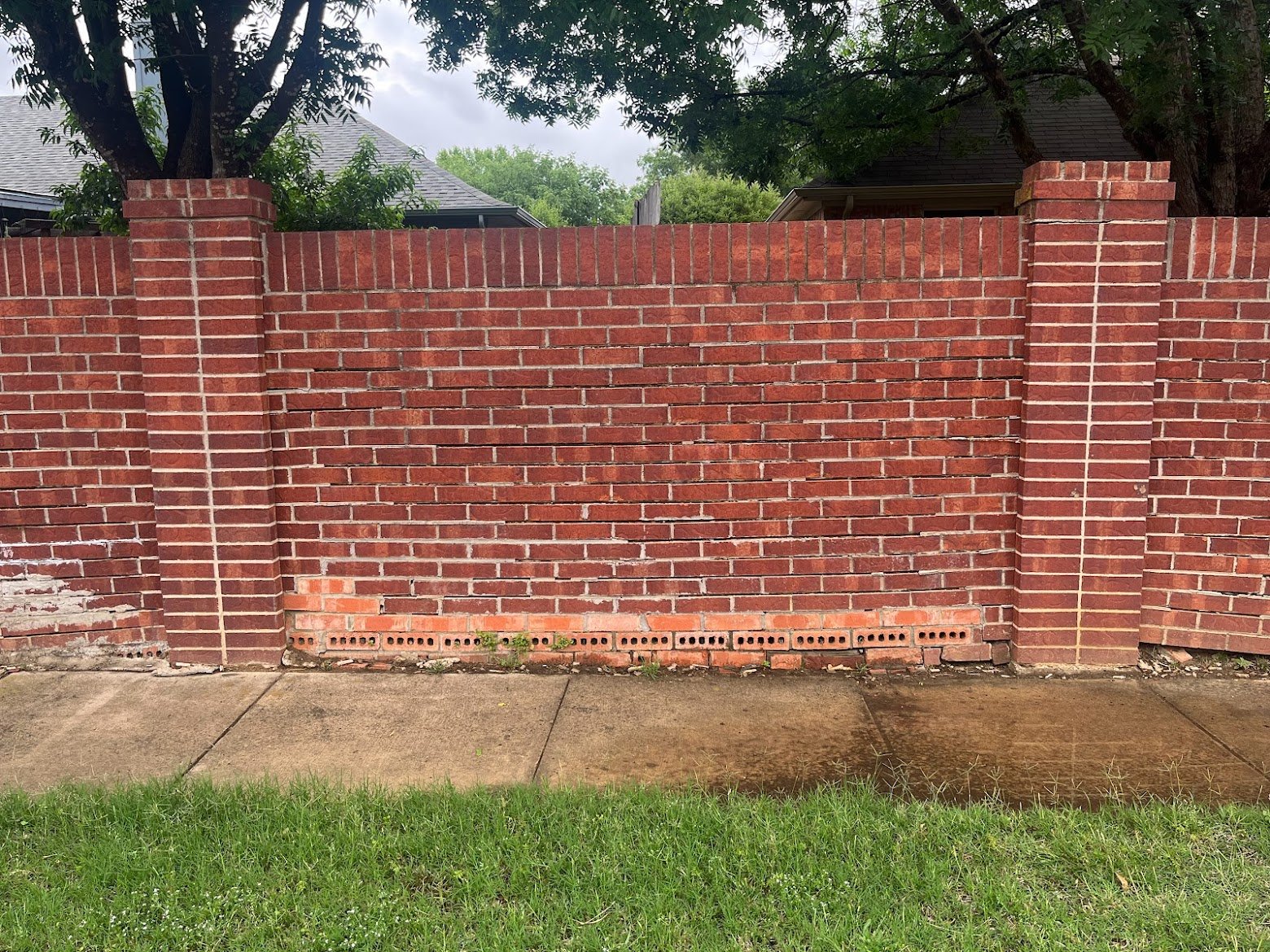
A homeowner in Southlake calls a masonry contractor about deteriorating mortar joints on their red brick home. The contractor shows up, gives a fair price, completes the work in a day—and then the homeowner walks to the street to take a look. The new joints are a clean, uniform gray. Against the warm red brick and original buff-toned mortar, they stand out like chalk lines on a sidewalk. The repair is structurally sound. But from the curb, the house looks patched. That's the moment most homeowners realize they should have asked a different question before the work started.
If you're reading this before that moment, you're in a much better position. The choice between color-matched mortar and natural gray mortar is one of the most consequential decisions in any masonry repair project—and it's one that most contractors won't walk you through unless you ask. This guide covers everything you need to know: how each option works, what it costs in the Dallas-Fort Worth market, how it holds up in North Texas's demanding climate, and exactly when each choice makes sense for your home.
Key Takeaways
- Color-matched mortar uses iron oxide pigments to replicate existing joint color—it costs 20–50% more than gray mortar but creates seamless, nearly invisible repairs on visible facades.
- Natural gray mortar is the industry standard: reliable, affordable, and structurally sound—but it creates visible contrast on red, buff, or tan brick that rarely disappears over time.
- DFW's climate—extreme heat, UV exposure, and expansive clay soils—accelerates mortar deterioration and makes timely repairs critical for structural integrity and curb appeal.
- The right choice depends on location: front-facing repairs strongly favor color matching; rear or hidden repairs are ideal candidates for cost-saving gray mortar.
- Properly formulated color-matched mortar (pigment under 5% by weight of cement) meets ASTM C270 durability standards and lasts just as long as gray mortar—25 to 40 years.
- For a typical 100 sq ft repair, color matching adds roughly $500–$1,000 to the total project cost—an investment that often pays back in curb appeal and buyer perception.
- Always verify contractor credentials through TDLR, request proof of insurance, and get warranty terms in writing before any work begins.
Why Mortar Repair Matters in Dallas-Fort Worth Homes
Mortar doesn't fail overnight. It deteriorates gradually—hairline cracks widen over months, joints erode over years, and by the time the damage is visible from the street, the underlying problem has often been developing for a decade. In Dallas-Fort Worth, that process moves faster than in most parts of the country, and the housing stock here means millions of homes are reaching exactly the age where mortar maintenance becomes unavoidable.
A substantial share of DFW's suburban housing—particularly in communities like Southlake, Keller, Roanoke, and Fort Worth's established neighborhoods—was built between the 1970s and 1990s. Those homes are now 30 to 50 years old. Mortar joints in well-built masonry typically last 25 to 40 years under normal conditions. In DFW's climate, "normal" is a generous term. Understanding the common masonry failures and structural concerns that develop in this region helps explain why so many homeowners are facing this decision right now.
The DFW Climate Challenge for Mortar Joints
Summer temperatures in DFW regularly exceed 100°F, and the UV index during peak months is among the highest in the continental United States. That combination accelerates the drying and aging of mortar—surface cement weathers away faster, pigments fade more quickly, and the bond between mortar and masonry units weakens over time. When contractors apply new mortar in these conditions, curing must be carefully managed to prevent premature drying and cracking.
DFW also experiences occasional freeze-thaw cycles in winter—not as severe as northern climates, but enough to matter. When moisture penetrates deteriorated mortar joints and then freezes, the expansion forces joints apart. Over multiple cycles, this leads to progressive cracking and spalling. The more critical factor in DFW, however, is the region's expansive clay soils. These soils absorb moisture and swell, then shrink dramatically during dry periods. That constant movement stresses foundations and the masonry structures above them, creating hairline cracks in mortar joints that widen over time if left unaddressed.
Why Your Home's Mortar Condition Affects Resale Value
In a competitive DFW real estate market, first impressions carry significant weight. Buyers form opinions about a home's overall condition within seconds of seeing it from the street. Visible mortar deterioration—crumbling joints, staining, obvious repairs—signals deferred maintenance and raises questions about what else might have been neglected. Conversely, well-maintained masonry signals a cared-for home and supports buyer confidence.
The visual quality of mortar repairs matters as much as whether the repairs were made at all. A structurally sound repair done in mismatched gray mortar can still undermine curb appeal and buyer perception. In neighborhoods like Southlake and Keller, where homes are closely compared and buyers have high expectations, the aesthetic quality of masonry work directly influences perceived value and offer amounts.
You're Not Alone in This Decision
Thousands of DFW homeowners face the same choice between color-matched and gray mortar repairs every year. The fact that you're researching the options before hiring a contractor means you're making an informed decision—not just accepting the cheapest quote. That distinction often makes the difference between a repair you're proud of and one you're embarrassed by every time you pull into the driveway.
Understanding Color-Matched Mortar: What It Is and How It Works
Color-matched mortar is exactly what it sounds like: standard mortar—Portland cement, hydrated lime, and sand—with iron oxide pigments added to replicate the color of existing joints. The concept is straightforward. The execution is not. Achieving an accurate, consistent color match requires skill, patience, and a systematic testing process that adds significant labor time to any repair project. That's why professional masonry repairs using color-matched mortar cost more—not because the materials are dramatically more expensive, but because the process demands more from the mason.
Iron oxide pigments are the industry standard for mortar coloring because they're UV-stable, chemically inert, and don't react with cement or lime. Unlike organic pigments, which can fade significantly under DFW's intense sun, iron oxides hold their color reliably over decades. They're available in a wide spectrum—reds, yellows, browns, blacks, and whites—that can be combined to replicate virtually any mortar tone from warm buff to deep charcoal.
The Color-Matching Process: From Sample to Installation
The process begins before a single joint is touched. An experienced mason examines the existing mortar under different lighting conditions—direct sunlight, shade, and overcast light—because mortar color shifts dramatically depending on how it's illuminated. They then create small test samples using different pigment ratios, allow them to cure fully, and compare them side by side against the original joints.
This testing phase is where most of the additional cost comes from. Creating, curing, and evaluating samples takes time. For a typical residential repair, a skilled mason might test three to five different pigment ratios before settling on the right formulation. For larger projects or homes with unusually aged or weathered mortar, that number can be higher. The sand color, cement type, and local water chemistry all affect the final color—variables that require an experienced eye to account for.
Once the formulation is confirmed, the mason must maintain batch-to-batch consistency throughout the repair. This means precise measuring of pigment quantities for every mix, careful monitoring of water content (which affects color), and quality checks as work progresses. Premixed color products from manufacturers like SPEC MIX and Laticrete simplify this process by providing pre-calibrated pigment packs, but they come at a higher per-bag cost and offer less flexibility for custom or unusual mortar tones.
Durability and Performance of Color-Matched Mortar
One of the most common misconceptions about color-matched mortar is that adding pigments weakens it. When properly formulated—with pigment content kept below 3–5% by weight of cement, as specified by ASTM C979—color-matched mortar performs identically to standard gray mortar in compressive strength, bond strength, and freeze-thaw resistance tests. The pigments are inert fillers that don't interfere with the cement hydration process.
The critical caveat is that "properly formulated" phrase. Over-pigmentation—pushing pigment content above 5% by weight—can reduce durability by interfering with cement hydration and reducing freeze-thaw resistance. This is why quality control matters. A contractor who cuts corners on the testing process or uses excessive pigment to achieve a faster match may deliver a repair that looks right initially but fails prematurely. ASTM C270 compliance documentation is the standard you should request from any contractor doing color-matched work.
Pro Tip: The Wet vs. Dry Color Shift
When contractors show you color samples, remember that wet mortar appears 10–20% darker than fully cured, dry mortar. Always ask to see samples in both wet and freshly dried conditions, and compare them to your existing joints in natural light and shade before any work begins. A sample that looks perfect when wet may dry significantly lighter—or vice versa. This is one of the most common sources of color-matching disappointment, and it's entirely preventable with the right process.
Natural Gray Mortar: The Standard Repair Option
Natural gray mortar is the default choice in residential masonry repair for good reason. It's the industry standard—Portland cement, hydrated lime, and sand, mixed in proportions that meet ASTM C270 specifications. It's reliable, widely available, and significantly less expensive than color-matched alternatives. For the vast majority of structural repairs, it performs exactly as needed. The trade-off is purely visual, and whether that trade-off matters depends entirely on where the repair is and what your priorities are.
Understanding the full picture of brick repair costs in DFW helps put the gray mortar option in context—it's not a compromise, it's a deliberate choice that makes sense in specific situations.
Performance Benchmarks for Gray Mortar
ASTM C270 defines mortar types by their compressive strength and intended application. The two types most relevant for DFW residential repairs are Type N and Type S. Type N mortar achieves approximately 750 psi compressive strength at 28 days—adequate for non-load-bearing repairs like repointing exterior joints on a standard brick veneer wall. Type S mortar achieves approximately 1,800 psi and is specified for structural repairs, areas subject to higher stress, or below-grade applications where moisture exposure is greater.
Both types provide reliable bond strength and freeze-thaw durability when properly mixed and cured. In DFW's climate, Type S is generally the safer choice for exterior repairs given the combination of UV exposure, occasional freeze-thaw cycles, and soil movement stress. The choice between Type N and S should be driven by the structural context of the repair—not by cost savings.
Visual Outcomes: What Gray Mortar Looks Like on DFW Brick
Here's the honest truth about gray mortar on DFW's most common brick types: it stands out. On red brick—the dominant exterior material in DFW's suburban housing stock—gray joints create a stark, high-contrast line that reads as "repaired" from the street. The original mortar in most DFW homes built from the 1970s through the 1990s was buff, off-white, or lightly tinted to complement the brick color. Gray is a fundamentally different tone, and the eye catches the difference immediately.
On buff or tan brick, the mismatch is different but equally noticeable. Gray mortar against a warm-toned brick appears dull and institutional—it breaks the visual warmth of the original design. The contrast is most pronounced in the first six to twelve months after installation. Over time, DFW's intense sun weathers the surface cement from gray mortar, lightening it slightly. But "slightly lighter gray" is still gray, and the contrast with original buff or white mortar rarely disappears to the point where the repair becomes invisible.
The exception is areas where aesthetics genuinely don't matter: rear foundations, interior walls, crawl space masonry, and back facades that aren't visible from the street. In those locations, gray mortar is the sensible choice—structurally sound, cost-effective, and perfectly appropriate for the context.
Trying to decide whether color matching is worth it for your specific repair? A free consultation with a masonry expert can help you weigh the trade-offs based on your home's brick type, repair location, and budget—before you commit to anything.
Schedule a Free ConsultationCost Comparison: Color-Matched vs Natural Gray Mortar in DFW
Let's talk numbers. In the Dallas-Fort Worth market, natural gray mortar repair typically runs $5–$15 per linear foot or $10–$25 per square foot of wall face, depending on the scope of work, accessibility, and the contractor's labor rates. Color-matched mortar repair runs $7–$20+ per linear foot or $15–$35+ per square foot—a 20–50% premium that reflects the additional labor involved in testing, sampling, and quality control. For a typical 100 square foot repair, that premium translates to roughly $500–$1,000 in additional project cost.
For more detailed pricing context by location, the breakdown of masonry contractor pricing in your area provides useful benchmarks for comparing quotes. Keep in mind that these ranges are starting points—your actual cost will depend on the specific repair, the contractor's process, and the complexity of the color match required.
What Drives the Color-Matching Premium
The premium for color-matched mortar is almost entirely driven by labor, not materials. Iron oxide pigments cost more than standard gray mortar ingredients, but the material cost difference is modest. What costs money is time: the time to create test samples, allow them to cure, evaluate them in different lighting conditions, adjust pigment ratios, and repeat the process until the match is right. For a skilled mason, this testing phase alone can add two to four hours to a project before a single joint is repaired.
Batch consistency control adds additional labor for larger projects. Every new mix must be measured precisely to maintain color consistency across the entire repair area. Experienced masons with proven color-matching skills also command higher labor rates—and rightfully so. The expertise required to consistently achieve accurate matches on aged, weathered mortar is genuinely specialized.
Hidden Costs of Choosing Gray Mortar
The sticker price of gray mortar repair is lower. But there are real costs that don't show up on the initial invoice. The most significant is aesthetic dissatisfaction leading to rework. Homeowners who choose gray mortar for a highly visible front facade repair sometimes end up paying for a second repair with color matching after living with the visual result. That rework costs more than if they'd chosen color matching the first time, because the gray mortar must be removed before new material can be applied properly.
There's also the less quantifiable but very real impact on perceived home value. In competitive DFW markets, visible mismatched repairs can raise questions in buyers' minds—not about the structural integrity of the work, but about the overall level of care the home has received. That perception can translate to lower offers or longer time on market, both of which cost money.
Premixed vs Job-Site Pigmented Mortar: Cost and Quality Trade-Offs
Contractors have two primary approaches to color-matched mortar: premixed products from manufacturers like SPEC MIX or Laticrete, or job-site pigmentation where the mason adds iron oxide pigments to standard mortar on location. Premixed products offer guaranteed batch-to-batch consistency and are ideal for smaller, high-visibility repairs where any color variation would be immediately noticeable. They cost more per bag, but the consistency they provide can justify the premium.
Job-site pigmentation is more economical for larger projects and gives experienced masons more flexibility to dial in a precise custom match. The trade-off is that it requires genuine expertise and disciplined quality control—variables that are harder to guarantee. For most DFW homeowners, the choice between these approaches is less important than ensuring the contractor has experience with whichever method they use.
Aesthetic Impact: How Each Option Looks on Your Home
The structural performance of a mortar repair is binary: it either holds or it doesn't. The aesthetic performance exists on a spectrum, and where your repair lands on that spectrum depends on the mortar choice, the contractor's skill, and the specific characteristics of your home's masonry. For stone and brick masonry across DFW neighborhoods, the visual outcome of a repair can be the difference between a home that looks restored and one that looks patched.
Color-Matched Mortar on Red, Buff, and Tan Brick
When color matching is done well, the repair disappears. On red brick with original buff or off-white mortar, a properly matched repair blends seamlessly into the existing wall—you have to look closely to find where the new work begins and ends. That invisibility is the entire point. The home looks like it was always that way, not like it was repaired.
On buff and tan brick, color matching restores the warm, cohesive aesthetic that the original design intended. The joints read as part of the wall rather than as a contrasting element. For homes in upscale DFW communities where buyers and neighbors notice these details, that visual continuity is a meaningful asset. It signals craftsmanship and care—qualities that support both pride of ownership and market value.
Natural Gray Mortar: The Visual Trade-Off
The visual impact of gray mortar on DFW's most common brick types is hard to overstate. On red brick, the contrast is stark—gray joints against warm red masonry create a pattern that draws the eye directly to the repaired areas. From the street, the effect is unmistakable. It's not that the repair looks bad in a structural sense; it's that it looks obviously like a repair, which undermines the home's overall aesthetic.
On buff or tan brick, gray mortar breaks the warmth of the original palette. The wall loses its visual cohesion, and the repaired sections take on an institutional quality that clashes with the residential aesthetic. This effect is most pronounced in the first year after installation. Over time, weathering softens the contrast slightly as the surface cement washes away—but "slightly less obvious" is still obvious, and the improvement rarely reaches the point of invisibility.
Location Matters: Front vs Rear Repairs
The single most important factor in deciding between color-matched and gray mortar is where the repair is located. Front-facing repairs on the main facade—visible from the street, from the driveway, from the front door—have the highest aesthetic impact. These are the repairs that affect curb appeal, buyer perception, and your own daily experience of your home. They strongly favor color matching.
Rear repairs, foundation repairs on the back of the house, interior masonry walls, and other areas not visible from the street are ideal candidates for gray mortar. The structural work is identical; only the aesthetics differ. Many DFW homeowners take a hybrid approach: color matching for the front facade and visible side walls, gray mortar for rear and hidden repairs. This strategy prioritizes curb appeal where it matters most while keeping the overall project budget reasonable.
Durability and Long-Term Performance in DFW's Climate
The question homeowners ask most often about color-matched mortar is whether it's as durable as standard gray. The short answer is yes—when properly formulated. The longer answer requires understanding how DFW's specific climate affects both options over time, and what "properly formulated" actually means in practice. Following masonry repair best practices for installation and curing is what determines long-term performance, regardless of which mortar type you choose.
How DFW's Heat and UV Affect Mortar Color Over Time
DFW's intense summer heat and UV exposure affect both color-matched and gray mortar, though in different ways. For color-matched mortar, the primary concern is pigment stability. Iron oxide pigments—the industry standard—are highly UV-stable and resist fading significantly better than organic alternatives. In DFW's climate, you can expect minimal color shift in quality iron oxide-pigmented mortar over 10–15 years. The change is gradual and subtle, not dramatic.
Gray mortar also changes color over time in DFW's sun. As surface cement weathers away, gray mortar lightens—sometimes significantly. This weathering process can actually narrow the visual gap between gray repairs and original buff or off-white mortar over many years, though it rarely closes it completely. The key point is that both options change with age; neither is static. Quality iron oxide pigments in color-matched mortar weather more predictably and gracefully than the surface bleaching that occurs in gray mortar.
Freeze-Thaw Durability in North Texas
DFW's freeze-thaw cycles are less severe than those in northern climates, but they're not irrelevant. When moisture-saturated mortar joints freeze, the water expands and forces the joint apart. Over multiple cycles, this leads to progressive deterioration. Both color-matched and gray mortar perform well in DFW's freeze-thaw conditions when properly mixed with adequate air entrainment and cured correctly.
In DFW, expansive clay soils are actually a more significant stressor on mortar joints than freeze-thaw cycles. The seasonal swelling and shrinking of clay soils creates constant micro-movement in foundations and the masonry above them. This is why proper mortar type selection (Type S for structural and high-stress areas) and correct joint depth matter more than color choice for long-term performance in this region.
Warranty and Longevity Expectations
Properly installed mortar—color-matched or gray—typically lasts 25 to 40 years before re-pointing becomes necessary again. Most masonry contractors warranty their workmanship (not material longevity) for one to five years, covering against premature cracking, delamination, or bond failure caused by installation errors. Color-matched repairs may carry shorter warranties on color consistency specifically, due to the inherent variability of pigments and weathering. Always clarify what the warranty covers and get the terms in writing before work begins.
Watch Out for Over-Pigmented Mortar
Mortar with pigment content above 5% by weight of cement can lose durability and freeze-thaw resistance. Always ask contractors about their pigment percentages and request ASTM C270 compliance documentation before work begins. More pigment doesn't mean better color—it means weaker mortar. A contractor who can't answer this question clearly is a contractor worth reconsidering.
Now that you understand the durability and aesthetic trade-offs, the next step is getting a professional assessment of your specific repair. A detailed quote that compares both options gives you the information you need to make a confident decision.
Explore Professional Repair ServicesWhen to Choose Color-Matched Mortar
Color matching is an investment. Like most investments, it pays off most clearly in specific contexts—and understanding those contexts helps you decide whether the premium is justified for your situation. For brick repair in Keller, Southlake, and other DFW communities, color matching is frequently the right call for the reasons outlined below.
Curb Appeal and Resale Value Scenarios
If your home is in a competitive DFW market—Southlake, Keller, Roanoke, Westlake, Trophy Club, or any of the established Fort Worth neighborhoods where buyers have high expectations—front-facade repairs should almost always be color-matched. The ROI is indirect but real. Color-matched repairs preserve the home's original aesthetic, support buyer confidence, and avoid the "what else was neglected?" question that visible mismatched repairs can trigger.
Homes being prepared for sale are particularly strong candidates for color-matched repairs. The investment is modest relative to the overall transaction value, and the curb appeal benefit is immediate. Buyers form opinions before they walk through the door, and masonry that looks seamlessly maintained signals a well-cared-for home throughout.
Historic and High-End Properties
Historic homes present a special case where color matching isn't just preferable—it's often essential. The aesthetic fidelity of the original design is part of the property's value and character. Gray mortar on a 1920s Fort Worth bungalow or a mid-century modern brick home doesn't just look wrong; it actively undermines the property's historical integrity. For these homes, finding a contractor with genuine expertise in historic restoration and custom color matching is worth the additional effort and cost.
High-end properties across the DFW market justify color matching as part of their overall quality standard. Buyers of premium homes expect every detail to be right—and mortar joints are a detail that sophisticated buyers notice. Color matching supports the narrative of a meticulously maintained, carefully restored home, which is exactly the story you want to tell in that market segment.
Peace of Mind and Long-Term Satisfaction
There's a less quantifiable but very real benefit to color matching: you won't regret it. Homeowners who choose color matching for visible repairs consistently report higher satisfaction with the outcome. The repair looks right. The house looks cared for. You don't notice the repaired joints every time you pull into the driveway. That peace of mind has genuine value, and for many DFW homeowners, it's worth the premium on its own.
When Natural Gray Mortar Makes Sense
Gray mortar gets a bad reputation in conversations about aesthetics, but that reputation is only deserved when it's used in the wrong context. For foundation and structural masonry repairs in non-visible areas, gray mortar is not a compromise—it's the right choice. Understanding when gray mortar is appropriate helps you allocate your budget intelligently rather than spending on color matching where it doesn't matter.
Hidden and Non-Visible Repairs
Back foundations, interior masonry walls, areas behind landscaping, and rear facades that aren't visible from the street or from neighboring properties are ideal candidates for gray mortar. In these locations, structural integrity is the priority—aesthetics are genuinely secondary. Gray mortar saves 20–50% on labor costs for these repairs without compromising function in any way. A smart approach is to allocate those savings toward color matching the repairs that are visible, rather than spending uniformly on the entire project.
Budget-Conscious Projects
Structural deterioration shouldn't wait for budget availability. If mortar joints are failing on a load-bearing wall or a section of masonry that's showing signs of water infiltration, the repair needs to happen—and gray mortar is a responsible, structurally sound choice that allows the work to proceed without delay. Homeowners can plan for color-matched repairs on visible areas in future years once budget allows. Prioritizing structural safety over aesthetics is always the right call when resources are constrained.
Emergency and Large-Scale Repairs
Emergency structural repairs—where a section of masonry is at risk of failure and needs immediate attention—may require gray mortar simply because the testing and sampling process for color matching takes time that isn't available. In these situations, stabilizing the structure is the priority. Large-scale repairs covering 200 square feet or more can also become prohibitively expensive with color matching; gray mortar allows the work to proceed at a manageable cost, with color-matched touch-ups on the most visible sections handled as a separate, smaller project.
Gray Mortar Is a Valid Choice—In the Right Situation
If your repair is on a rear foundation or a hidden area, gray mortar is a smart, cost-effective choice that protects your home's structural integrity without unnecessary expense. The decision between color matching and gray should be based on visibility and your priorities—not guilt or pressure from contractors who push one option over the other. A good contractor will help you think through the trade-offs honestly, not steer you toward the more expensive option by default.
Licensing, Regulations, and Contractor Qualifications in Texas
Texas doesn't mandate a specific masonry license at the state level, but that doesn't mean contractor qualifications are irrelevant. The regulatory framework around residential construction work in Texas provides meaningful consumer protections—if you know how to use them. Before hiring any contractor for mortar repair work, understanding what credentials to look for and how to verify them protects you from substandard work and uninsured liability. For guidance on finding licensed masonry contractors in DFW, the verification process is straightforward once you know where to look.
Texas Residential Contractor Licensing and TDLR Requirements
The Texas Department of Licensing and Regulation (TDLR) oversees Residential Contractor licenses for general construction work. Contractors performing structural repairs or managing multiple trades may be required to hold a Residential Contractor license. Masonry-only contractors focusing exclusively on tuckpointing and repointing may not require a state license under TDLR's current framework, though local municipalities may have additional requirements.
Licensed contractors must maintain financial responsibility, insurance, and surety bonds as conditions of their license. You can verify any contractor's license status at tdlr.texas.gov using the License Holder Search tool—search by company name or contractor name, check the license status and expiration date, and look for any listed disciplinary actions. This takes five minutes and is worth doing before signing any contract.
Insurance and Bonding Minimums
General Liability Insurance is non-negotiable for any contractor working on your property. Reputable masonry contractors carry a minimum of $1 million in coverage, protecting against property damage and injury claims during the project. Workers' Compensation insurance is required by Texas law for contractors with employees—if a worker is injured on your property and the contractor doesn't carry Workers' Comp, you could face liability. Always request certificates of insurance before work begins, and verify that the coverage is current.
Surety bonds may be required by TDLR for licensed contractors and provide financial protection to consumers if the contractor fails to complete the work or abandons the project. They're a meaningful consumer protection, and their presence indicates a contractor who has met a baseline of financial accountability.
ASTM C270 and Texas Building Code Standards
ASTM C270 defines mortar types by strength and durability requirements—Type N at approximately 750 psi for non-load-bearing repairs, Type S at approximately 1,800 psi for structural applications. Texas Building Code adopts the International Residential Code (IRC), which references ASTM C270 for masonry construction and repair. Proper mortar type selection and minimum joint depth (typically 3/8 inch) are code requirements, not suggestions.
Understanding ASTM C270 Mortar Types
Type N mortar (~750 psi) is standard for non-load-bearing residential repairs—repointing exterior joints on a typical brick veneer wall. Type S mortar (~1,800 psi) is used for structural repairs and areas with higher stress, such as below-grade masonry or walls subject to lateral loads. Both types are available in gray or color-matched versions. Your contractor should specify which type is appropriate for your repair and explain why—if they can't, that's a red flag worth noting.
How to Verify Contractor Credentials and Check for Complaints
Beyond TDLR verification, check the contractor's reputation through independent sources: Google reviews, the Better Business Bureau, and direct references from past clients. For color-matched work specifically, ask for references from homeowners with similar brick types and repair locations—not just general masonry references. A contractor who has successfully color-matched red brick in Southlake or buff brick in Keller can demonstrate that track record with real examples. If they can't provide references for color-matched work, that's important information.
Top Masonry Contractors in DFW: Compared and Reviewed
Choosing the right contractor is as important as choosing the right mortar. The DFW market includes a range of masonry contractors—from local specialists to regional companies to national franchises—each with different strengths, approaches to color matching, and pricing structures. Here's an honest comparison of what you'll find in the market, so you can shortlist contractors and request quotes with confidence.
Brick & Stone Master
Location/Address: 3800 Haslet-Roanoke Road Suite 32, Roanoke, Texas 76262
Service Area: Dallas-Fort Worth metroplex, including Southlake, Keller, Roanoke, Fort Worth, and surrounding suburbs
Specialties: Masonry repairs, tuckpointing, repointing, color-matched mortar, brick and stone restoration, outdoor masonry
Licensing: Licensed masonry contractor with full insurance and bonding; TDLR verification available
Color-Matching Approach: Proven track record of precise color matching on red, buff, and tan brick; uses ASTM C270-compliant materials and iron oxide pigments; systematic sample testing process
Customer Ratings: Highly rated for attention to detail, aesthetic quality, and transparent communication throughout the project
Notable Differentiators: Deep local expertise in DFW's climate and housing stock; transparent pricing with free consultations; warranty on workmanship; educates homeowners on trade-offs rather than defaulting to the most expensive option. Brick & Stone Master's masonry repair services cover the full spectrum from structural tuckpointing to high-precision color-matched restoration.
Competitor A: Regional Masonry Contractor
Service Area: DFW and surrounding regions; established presence in Fort Worth and Arlington. Specialties: General masonry repair, tuckpointing, some color-matching work, commercial and residential projects. Licensing: Licensed Residential Contractor with TDLR; standard insurance and bonding. Color-Matching Approach: Offers color matching but primarily focuses on standard gray repairs; less emphasis on aesthetic precision and sample testing. Customer Ratings: Positive reviews for structural repairs; mixed feedback on color-matching quality and consistency across batches. Pricing: Competitive on gray mortar; color-matching premium tends to be higher due to a less streamlined process. Notable Differentiators: Faster turnaround on gray repairs due to larger crew capacity; less personalized color-matching consultation; better suited for large-scale structural work than high-precision aesthetic repairs.
Competitor B: National Masonry Chain
Service Area: Multiple DFW locations operating under a national franchise model. Specialties: Masonry repair, tuckpointing, waterproofing, chimney repair; standardized service menu across locations. Licensing: Licensed contractors at each location; corporate insurance and bonding structure. Color-Matching Approach: Uses premixed color products (SPEC MIX); less customization available for unique or heavily aged mortar tones; consistency is reliable within their product range but limited for unusual matches. Customer Ratings: Consistent service quality overall; some complaints about color-matching accuracy on older homes with non-standard original mortar. Pricing: Mid-range; color-matching premium is moderate but less flexible on custom pigment work. Notable Differentiators: Standardized processes and corporate warranty backing; less local expertise in DFW-specific aesthetics and housing stock characteristics. For additional context on how these contractors compare, the top masonry contractors in Southlake review provides useful perspective.
Competitor C: Local Independent Mason
Service Area: Specific DFW neighborhoods; smaller service radius than larger contractors. Specialties: High-end masonry repair, historic restoration, custom color matching, artisanal approach to all work. Licensing: Licensed contractor; personalized service model with limited crew size. Color-Matching Approach: Exceptional attention to detail; job-site pigmentation with extensive testing; highly customized matching process that can handle unusual or very aged mortar tones. Customer Ratings: Excellent reviews for aesthetic quality and craftsmanship; some complaints about scheduling availability and longer project timelines. Pricing: Premium pricing reflecting the artisanal approach and high labor investment in color matching. Notable Differentiators: Unmatched color-matching precision for historic or high-end properties; limited availability means longer lead times; ideal for homeowners who prioritize perfection over speed.
Ready to discuss your specific project with a DFW masonry expert? A free consultation helps you understand exactly what your repair requires—and what it should cost—before you commit to any contractor.
Schedule a Free ConsultationHow to Get an Accurate Quote for Your Mortar Repair Project
Getting an accurate quote requires more than calling three contractors and comparing bottom-line numbers. The quality of the information you provide, the questions you ask, and the way you structure the comparison all affect whether you're making an apples-to-apples decision or comparing fundamentally different scopes of work. Here's how to approach the process so you end up with a quote you can actually rely on.
Information to Provide Contractors
Come prepared with specifics. Know the repair location (front facade, rear, side, foundation), the approximate square footage or linear feet of joints needing repair, and your brick or stone type and color. If possible, take photos of the existing mortar in natural light and in shade—these help contractors assess the color-matching challenge before they visit. Note the age of your home, which helps contractors understand what original mortar specifications might have been used. If you have a timeline or budget constraint, share it upfront so contractors can recommend appropriate options rather than defaulting to their standard approach.
Questions to Ask About Color Matching
Don't assume contractors will volunteer information about their color-matching process—ask directly. The questions that matter most: What is your color-matching process, and how many samples do you typically create before proceeding? Do you test samples in natural light, shade, and wet conditions? What pigments do you use, and are they UV-stable iron oxides? How do you ensure batch-to-batch consistency for larger projects? What warranty do you offer on color consistency specifically, separate from workmanship? Can you provide references from past color-matched projects on similar brick types?
A contractor who answers these questions confidently and specifically—not vaguely—is demonstrating genuine expertise. A contractor who deflects, minimizes the importance of the testing process, or can't provide references for color-matched work is telling you something important about the quality of results you should expect. For more detailed information on what brick and stone repair should cost in your area, the Fort Worth masonry repair cost breakdown provides useful market context.
Comparing Quotes and Identifying Red Flags
Request itemized quotes that separate materials, labor, and testing costs. This lets you see where the differences between contractors actually lie—and whether a lower quote reflects genuine efficiency or a less thorough process. Be wary of quotes that are significantly lower than others for color-matched work; quality color matching requires time and expertise, and a contractor who quotes dramatically less is likely cutting corners on the testing process.
Verify that all contractors you're comparing are licensed, insured, and bonded before you compare prices. A lower quote from an uninsured contractor is not a bargain—it's a liability. Ask for detailed timelines, because rushed color-matching work consistently produces poor matches. And get warranty terms in writing; legitimate contractors stand behind their work and are comfortable putting that commitment on paper.
Frequently Asked Questions About Color-Matched vs Gray Mortar
How long does color-matched mortar last compared to natural gray mortar?
When properly installed, both color-matched and gray mortar last 25–40 years before re-pointing is needed again. The difference between the two options is not durability—it's aesthetics. Color-matched mortar may fade slightly over 10–15 years in DFW's intense sun, but structural performance remains identical to gray mortar throughout its service life. The longevity of either option depends far more on proper installation technique, correct mortar type selection, and curing conditions than on whether pigments were added.
Will color-matched mortar fade or change color over time in DFW's climate?
Quality color-matched mortar using iron oxide pigments—the industry standard—resists fading well in DFW's extreme heat and UV exposure. You may notice subtle color shifts over 10–15 years, but the change is gradual and minimal compared to the dramatic bleaching that can occur with organic pigments. It's worth noting that gray mortar also lightens over time as surface cement weathers away, so both options change with age. The key advantage of iron oxide pigments is that they weather more predictably and gracefully than the uneven surface bleaching that occurs in standard gray mortar.
Can I do a partial color-matched repair on just the front of my home and gray mortar on the back?
Yes, and this is actually one of the smartest strategies available to DFW homeowners. Many homeowners color-match visible front facades and use gray mortar on rear or hidden repairs to manage costs without sacrificing curb appeal. This approach prioritizes the aesthetic investment where it has the most impact—on the areas buyers, neighbors, and guests actually see—while keeping the overall project budget reasonable. A good contractor will help you identify which areas genuinely benefit from color matching and which don't.
What's the best way to find a contractor who specializes in color-matched mortar in DFW?
Ask contractors directly about their color-matching process, request references from past color-matched projects on similar brick types, and verify their TDLR license and insurance before comparing quotes. Look for contractors who emphasize systematic testing, sample creation, and attention to detail—not just speed and price. A contractor who genuinely specializes in color matching will be able to describe their process specifically and provide references from homeowners with comparable brick types and repair locations. If they can't, that's important information about the quality of results you should expect.
Is color-matched mortar worth the extra cost if I'm planning to sell my home soon?
Yes, especially for front-facade repairs. Color-matched repairs preserve curb appeal and signal a well-maintained home to buyers, potentially supporting a faster sale or stronger offers. The 20–50% premium for color matching often pays for itself in buyer perception and perceived home value—particularly in competitive DFW markets like Southlake, Keller, and Roanoke where buyers have high expectations and compare properties closely. The investment is modest relative to the overall transaction value, and the curb appeal benefit is immediate and visible from the moment buyers approach the property.
Can color-matched mortar be applied to very old or weathered mortar joints?
Matching very old, weathered, or inconsistently colored mortar is one of the most challenging aspects of color-matching work, and contractors should be honest with you about the limitations. The original mortar may have faded unevenly, been applied inconsistently, or changed color in ways that are difficult to replicate precisely. Experienced masons will do their best and can often achieve a close match, but perfect matches on heavily aged mortar are rare. In these cases, it's worth having a detailed conversation with your contractor about realistic expectations—sometimes a slightly blended tone that reads as cohesive from a distance is a better outcome than an imperfect attempt at an exact match.
Ready to Make Your Decision? Get Expert Guidance on Your Mortar Repair Project
You've done the research. You understand the trade-offs between color-matched and gray mortar, and you know what questions to ask. The next step is getting eyes on your specific repair—because no guide can substitute for an expert assessment of your home's brick type, mortar condition, and repair location.
At Brick & Stone Master, we work with DFW homeowners every day who are navigating exactly this decision. We'll walk you through both options honestly, show you what color matching looks like on your specific brick type, and give you a detailed quote that lets you compare apples to apples—without pressure and without surprises.
Your home's curb appeal and structural integrity both matter. Let's make sure your repair protects both.
Schedule a Free Consultation