
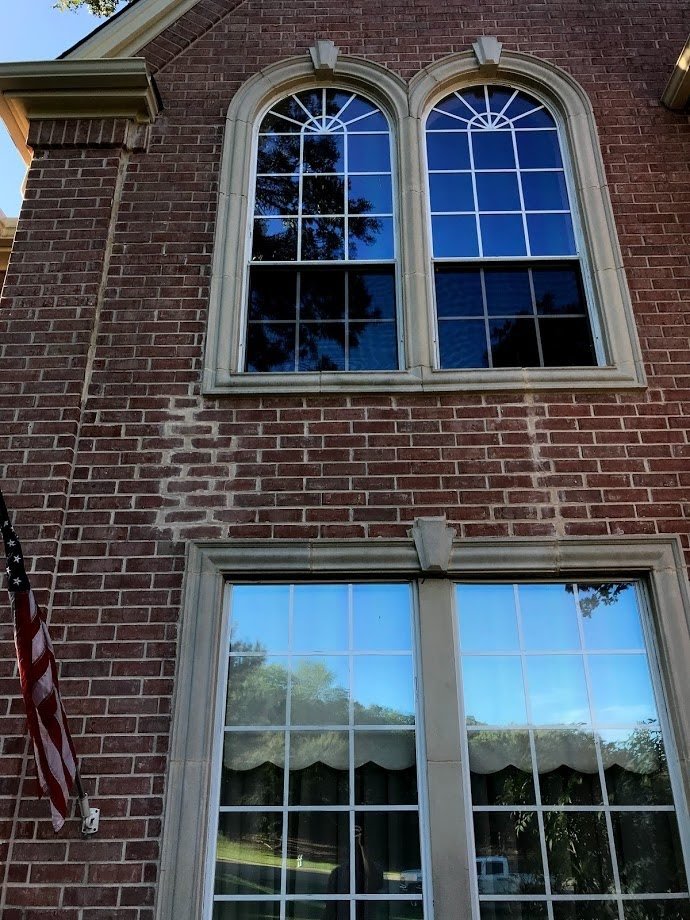
Updated for 2026 | Serving the Dallas-Fort Worth Metroplex
You're walking around your home on a Saturday morning, coffee in hand, when you notice it. A diagonal crack running along the mortar joints of your brick exterior—stepping up and to the right like a staircase. Your stomach drops. Is my foundation failing? Am I looking at a $20,000 repair? Should I have bought that home warranty?
If you're a homeowner in the Dallas-Fort Worth area, this scenario is more common than you might think. DFW sits on some of the most expansive clay soils in the entire United States—soils that swell when wet and shrink when dry, putting constant stress on your home's foundation and the rigid brick veneer wrapped around it. Stair step cracks are the visible result of that stress, and they're one of the most frequently reported masonry concerns across the metroplex.
Here's the good news: discovering these cracks is not the end of the world. By the time you finish reading this guide, you'll understand exactly what's causing them, how to tell whether they're cosmetic or structural, what it realistically costs to fix them in 2026, and how to find qualified professionals who will do the job right. Anxiety into confidence—that's what this guide is designed to deliver.
Key Takeaways
- Stair step cracks follow mortar joints diagonally and are a structural indicator—not just cosmetic—especially in DFW's expansive clay soil environment.
- Over 50% of DFW homes will experience some degree of foundation movement during their lifetime, making stair step cracks extremely common in the region.
- Minor cosmetic repairs cost $300–$800; moderate repairs run $1,500–$4,000; major structural repairs (including foundation work) can reach $8,000–$25,000+.
- DFW masonry repair costs run 15–30% higher than the national average due to labor shortages and high demand driven by expansive soils.
- If cracks are caused by foundation movement, foundation repair must happen first—masonry repair before stabilization is wasted money.
- A structural engineer's assessment ($500–$1,500) is the single most important diagnostic investment you can make before committing to any repair plan.
- Texas does not require a state masonry license, but all foundation repair contractors must be TDLR-registered—always verify before hiring.
- Ignoring stair step cracks for 3–5 years can increase repair costs by 2–10 times due to water damage and structural deterioration.
What Are Stair Step Cracks in Brick and Why Do They Matter?
Not all brick cracks are created equal. A straight horizontal crack running through the middle of a brick is a different problem than a vertical crack at a corner, which is different still from the stair step pattern that follows the mortar joints in a diagonal, zigzagging path—like the outline of a staircase climbing up your wall.
Stair step cracks are defined by their path: they travel along the mortar joints between bricks, alternating between horizontal and vertical joints, stepping upward and to one side. They don't cut through the bricks themselves (at least not in early stages)—they follow the path of least resistance, which is the mortar. This is important because mortar is intentionally softer than brick, designed to absorb movement. When it cracks, it's telling you something.
Why do they matter more than other cracks? Because stair step cracks are a structural indicator. They typically signal that one section of your wall—and potentially your foundation—has moved relative to an adjacent section. This differential movement is what creates the diagonal tension that follows mortar joints. If you've noticed these cracks and are exploring your foundation repair and masonry restoration services options, you're already asking the right questions.
In most parts of the country, stair step cracks are a moderate concern. In DFW, they're a near-universal experience. The reason comes down to geology—specifically, the expansive clay soils that underlie most of the metroplex. These soils have a Plasticity Index (PI) of 30–60 or higher, which is a measure of how much the soil expands and contracts with moisture changes. For reference, a PI above 20–30 is considered highly expansive. DFW's soils are among the most expansive in the entire United States.
According to data from Texas A&M AgriLife Extension and DFW foundation repair industry statistics, more than 50% of DFW homes will experience some degree of foundation movement that requires professional evaluation or repair during their lifespan. That's not a fringe problem—it's a regional reality that every brick homeowner in this market needs to understand.
DFW's Unique Soil Conditions: Why Stair Step Cracks Are So Common Here
To truly understand why your brick is cracking, you need to understand what's happening beneath your feet. The DFW metroplex sits on three major geological formations: the Eagle Ford Shale, Austin Chalk, and the Blackland Prairie. Each of these formations contains expansive clay minerals—primarily montmorillonite—that have an extraordinary ability to absorb water and swell, then release water and shrink.
The Plasticity Index of these soils ranges from 30 to 60 or higher. To put that in context: soils with a PI of 15–30 are considered "moderately expansive" and warrant careful foundation design. DFW soils routinely exceed that range by double. When you combine this with DFW's climate—blazing summers that can run weeks without rain, followed by sudden heavy rainfall events that saturate the ground rapidly—you get a cycle of constant ground movement that never fully stops.
Here's what that cycle looks like in practice: During a dry summer, the clay soil around your foundation loses moisture and shrinks. The ground literally pulls away from your foundation, creating voids and causing sections of the slab to lose support. Then, when heavy rains arrive, the soil absorbs moisture rapidly and expands—sometimes unevenly, pushing up in some areas while other areas remain settled. This differential movement is transmitted directly to your home's structure.
Brick veneer is a rigid material. It doesn't flex. When the structure beneath it moves—even slightly—the stress concentrates along the weakest points in the masonry assembly, which are the mortar joints. The result is stair step cracking. Understanding the masonry failures and structural issues that result from this soil movement helps clarify why DFW homeowners see this problem so frequently and why it deserves serious attention.
There's also a timing factor worth noting. A large proportion of DFW homes with brick exteriors were built during the 1980s through early 2000s. Many of these homes are now 25–45 years old. The accumulated stress of decades of seasonal soil movement, combined with the natural aging of mortar (which becomes more brittle over time), means that homes that showed no visible cracking for years are now beginning to show the effects. The DFW metroplex is projected to reach approximately 8.48 million people by 2025, with continued explosive growth in northern suburbs like Roanoke, Haslet, Keller, Southlake, and Frisco—meaning a large and growing inventory of aging brick homes that need attention.
It's Normal to Feel Overwhelmed by This Discovery
Discovering stair step cracks in your brick home can feel like a financial and structural emergency. But you're not alone—over 50% of DFW homeowners face this issue at some point. With the right information and professional guidance, this is a manageable problem with clear solutions. The fact that you're researching it now, before it gets worse, puts you ahead of the curve.
Is It Foundation Settlement or Just Mortar Deterioration? How to Tell the Difference
This is the most important question you need to answer before spending a single dollar on repairs. The difference between a cosmetic mortar issue and a structural foundation problem is the difference between a $500 repair and a $15,000+ project. Getting this wrong—in either direction—is costly.
Mortar deterioration is a natural process. Mortar is designed to be the sacrificial element in a brick assembly—softer than the brick itself so it absorbs stress and can be replaced without damaging the bricks. Over time, especially in DFW's harsh climate, mortar can weather, crack, and crumble. These deterioration cracks tend to be small, hairline in width, limited to isolated joints, and—critically—stable. They don't grow. They don't change with the seasons. They're just the result of mortar that has reached the end of its service life.
Foundation settlement cracks are a different animal entirely. These cracks are caused by differential movement in the foundation—one section of the slab or footing moving relative to another. The crack pattern follows the path of that movement. They tend to be wider (more than 1/4 inch in severe cases), longer (spanning multiple courses of brick), and—most importantly—actively growing. They may widen after a dry summer or after heavy rains. They often appear alongside other symptoms in the home.
One practical test you can do yourself: place a strip of painter's tape across the crack, write the date and the crack width on the tape, and check back in 4–6 weeks—especially after a significant weather change. If the tape tears, the crack has widened, or you can see the crack has grown beyond the tape, you're dealing with active movement. This is a sign you need professional assessment, not a tube of mortar from the hardware store.
Waterproofing is also worth considering as a preventative step once any active issues are resolved—water intrusion through cracked mortar accelerates deterioration significantly. Professional cleaning and waterproofing services can seal brick and mortar against moisture infiltration and extend the life of your masonry considerably.
Red Flags That Indicate Serious Foundation Issues
If you're seeing any combination of the following signs, treat this as a structural issue until a professional tells you otherwise:
- Multiple stair step cracks on the same wall, or similar cracks appearing on multiple walls of the home
- Cracks that are visibly widening over weeks or months—especially after dry spells or heavy rain
- Doors or windows that stick, bind, or no longer close properly, particularly on the same side of the house as the cracks
- Uneven or sloping floors, or a floor that feels springy or soft in certain areas
- Gaps between walls and ceilings or floors—especially if they weren't there before
- Cracks in interior drywall, particularly diagonal cracks radiating from the corners of door and window frames
- Visible gaps in exterior trim, or separation between the brick veneer and the foundation line
The more of these signs you're seeing, the more urgent the situation. A single stair step crack with no other symptoms might be cosmetic. Multiple cracks combined with sticking doors and uneven floors is a foundation issue until proven otherwise.
Not Sure If Your Cracks Are Cosmetic or Structural?
That's exactly what a professional assessment is designed to answer. Brick & Stone Master can evaluate your specific situation and recommend the right next steps—no pressure, just honest expertise from masons who understand DFW's soil conditions.
Get a Free Assessment of Your Brick CracksStair Step Crack Repair Costs in DFW: Pricing Breakdown by Severity
Let's get to the numbers you came here for. The cost to fix stair step cracks in brick in DFW varies enormously depending on one central factor: whether the cracks are purely cosmetic or tied to foundation movement. Here's a clear breakdown by severity level.
Minor Cosmetic Repointing — $300 to $800
This applies to small, stable, hairline cracks limited to a few mortar joints with no brick replacement needed. The work involves grinding out the deteriorated mortar, carefully matching the mortar color and texture to your existing joints, and repointing with fresh mortar. This is the best-case scenario, and it's appropriate only when the cracks are confirmed to be stable and non-structural. For homeowners in Grapevine, Southlake, or Roanoke with older homes showing minor weathering, this is often the starting point.
Moderate Repair — $1,500 to $4,000
This covers more extensive repointing spanning 10–30 linear feet, replacement of 10–30 damaged or spalled bricks, mortar color matching, and potentially minor scaffolding for second-story access. This is the most common repair scenario for DFW homes with moderate stair step cracking that isn't tied to active foundation movement. The quality of brick and mortar matching is critical at this level—a skilled mason should be able to make the repair nearly invisible. For guidance on finding experienced masonry contractors in Grapevine, Southlake, and Roanoke, reviewing local contractor resources can help you evaluate your options carefully.
Major Structural Repair — $8,000 to $25,000+
This is the full picture when foundation settlement is involved. The cost breakdown for a typical large repair in DFW looks like this: structural engineer assessment ($500–$1,500), foundation repair ($5,000–$20,000 depending on severity and number of piers required), followed by masonry repair ($4,000+) after the foundation is stabilized. A representative scenario: $750 for the engineer, $10,000 for slab repair, $4,000 for masonry restoration, and $200 in permit fees—totaling approximately $14,950. This is the reality for homes with significant stair step cracking tied to soil movement, and it's why getting an accurate diagnosis upfront is so important.
For context on where DFW sits relative to broader market pricing: the national average for tuckpointing runs $10–$25 per linear foot, while DFW contractors typically charge $12–$30 per linear foot. For brick replacement over larger areas, national averages run $20–$50 per square foot; DFW rates often reach $25–$70+ per square foot. According to data from HomeAdvisor, Angi, and local contractor interviews, DFW masonry repair costs have increased 15–30% over the past several years, driven by chronic labor shortages, material cost inflation, and sustained high demand from foundation-related issues.
Hidden Costs Homeowners Often Overlook
When getting quotes, make sure these line items are explicitly addressed—either included or excluded—in any written estimate:
- Scaffolding or lift rental for two-story homes: $300–$1,500 depending on height and duration
- Brick matching fees (especially for discontinued or reclaimed brick sourcing): $100–$500+
- Mortar color matching and custom tinting: $50–$200 for a seamless match to aged mortar
- Cleanup and debris haul-away: $100–$300 for old brick and mortar removal
- Building permits (required when structural work is involved): $100–$500
- Landscaping repair around the work area: $50–$250 for disturbed plants or grass
Why DFW Pricing Is Higher Than the National Average
DFW masonry repair costs 15–30% more than the national average due to three converging factors: (1) a chronic shortage of skilled brick masons in North Texas, which drives up labor rates and extends wait times for quality work; (2) consistently high demand driven by expansive soil issues and a large inventory of aging brick homes; and (3) the prevalence of foundation problems that require coordinated foundation and masonry repair—a more complex and expensive undertaking than simple repointing. You're paying for expertise and local market realities, not contractor price gouging.
⚠ Foundation First, Masonry Second—Always
If your stair step cracks are caused by foundation settlement, repairing the brick before stabilizing the foundation is like putting a fresh coat of paint on a sinking ship. The cracks will reappear within months as the foundation continues to move. The correct order is always: structural engineer assessment → foundation repair → masonry repair. A moving foundation will immediately re-crack any new mortar or brick you install. Foundation repair typically takes 2–4 weeks; masonry repair follows only after the foundation is confirmed stable.
When Do You Need a Structural Engineer? Cost and What to Expect
Many homeowners try to skip the structural engineer step to save money. This is almost always a mistake, and here's why: a structural engineer is the only professional in this process whose job is to give you an unbiased, expert diagnosis—not to sell you a repair. Foundation repair companies have an incentive to recommend foundation repair. Masonry contractors have an incentive to recommend masonry work. A licensed structural engineer has an incentive to tell you the truth.
In DFW, a residential structural engineer assessment typically costs $500–$1,500. For the diagnostic value it provides, this is one of the most cost-effective investments in the entire repair process. Here's what you get for that fee:
- A thorough inspection of the foundation, including measurement of crack width and documentation of crack locations
- Assessment of soil conditions and drainage around the home
- Determination of whether foundation repair is needed, and if so, what type and scope
- A written report with specific repair recommendations—which you can take to multiple foundation repair companies for competitive bids
- Documentation that may be required for insurance claims or real estate disclosures
To find a qualified structural engineer in DFW, search for "structural engineer near me" or ask your foundation repair company for a referral—though we recommend getting an independent engineer rather than one referred by the contractor who wants to do the work. Verify that any engineer you hire holds a Professional Engineer (PE) license in Texas. You can check this through the Texas Board of Professional Engineers and Land Surveyors (TBPELS) website.
One red flag to watch for: any contractor—masonry or foundation—who tells you "You don't need an engineer, I've seen this a thousand times" is not acting in your best interest. That statement might be true for very minor, clearly cosmetic cracks. But for any crack that raises structural questions, dismissing an engineer's assessment is a red flag about that contractor's priorities. Professional professional masonry assessment and design services should always complement, not replace, a structural engineer's evaluation when foundation issues are suspected.
Ready to Move Forward With a Repair Plan?
The first step is always a professional evaluation. Whether you need a structural engineer referral, a masonry assessment, or both, Brick & Stone Master can guide you through the process and help you understand exactly what you're dealing with before any money changes hands.
Schedule Your Professional Brick and Foundation AssessmentTop Masonry Repair Providers in DFW: Compared and Reviewed
The DFW market for masonry repair is large and varied. There are hundreds of contractors who will claim they can fix your stair step cracks, but the quality of work—and the long-term outcome—varies dramatically depending on who you hire. Understanding the different provider types helps you make a smarter decision.
According to DFW contractor market data, approximately 60–70% of homeowners do not hire the cheapest bid for foundation or major masonry repair. They prioritize reputation, warranty, and quality over lowest price. That's a smart instinct—a poorly matched mortar repair or a cosmetic fix over an unresolved foundation issue will cost far more to redo than the savings from going cheap the first time. When researching your options, reviewing resources on top masonry contractors in Southlake can give you a useful framework for evaluating providers in your area.
Brick & Stone Master
Location: 3800 Haslet-Roanoke Road Suite 32, Roanoke, Texas 76262
Service Area: Dallas-Fort Worth metroplex, including Grapevine, Southlake, Roanoke, Frisco, Keller, Trophy Club, and surrounding communities
Brick & Stone Master brings 25+ years of DFW masonry experience to stair step crack repair, tuckpointing, brick matching, and structural masonry restoration. What sets this team apart is a combination of master mason expertise and deep understanding of DFW's specific soil and foundation challenges—they don't just fix what's visible, they assess what's causing it. Brick & Stone Master's masonry repair expertise spans everything from minor repointing to complex multi-wall restorations, with a documented commitment to seamless brick and mortar matching that makes repairs nearly invisible. Highly rated for quality, attention to detail, and transparent communication—and notably, they recommend structural engineer assessments when the situation warrants it, rather than jumping straight to cosmetic fixes.
General Masonry Contractors (Regional)
The DFW market has a large pool of general masonry contractors who handle moderate brick repair, repointing, and standard masonry work. Pricing is typically mid-range at $15–$40 per linear foot for repointing, and availability tends to be better than specialized masons. The trade-off is consistency: quality varies significantly between contractors, and many lack the expertise for complex brick matching, mortar color replication, or the structural understanding needed to recognize when a crack is more than cosmetic. For standard repairs on clearly non-structural cracks, a vetted general contractor can be a reasonable option—but vetting is non-negotiable. Ask for references, check Google Reviews, and verify insurance before signing anything.
Foundation Repair Companies with Masonry Subcontractors
DFW has dozens of large, TDLR-registered foundation repair companies that offer the convenience of handling both the root cause (foundation) and the symptom (brick cracks) under one contract. This one-stop-shop approach can simplify scheduling and project coordination. However, the masonry work is typically subcontracted, which means the quality depends on who the subcontractor is—and you may have less control over brick matching and restoration quality. Pricing for the masonry component may also carry a markup. If you go this route, ask specifically about the masonry subcontractor's credentials and portfolio before agreeing to the combined package.
The 8 Questions That Separate Good Contractors from Risky Ones
Before signing any contract, ask these eight questions. A trustworthy contractor will answer clearly and provide documentation. Evasive answers or red-flag responses mean keep looking.
- What's your assessment of the underlying cause of these cracks? (Look for answers that address soil movement, not just cosmetic patching)
- Do you recommend a structural engineer's assessment? (A good sign if they do for severe cracks)
- Can you provide a detailed written estimate with all costs itemized? (Demolition, brick replacement, mortar, labor, cleanup, permits)
- What's your process for matching my existing brick and mortar color? (This is crucial for an invisible repair)
- Do you have a portfolio of stair step crack repairs and references I can contact? (Ask to speak directly to past clients)
- Are you fully insured with general liability and workers' compensation? (Ask to see a Certificate of Insurance—non-negotiable)
- What's your warranty on materials and labor? (Should be at least 1–2 years)
- Will you handle obtaining necessary permits? (You want them to take responsibility for this)
Licensing, Permits, and Regulations: What DFW Homeowners Need to Know in Texas
Navigating the regulatory side of masonry and foundation repair in Texas can be confusing, and unfortunately, some contractors count on that confusion. Here's what you actually need to know to protect yourself.
Masonry licensing in Texas: Texas does not issue a state masonry license. Masonry work, by itself, is not a state-licensed trade the way plumbing or electrical work is. This means any person can technically call themselves a masonry contractor in Texas without any formal credential. This is precisely why vetting through reviews, references, portfolios, and insurance verification is so important.
Foundation repair is different: All foundation repair contractors in Texas are required to register with the Texas Department of Licensing and Regulation (TDLR) under the Foundation Repair Contractor Registration Act. This is a meaningful consumer protection—TDLR-registered contractors must meet experience, insurance, and compliance standards. If anyone is doing foundation work on your home, verify their TDLR registration at www.tdlr.texas.gov before signing a contract.
Permits: Cosmetic repointing and tuckpointing typically do not require a building permit. However, structural masonry repairs—particularly those tied to foundation work, lintel replacement, or significant wall rebuilding—almost certainly require a permit from your local DFW city. Permitted work is inspected, which actually protects you as the homeowner. Be wary of any contractor who suggests skipping permits to save time or money on structural work.
Insurance requirements: Legitimate contractors should carry at minimum $1,000,000 in general liability insurance. If the contractor has employees, workers' compensation coverage is also essential—this protects you from liability if a worker is injured on your property. Always ask for a Certificate of Insurance directly from the contractor's insurance provider, not just their word that they're covered. The team at professional masonry contractors serving DFW who operate with full transparency about their credentials and coverage are the ones worth trusting with your home.
Red flags to watch for: Cash-only payment demands, unwillingness to obtain permits, no business license or insurance, dismissal of engineer assessments, or quoting a job without a physical inspection are all warning signs of an unqualified or unethical contractor. Texas's Deceptive Trade Practices Act (DTPA) provides legal recourse for homeowners who are misled or defrauded, and small claims court handles disputes up to $20,000—but it's far better to avoid these situations through careful vetting upfront.
Financing Your Stair Step Crack Repair: Options and Strategies
One of the most common reasons homeowners delay addressing stair step cracks is financial uncertainty. They see a potentially large number and decide to wait until they have a clearer picture—or simply until the problem becomes impossible to ignore. The challenge is that waiting almost always makes the financial situation worse, not better.
According to building science experts and DFW general contractors, ignoring stair step cracks for just one year can increase repair costs by 10–20% as water infiltration begins damaging internal framing and insulation. At three years, repair costs can double or triple as mold, structural deterioration, and expanded cracking set in. At five years, you may be looking at costs 5–10 times the original estimate, requiring full wall rebuilds and extensive interior renovation. The math strongly favors addressing this early.
Here are the realistic financing options available to DFW homeowners:
- Contractor payment plans: Many masonry contractors structure payments as 30–50% deposit, progress payments at milestones, and final payment upon completion. This spreads the cash outflow without interest charges.
- Home Equity Line of Credit (HELOC): Flexible, revolving credit secured by your home equity. Interest rates are competitive, and interest may be tax-deductible when used for home improvements. Well-suited for repairs where the final cost isn't fully known upfront.
- Home Equity Loan: Fixed rate, fixed term, lump-sum disbursement. Good for larger repairs ($5,000+) where the scope is clearly defined. Predictable monthly payments make budgeting straightforward.
- Foundation repair financing: Many TDLR-registered foundation repair companies offer specialized financing programs, including 0% interest for 12–24 months for qualified borrowers. This can make a $10,000–$15,000 foundation repair much more manageable.
- Insurance claims: Texas homeowners insurance typically does NOT cover stair step cracks caused by natural soil expansion and contraction—this falls under "earth movement" exclusions. However, if foundation damage was caused by a sudden and accidental plumbing leak under the slab, coverage may apply. Always review your specific policy and contact your insurer before assuming coverage or assuming exclusion.
There's also a real estate angle worth considering. Appraisers flag visible stair step cracks, and buyers are often deterred or demand significant price reductions when they see them during inspections. According to National Association of Realtors data, unaddressed structural issues can reduce home value by 5–15% or more and extend time on market. For a $400,000 DFW home, that's $20,000–$60,000 in lost value—far exceeding the cost of repair.
Worried About the Cost? Let's Talk Through Your Options.
Addressing stair step cracks early—before water damage and structural deterioration compound the problem—almost always saves money in the long run. Brick & Stone Master can walk you through your specific situation and help you understand what a realistic repair plan and budget looks like.
Discuss Repair Options and Financing With a Masonry ExpertPrevention and Long-Term Maintenance: How to Avoid Future Stair Step Cracks
Once your stair step cracks are repaired and any underlying foundation issues are resolved, the goal shifts to keeping your home in that condition for as long as possible. In DFW's challenging soil environment, prevention isn't about eliminating risk—it's about managing the variables you can control to reduce the stress on your foundation and masonry over time.
Soil moisture management is the single most impactful thing you can do. The dramatic expansion and contraction of DFW's clay soils is driven by moisture changes. During dry spells—especially the brutal North Texas summers—maintaining consistent soil moisture around your foundation's perimeter through controlled watering significantly reduces the shrink-swell cycle. A soaker hose or drip irrigation system placed 12–18 inches from the foundation and run during dry periods keeps the soil from drying out and pulling away from your slab. This is one of the most widely recommended practices by DFW foundation repair professionals.
Drainage is equally critical. Water pooling near your foundation during rains causes the opposite problem—rapid soil saturation and expansion. Ensure gutters are clean and functioning, downspouts direct water at least 6 feet away from the foundation, and the grade around your home slopes away from the structure. Flat or inward-sloping grade is one of the most common contributors to foundation problems in DFW neighborhoods.
Plumbing maintenance matters more than most homeowners realize. A slow leak under your slab can wash away the soil that supports your foundation, creating voids that lead to rapid and severe settling. Have your plumbing inspected periodically, and address any leaks immediately—don't wait to see if they get worse. A plumbing leak that goes undetected for a year can cause more foundation damage than decades of normal soil movement.
Regular visual inspections are your early warning system. Walk the perimeter of your home quarterly—especially in late summer after dry spells and in spring after heavy rains. Look for new cracks, widening of existing cracks, changes in door and window operation, and any new gaps in trim or at the foundation line. Catching movement early means smaller repairs and lower costs.
Waterproofing your brick and mortar is a proactive measure that protects against water intrusion, which accelerates mortar deterioration and can hide structural issues developing behind the veneer. Professional brick cleaning and waterproofing services apply penetrating sealers that repel water while allowing the masonry to breathe—preventing the freeze-thaw and moisture damage that shortens the life of your mortar joints. In DFW's climate, a quality waterproofing treatment every 5–10 years is a sound investment.
One caution: avoid over-watering landscaping immediately adjacent to your foundation. While dry soil is a problem, chronically saturated soil near the foundation can cause excessive expansion and upward heaving. The goal is consistency—not wet, not dry, but stable moisture levels year-round. Consult a landscape irrigation professional if you're unsure how to calibrate your system for foundation protection.
Frequently Asked Questions About Stair Step Cracks and Brick Repair
Do stair step cracks in brick always mean foundation problems?
Not always, but they are a very strong indicator—especially in DFW's expansive clay soil environment. Small, stable hairline cracks might be due to minor settling or temperature fluctuations in the brick veneer, and these can sometimes be addressed with straightforward repointing. However, wide, long, or actively growing stair step cracks—particularly those accompanied by sticking doors or windows, uneven floors, or interior drywall cracks—almost certainly point to foundation movement rather than simple mortar aging. A structural engineer's assessment is the only way to know for certain, and it's the diagnostic step we always recommend before committing to any repair approach.
How can I tell if my stair step cracks are getting worse?
The most reliable DIY monitoring method is to place painter's tape across the crack, write the date and the approximate crack width on the tape, and revisit every 4–6 weeks—especially after significant weather changes like prolonged dry spells or heavy rainfall. If the tape tears, the crack has widened, or you can see the crack extending beyond the tape, you're dealing with active movement. Also watch for new cracks appearing nearby, changes in how doors and windows operate on the same side of the house, or any new unevenness in floors—these are all signs that foundation movement is ongoing and the situation warrants immediate professional evaluation.
Does my homeowners insurance cover fixing stair step cracks?
Homeowners insurance in Texas typically does not cover stair step cracks or foundation repair when the underlying cause is natural settlement or soil expansion and contraction—this falls squarely under the "earth movement" exclusions found in most standard policies. However, if the foundation damage (and the resulting brick cracks) was caused by a sudden and accidental event like a plumbing leak under the slab that washed away soil support, coverage may apply under certain policy terms. Insurance outcomes in these situations vary significantly by policy and insurer, so always review your specific policy language and contact your insurer directly before assuming you're covered or that you're not.
When is DIY mortar patching acceptable versus when do I need a professional mason?
DIY mortar patching is only appropriate for very small, purely cosmetic, confirmed-stable hairline cracks in non-load-bearing areas where you can reasonably match the mortar color and texture to the existing joints. For any cracks that are wide, long, growing, structural, or associated with foundation issues, a professional mason is absolutely necessary—and a foundation repair expert may need to come first. Beyond the skill and tool requirements, improper DIY work carries real risks: using the wrong mortar type (too hard, too soft), failing to properly prepare the joint, or masking a structural problem with cosmetic patching can all worsen the underlying issue and increase the eventual repair cost significantly.
How long does a properly executed stair step crack repair last?
A properly executed repair by a skilled mason—performed after the underlying foundation issue has been fully resolved and stabilized—can last 20–30 years or more, blending seamlessly with the surrounding masonry and holding strong through DFW's seasonal cycles. The critical variable is whether the root cause was addressed first: if the foundation continues to move, new cracks will appear within months to a few years regardless of how well the masonry work was done. Longevity depends entirely on the correct sequence of repairs, the quality of materials and workmanship, and ongoing maintenance practices like soil moisture management and waterproofing.
What other signs should I look for that indicate a serious foundation problem along with stair step cracks?
Along with stair step cracks in the brick exterior, watch for diagonal cracks in interior sheetrock—especially radiating from the corners of door and window frames—sticking or binding doors and windows, uneven or sloping floors, gaps between walls and ceilings or floors, cracks in concrete slab areas, exterior sidewalks, or driveways, and visible gaps in exterior trim or at the foundation line. The more of these signs present simultaneously, the higher the likelihood of a significant foundation issue that warrants immediate professional assessment. A single stair step crack with no other symptoms is a different situation than multiple cracks combined with sticking doors and uneven floors—the latter should be treated as a foundation issue until a structural engineer confirms otherwise.
Ready to Address Your Stair Step Cracks? Start With a Professional Assessment
Stair step cracks in brick don't have to be a mystery or a financial nightmare. With the right diagnosis and a clear repair plan, you can restore your home's integrity and protect the investment you've made in it. Brick & Stone Master has helped hundreds of DFW homeowners navigate this exact situation—from initial assessment through final restoration—and we understand the unique soil conditions, foundation dynamics, and masonry challenges that make this market unlike anywhere else in the country.
Whether you're just starting to notice a crack or you've been watching one grow for months, the right next step is the same: get an honest, expert evaluation from a mason who will tell you the truth about what you're dealing with.
Get Your Free Brick Crack Assessment TodayNo pressure, no sales pitch—just honest expertise and a clear path forward.