
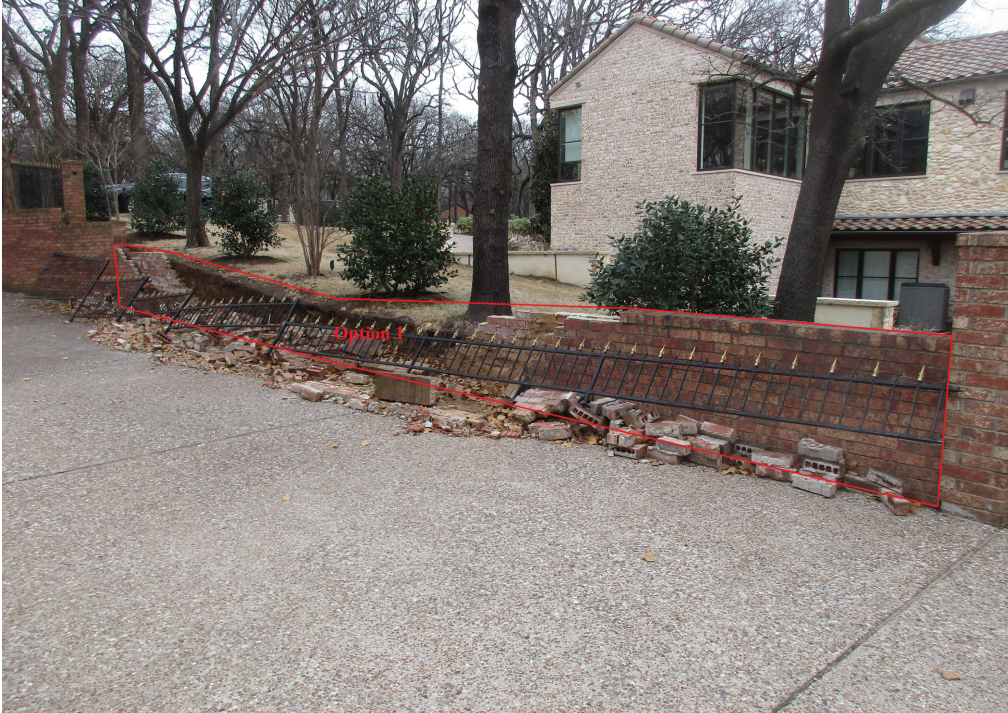
A Frisco homeowner with a sloped backyard finally decides to do something about it. They want a usable outdoor living space — a patio, maybe a garden terrace, room for the kids to actually run around. They call a few contractors, get wildly different quotes, and suddenly find themselves buried in terms like "geogrid," "hydrostatic pressure," and "surcharge loads." One contractor says they need a permit; another says they don't. One recommends Allan Block; another pushes a cheaper big-box option. The price range spans $8,000 to $28,000 for what looks like the same wall. Sound familiar?
Here's the truth most contractors won't tell you upfront: choosing the wrong block system — or hiring the wrong installer — is how you end up spending twice as much money in five years to tear down a failed wall and start over. Industry data from the National Concrete Masonry Association (NCMA) shows that over 80% of retaining wall failures are caused by poor drainage, not block failure. The block gets the blame, but the real culprit is almost always what's behind it and underneath it.
This guide cuts through the noise. You'll get transparent cost data, honest block system comparisons, a clear breakdown of what DFW's permit requirements actually mean for your project, and the specific red flags that separate professional installers from predatory ones. By the time you're done reading, you'll know exactly what questions to ask, what to pay, and what the best retaining wall blocks for residential and commercial installation in Dallas-Fort Worth actually are — for your soil, your budget, and your timeline.
Key Takeaways
- DFW's expansive Blackland Prairie clay soils expand 10%+ when wet — this makes proper drainage and block selection more critical here than almost anywhere else in the country.
- Over 80% of retaining wall failures are caused by poor drainage, not block failure — engineering and drainage matter more than the block brand you choose.
- Building permits and a licensed Professional Engineer's stamp are legally required for any wall exceeding 48 inches in most DFW municipalities — and for any wall supporting a surcharge load at any height.
- Top block systems for DFW clay conditions: Allan Block (drainage relief), Versa-Lok (weight and pinning strength), Belgard Diamond Pro (commercial speed), Keystone Compac (large-scale engineered projects).
- Block materials represent less than 30% of total project cost — excavation, drainage aggregate, geogrid, and engineering make up the bulk.
- A properly engineered segmental retaining wall (SRW) with quality blocks and a 12-inch drainage zone lasts 50+ years with near-zero maintenance. A cheap wall fails in 3–5 years and costs 1.5–2x to replace.
- Always verify contractor credentials: local city registration, $1M+ general liability insurance, NCMA or ICPI certifications, and BBB ratings before signing anything.
Why Retaining Wall Blocks Matter in Dallas-Fort Worth's Unique Climate
DFW is not a forgiving environment for retaining walls. The region sits atop the Blackland Prairie, Austin Chalk, and Eagle Ford geological formations — all rich in smectite and montmorillonite clay, classified by soil scientists as Vertisols. According to Texas A&M AgriLife Extension, these high-plasticity clay soils can expand by 10% or more when saturated with water, then shrink dramatically during the droughts that regularly bake North Texas summers. That cycle of swelling and shrinking creates extreme hydrostatic pressure and soil movement — forces that will eventually push any inadequately engineered wall outward, crack it, or topple it entirely.
Expansive clay soils are the single biggest cause of retaining wall failure in North Texas. The Potential Vertical Rise (PVR) of DFW soils can exceed 4 to 6 inches depending on moisture content — meaning the ground itself can literally heave upward and outward by several inches. That's not a minor inconvenience; it's a structural force that will destroy a wall not built to handle it. This is precisely why professional retaining wall installation in DFW requires deeper compacted bases, superior drainage aggregates, and reinforced geogrid tie-backs compared to walls built in sandy or loamy regions elsewhere in the country.
The timing couldn't be more relevant. The DFW metroplex surpassed 8 million residents in 2024–2025 and continues to grow at a pace that consistently ranks it among the fastest-growing metro areas in the United States. Northern suburbs — Celina, Prosper, Frisco, McKinney — are experiencing explosive residential and commercial development that pushes construction into uneven topographies that were previously left undeveloped. That means more retaining walls, more grading projects, and unfortunately, more opportunities for unqualified contractors to cut corners.
At the same time, DFW homeowners are increasingly treating their backyards as extensions of their living space. The era of basic treated-timber walls is giving way to premium segmental retaining wall (SRW) blocks — split-face concrete systems and natural stone veneers that create terraced patios, garden beds, and outdoor living areas that genuinely add to a home's value and usability. A well-built retaining wall yields an estimated 100% to 200% ROI in home value, according to the NAR Remodeling Impact Report, by preventing foundation-threatening erosion and increasing usable square footage on sloped lots. That's a compelling investment — when it's done right.
Understanding Retaining Wall Block Types and Connection Systems
Not all retaining wall blocks are created equal, and the differences go far beyond aesthetics. The connection system — the mechanism by which blocks lock together and integrate with geogrid reinforcement — is what determines a wall's structural performance under DFW's soil conditions. Understanding these systems is the first step toward making an informed decision about retaining wall design and installation that will actually hold up over time.
There are three primary connection systems in the segmental retaining wall market: pinned systems, lip-and-groove systems, and gravity-only blocks. Each has specific strengths, limitations, and ideal applications. A fourth category — hollow-core systems — overlaps with the above but deserves its own discussion because of how it handles the drainage challenge that defines DFW wall performance.
One important trend worth noting: large-format blocks (18-inch width or larger) have become increasingly dominant in both residential and commercial DFW projects through 2025–2026. Their faster installation, modern clean-line profiles, and superior load-bearing capacity make them the preferred choice for professional installers working under tight timelines and demanding engineering specifications.
Pinned Block Systems: Versa-Lok and Keystone
Pinned systems use fiberglass or nylon pins driven through the blocks to lock each course to the one below and to anchor geogrid reinforcement fabric. This creates exceptional shear strength — resistance to the lateral sliding forces that expansive clay soils exert on a wall. Pinned systems also excel at curves and corners because the pins allow rotational adjustment without sacrificing structural integrity.
Versa-Lok Standard is the workhorse of this category: a solid, non-hollow block weighing 82 pounds with dimensions of 16" W x 6" H x 12" D. Because it has no hollow core, it can be easily split or modified to create tight curves, corners, and steps. That solid construction also means water cannot infiltrate through the block itself — a meaningful advantage in DFW's wet-dry cycles. Keystone Compac (71 lbs, 18" W) uses high-strength fiberglass pins and is heavily used in DFW commercial projects, with engineered wall heights that can exceed 40 feet when properly designed by a licensed engineer.
Lip-and-Groove Systems: Belgard and Anchor Wall
Lip-and-groove systems rely on a rear-lip or groove cast into the block to align each course and hold geogrid in place through the weight of the block above. They don't use mechanical pins — instead, the geometry of the block and the mass of stacked courses do the work. This makes them faster to install and highly reliable for straight walls, though they offer less flexibility for curves than pinned systems.
Belgard Diamond Pro (75 lbs, 18" wide) features a rear-lip locator that speeds installation considerably and is stocked widely at DFW landscape supply yards. It's a dominant choice for commercial applications where speed matters. Anchor Wall Highland Stone, a three-piece system that mimics natural stone, is favored by DFW HOAs in master-planned communities where Architectural Review Committees demand a specific aesthetic.
Hollow-Core Systems: Allan Block
Allan Block's hollow-core design is arguably the most innovative engineering response to DFW's clay soil challenge. The hollow cores are filled with #57 gravel during installation, creating vertical drainage channels inside the wall itself. This internal drainage relief system directly addresses the hydrostatic pressure that causes the majority of retaining wall failures in North Texas. AB Classic (75 lbs) offers a clean split-face look; AB Europa mimics weathered stone for residential projects where aesthetics are a priority. Both are highly recommended by NCMA technical bulletins and Texas A&M AgriLife Extension specifically for expansive clay soil conditions.
Retaining Wall Costs in DFW: What You'll Actually Pay
Let's talk numbers — because the range of quotes homeowners receive for retaining wall projects in DFW is genuinely staggering, and without context, it's impossible to know what's fair. Retaining wall pricing is calculated per "square face foot" — the height of the exposed wall multiplied by its length. Here's what the DFW market actually looks like in 2026:
- Basic gravity walls (under 4 feet): $25–$40 per square face foot
- Mid-range engineered walls (4–8 feet): $40–$55 per square face foot
- Premium/commercial walls (8+ feet): $55–$80+ per square face foot
DFW costs trend 10–15% higher than national averages — not because Texas concrete is more expensive, but because the volatile clay soil demands substantially more excavation, a thicker compacted base, more drainage aggregate, and engineering oversight that simply isn't required in regions with stable, sandy soils. According to 2025 data from Angi/HomeAdvisor, retaining wall construction in Texas averages $20–$65 per square face foot, compared to the national average of $15–$50. For detailed context on how these costs compare to other masonry work in the region, the masonry contractor cost breakdowns in DFW provide useful perspective on where your money actually goes.
Most residential retaining wall projects in DFW fall between $8,000 and $25,000 total. Homeowners commonly finance these projects through Home Equity Lines of Credit (HELOCs) or contractor-partnered payment plans.
Material Costs: Block Pricing by System
Here's what block materials alone cost per square foot in 2026 — and remember, this represents less than 30% of your total project budget:
- Basic big-box brands: $5–$10 per sq. ft. (suitable only for garden borders, not structural walls)
- Pavestone RockWall/Standard: $8–$12 per sq. ft.
- Versa-Lok Standard: $10–$15 per sq. ft.
- Allan Block (AB Classic): $12–$16 per sq. ft.
- Belgard Diamond Pro: $14–$18 per sq. ft.
- Premium natural stone/veneer: $25–$40+ per sq. ft.
Hidden Costs Homeowners Overlook
This is where most homeowners get blindsided. The block is the visible part of the project, so it gets the mental budget allocation — but it's the least expensive component of a properly built wall. Here's what you're actually paying for:
- Base material and drainage aggregate: Tons of crushed limestone and #57 stone for base and backfill — often $2,000–$5,000 for a mid-size project
- Excavation and soil disposal: Heavy equipment rental and hauling fees for removing expansive clay — often $1,500–$3,500
- Geosynthetics: Geogrid reinforcement and non-woven filter fabrics — $500–$1,500
- Engineering and permits: Texas PE stamp and local city permits — $500–$2,500+
⚠️ Beware: The $5,000 Wall That Costs $20,000 to Fix
Unlicensed contractors often use lightweight big-box blocks (intended for 2-foot garden beds) to build 5-foot structural walls, or worse, backfill with excavated expansive clay instead of crushed stone. These walls fail within 3–5 years in DFW, requiring complete demolition and replacement at 1.5–2x the original cost. The incremental cost of adding proper gravel and geogrid upfront is usually less than 15% of the total budget — but it's the difference between a 50-year wall and a 5-year disaster. Proper drainage and engineered blocks cost 15% more upfront but last 50+ years.
If you're planning a retaining wall in DFW and want to ensure it's engineered correctly for your soil type and local codes, Brick & Stone Master provides PE-stamped designs and transparent cost breakdowns so you know exactly what you're getting — no surprises, no hidden fees.
Explore Retaining Wall ServicesTexas Licensing, Permits, and Building Codes for Retaining Walls
The regulatory landscape for retaining walls in Texas is genuinely confusing — and that confusion is regularly exploited by contractors who tell homeowners they don't need a permit when they absolutely do. Let's set the record straight. For additional context on how permit requirements apply to other masonry projects in the region, the outdoor kitchen masonry permit guide for DFW covers the broader regulatory framework that applies across masonry work in North Texas municipalities.
First, the state level: Texas does not require a state-level masonry license through the Texas Department of Licensing and Regulation (TDLR). Unlike plumbers or electricians, masonry and retaining wall contractors are not regulated at the state level. Regulation is deferred entirely to local municipalities — which means the rules vary by city and it's your responsibility to know what your city requires.
At the local level, the rules are clear and consistent across most DFW cities: a building permit is required for any retaining wall exceeding 48 inches (4 feet) in height, measured from the bottom of the buried footing to the top of the wall. That measurement is critical — it's not just the visible wall height. A wall with a 6-inch buried base course and 42 inches of exposed height may still trigger the permit requirement. Additionally, permits are required for walls of any height that support a "surcharge" — meaning a driveway, pool, fence, or steep slope above the wall.
Any retaining wall over 4 feet tall, or any wall supporting a surcharge load, must also have construction drawings stamped by a Civil or Structural Engineer licensed in the State of Texas. This isn't optional, and it isn't bureaucratic red tape — it's the mechanism that ensures your wall is engineered to handle the actual forces your soil and site conditions will impose on it.
If a wall fails and it was built without a permit or engineer stamp, you may face code violation fines, be required to demolish and rebuild at your own expense, and lose any insurance protection you thought you had. The Texas Deceptive Trade Practices Act (DTPA) does give homeowners recourse — if a contractor misrepresented their engineering standards or violated manufacturer installation guidelines, you can sue for up to triple damages — but that's a last resort, not a plan.
How to Verify Contractor Credentials
Because Texas lacks a statewide masonry license, verifying credentials is entirely on you as the consumer. Here's exactly what to check before signing any contract:
- Confirm the contractor is registered as a General Contractor with your specific city (Dallas, Fort Worth, Frisco, Southlake, etc.)
- Verify a minimum of $1,000,000 in General Liability insurance and proof of Workers' Compensation coverage — ask for certificates directly from the insurer
- Look for NCMA (National Concrete Masonry Association) or ICPI (Interlocking Concrete Pavement Institute) certifications, or manufacturer-specific credentials like Allan Block Certified Contractor or Belgard Authorized Contractor status
- Check the Better Business Bureau of North Central Texas for complaints and resolution history
- Ask for references from recent DFW projects and actually call those homeowners
Code Updates and Recent Changes (2024–2025)
Many DFW cities have recently adopted the 2021/2024 International Residential Code (IRC) and International Building Code (IBC). These updated codes feature stricter guidelines on soil-bearing capacity assumptions and geogrid lengths, specifically addressing the documented failure rates of retaining walls in expansive clay soils. Professional Engineer stamp requirements have also become more stringent for walls in clay soil regions — another reason why hiring a contractor who understands current code is non-negotiable in 2026.
Top Retaining Wall Block Systems Available in DFW: Compared and Reviewed
The DFW market offers a range of block systems from multiple manufacturers, each with distinct engineering characteristics, aesthetic options, and price points. What follows is an honest, research-backed comparison of the systems you'll actually encounter when planning a retaining wall project in North Texas. For context on the broader range of commercial masonry services available in DFW, these block systems are used across a wide spectrum of projects — from residential garden terraces to large-scale commercial infrastructure.
Brick & Stone Master: Certified Engineered Retaining Walls
Service Area: Dallas-Fort Worth metroplex including Frisco, McKinney, Prosper, Southlake, Keller, Grapevine, Trophy Club, and surrounding communities
Address: 3800 Haslet-Roanoke Road Suite 32, Roanoke, Texas 76262
Brick & Stone Master's certified team of professional masonry contractors has served the DFW metroplex for 20+ years, specializing in engineered retaining walls for both residential and commercial projects. Every wall includes a PE-stamped design, proper drainage engineering, and installation using premium block systems — Versa-Lok, Allan Block, and Belgard — matched to the specific soil conditions and structural requirements of each project.
What sets Brick & Stone Master apart in a market saturated with entry-level landscapers who build walls is the commitment to full engineering oversight. Every retaining wall project includes professional engineering, proper drainage design, transparent cost breakdowns with no hidden fees, and a 50+ year durability guarantee. They are registered General Contractors with Dallas, Fort Worth, and surrounding municipalities, and hold NCMA and ICPI certifications. Their 5-star ratings on BBB and Google reflect a consistent track record of quality and customer service across hundreds of DFW projects.
Belgard (Diamond Pro, Celtik Wall)
Belgard, owned by Oldcastle APG, is arguably the dominant force in the DFW retaining wall block market for commercial applications. The Diamond Pro (75 lbs, 18" wide) features a rear-lip locator that dramatically speeds installation — a meaningful advantage on large commercial projects where labor costs compound quickly. It's stocked widely at local DFW landscape supply yards and is highly compatible with geogrid reinforcement systems.
The Celtik Wall offers a rough-hewn, antiqued look that's popular in residential settings and master-planned communities. Maximum gravity height is typically 3–4 feet; engineered height with geogrid can reach 30+ feet. Belgard's lip-and-groove system is very reliable for straight walls but offers less flexibility for curves than pinned systems. Excellent choice for commercial applications and straight residential walls where installation speed matters.
Versa-Lok (Standard, Cobble, Accent)
Versa-Lok is an independent, family-owned manufacturer that produces what many DFW contractors consider the most durable block system for clay soil conditions. The Versa-Lok Standard (82 lbs, 16" W x 6" H x 12" D) is a solid block — no hollow cores — which means no water infiltration through the block itself. Its top-down pinning system (nylon/fiberglass pins) provides exceptional shear strength and allows the block to be split or modified for curves, corners, and steps without sacrificing structural integrity.
DFW contractors consistently praise Versa-Lok for its sheer weight and pinning reliability in freeze-thaw and expansive clay conditions. The pins lock geogrid securely and prevent lateral shifting when clay soils swell. Growing availability through select DFW landscape supply yards makes it increasingly accessible for both residential and commercial projects.
Allan Block (AB Classic, AB Europa)
Allan Block is the engineering-focused manufacturer that many experts consider the most resilient system for DFW's specific soil challenges. The hollow-core design — filled with #57 gravel during installation — creates vertical drainage channels inside the wall that directly relieve the hydrostatic pressure that causes most retaining wall failures in North Texas. NCMA technical bulletins and Texas A&M AgriLife Extension both specifically recommend Allan Block for expansive clay soil conditions.
AB Classic (75 lbs) offers a clean, split-face look that works well in both contemporary and traditional residential settings. AB Europa mimics weathered stone for projects where a more natural aesthetic is required. The highly integrated geogrid system and internal drainage relief make Allan Block arguably the most resilient choice for DFW clay soils, with a documented 50+ year lifespan when properly installed.
Pavestone (RockWall, Sterling Wall)
Pavestone is a Texas-based manufacturer with excellent local availability throughout DFW — stocked at both big-box retailers and landscape supply yards. That local manufacturing advantage reduces shipping costs and improves accessibility, particularly for smaller residential projects. The RockWall is lightweight and DIY-friendly, suitable for garden borders and decorative applications under 2 feet. The Sterling Wall offers a multi-piece aesthetic for larger residential projects with more visual interest.
Pavestone uses a lip-and-groove system and is best suited for gravity applications. For budget-conscious homeowners building decorative borders or low garden walls, Pavestone is a solid, accessible choice. For structural retaining walls over 3 feet, the commercial line is available for engineered loads, though Belgard and Allan Block offer more robust performance in demanding clay soil conditions.
Keystone (Compac, Century)
Keystone pioneered the pinned retaining wall system and remains the industry leader for large-scale commercial applications in DFW. The Keystone Compac (71 lbs, 18" W) uses high-strength fiberglass pins for alignment and shear strength, with an open-core design that reduces weight for installers while allowing gravel interlock. Maximum engineered heights exceed 40 feet — making Keystone the go-to choice for DFW developers managing large-scale grading and infrastructure projects.
Available through DFW commercial landscape suppliers, Keystone has a strong commercial presence and is trusted by developers for projects where raw load-bearing capacity and rapid installation are the primary requirements. For residential projects, the Compac's large format and commercial focus may be more than necessary — but for commercial and large residential projects, it's a proven performer.
💡 Which Block System Is Right for Your DFW Retaining Wall?
For residential projects in expansive clay: Allan Block (drainage relief) or Versa-Lok (weight and pinning) are top choices. For commercial or large-scale projects: Belgard Diamond Pro or Keystone Compac offer speed and load capacity. For budget-conscious DIY borders under 2 feet: Pavestone RockWall works fine. The key is matching the system's drainage and structural capabilities to your soil type and wall height — not just picking the block that looks best in the catalog.
Drainage, Geogrid, and Foundation: The Hidden Engineering Behind Every Wall
Here's the uncomfortable truth that most block marketing materials won't tell you: the block you choose is almost secondary to the engineering behind it. Over 80% of retaining wall failures are caused by poor water drainage — hydrostatic pressure building up behind the wall until it pushes the structure outward. In DFW's expansive clay soils, where the Potential Vertical Rise can exceed 4–6 inches, this failure mode is not theoretical. It happens regularly, and it's entirely preventable.
Understanding the engineering elements that prevent failure is also how you evaluate contractor quality. A contractor who can't explain their drainage plan in specific detail — what aggregate, what pipe, what filter fabric, what geogrid — is a contractor who either doesn't know or doesn't care. For a deeper look at how these failure modes develop and how proper engineering prevents them, masonry failure prevention and repair covers the most common structural problems in North Texas masonry and what it takes to fix them.
The Drainage System: Your Wall's Best Defense
A properly engineered drainage system has four components, and all four are non-negotiable for structural walls in DFW:
- Crushed limestone base (6 inches minimum, compacted): Provides a stable, level foundation and initiates drainage beneath the wall. Never sand — sand washes out under DFW's heavy spring rains.
- #57 gravel backfill (12 inches minimum): Clean, angular crushed stone placed directly behind the blocks allows water to flow freely downward without compacting or clogging. This is the single most important drainage element.
- Perforated drain pipe (4-inch corrugated): Placed at the base of the wall, sloped slightly to daylight or a drainage basin, to carry accumulated water away from the structure. Never buried without a proper outlet.
- Non-woven filter fabric: Separates the clay soil from the drainage stone, preventing clay particles from migrating into the gravel over time and clogging the drainage system.
The base trench for structural walls in DFW should be excavated 12–24 inches deep — enough to accommodate a minimum 6-inch compacted crushed limestone base plus the burial of at least one full block course below finished soil grade. This buried course prevents "toe failure," where the base of the wall slides outward under lateral pressure.
Geogrid Reinforcement: Locking Soil to Block
Geogrid is a polymer mesh fabric that extends horizontally back into the soil behind the wall, typically 60–80% of the wall height. It works by creating a composite mass — locking the soil and the wall together so that the lateral forces pushing on the wall are distributed across a much larger area of soil rather than concentrated at the block face. For walls over 4 feet in DFW, geogrid is not optional — it's required by building code and NCMA standards.
Different block systems lock geogrid differently: pinned systems (Versa-Lok, Keystone) use pins to mechanically anchor the geogrid between courses; lip-and-groove systems (Belgard, Anchor Wall) rely on the weight of the block and the setback lip to hold the geogrid in place. Both methods are effective when properly executed. Without geogrid on walls over 4 feet in DFW's clay soils, lateral pressure from swelling soil will push the wall outward within 3–5 years — guaranteed.
Ready to move forward with your retaining wall project? Brick & Stone Master's certified engineers evaluate your specific soil conditions, recommend the right block system, and provide a transparent estimate — so you know exactly what you're investing in before work begins.
Schedule a Free ConsultationInstallation Best Practices and Common Mistakes to Avoid
Even the best block system fails when it's installed incorrectly. The gap between a professional retaining wall installation and a DIY disaster — or worse, a predatory contractor's shortcut — comes down to a handful of specific practices that are either done right or not done at all. If you're evaluating contractors or considering a DIY approach for a smaller project, understanding these practices is how you protect your investment. For related guidance on smaller-scale stone installations, the stone flower bed edging and retaining wall installation guide for DFW covers the fundamentals that apply across residential masonry projects.
Proper base preparation is non-negotiable. Excavate to the correct depth, compact crushed limestone base in 6-inch lifts, and ensure a level foundation before laying the first block. Any deviation in the base compounds through every subsequent course. Block alignment requires a level and string line for every course — even small misalignments create stress concentrations in the geogrid and accelerate failure. Backfill must be crushed stone, not native clay — this is the single most common predatory contractor practice in DFW, and it guarantees hydrostatic failure within 3–5 years. Compaction of backfill must happen in 6-inch lifts to prevent settling and voids that allow water to pool behind the wall.
Seasonal timing matters more than most homeowners realize. Peak installation season in North Texas runs March–May and September–November. DFW summer heat regularly exceeds 100°F, limiting labor hours and affecting concrete curing. Winter freeze-thaw cycles stress freshly installed masonry. Installing during optimal windows ensures proper compaction, drainage, and curing — and can actually save money because contractors are more available and less rushed.
The Predatory Contractor Red Flags
The DFW market is saturated with landscaping companies that build walls — but there is a significant shortage of contractors certified for structural wall engineering. Here are the specific red flags that indicate a contractor who will cut corners at your expense:
- Using lightweight big-box blocks (20–30 lbs) for structural walls over 4 feet — these are intended for garden borders, not structural retaining
- Backfilling with native excavated clay instead of crushed stone — the most common shortcut in DFW, and a guaranteed failure mechanism
- Omitting geogrid on walls over 4 feet — violates building codes and NCMA standards, and will result in lateral failure
- No drainage pipe or minimal drainage stone — water will pool behind the wall and cause hydrostatic failure
- No building permit or engineer stamp — exposes you to code violations, fines, and personal liability
- Vague or verbal-only cost estimates — legitimate contractors provide detailed written breakdowns of materials, labor, drainage, and engineering
📅 Schedule Your Wall During DFW's Optimal Installation Windows
Peak installation season in North Texas runs March–May and September–November. Summer heat (100°F+) limits labor hours and affects concrete curing; winter freeze-thaw cycles stress masonry. Scheduling during optimal windows ensures proper compaction, drainage, and curing — and produces a wall that will perform correctly from day one. Off-season projects (January–February) often qualify for 5–10% contractor discounts, making them worth considering if your timeline is flexible.
Frequently Asked Questions About Retaining Wall Blocks in DFW
Yes — and this applies in virtually every DFW municipality, including Dallas, Fort Worth, Prosper, Frisco, and Southlake. Any retaining wall exceeding 48 inches (4 feet) measured from the bottom of the buried footing to the top of the wall requires a building permit and construction drawings stamped by a licensed Professional Engineer. Additionally, if a wall of any height supports a surcharge — a driveway, pool, fence, or steep slope above the wall — an engineer is required regardless of height. Skipping this step exposes you to code violation fines, forced demolition, and personal liability if the wall fails and causes property damage or injury. The permit process also protects you by creating a documented record that the wall was built to code.
Systems that maximize internal drainage and structural flexibility perform best in DFW's expansive Blackland Prairie clay. Allan Block is highly recommended by NCMA technical bulletins and Texas A&M AgriLife Extension because its hollow-core design is filled with #57 gravel during installation, creating exceptional vertical drainage that directly relieves the hydrostatic pressure that causes most retaining wall failures in North Texas. Versa-Lok is equally praised for its sheer weight (82 lbs per block) and pinning system, which prevents lateral shifting when clay soils swell during wet seasons. Both systems are engineered to handle DFW's specific soil conditions, and both have documented 50+ year lifespans when properly installed with adequate drainage.
For a 2-foot decorative planter box or garden border, big-box blocks are perfectly adequate — that's what they're designed for. For a 4-foot structural retaining wall, consumer-grade blocks (typically 20–30 lbs, lacking geogrid locking mechanisms) are completely inadequate and potentially dangerous. Commercial-grade segmental retaining wall blocks weigh 70–85 lbs, are manufactured to ASTM C1372 density standards, and are specifically engineered to interlock with geogrid reinforcement fabric. These blocks must be purchased from dedicated landscape supply yards like SiteOne, Whiz-Q Stone in Fort Worth, or RSSY — not big-box retailers. Using the wrong block on a structural wall isn't just a performance issue; it's a safety issue and a code violation.
Absolutely — and this is the most important engineering element of any retaining wall in DFW. Without proper drainage, water saturates the soil behind the wall, turning it into heavy mud that generates hydrostatic pressure strong enough to push even well-built walls outward and cause failure. Industry standards require a minimum of 12 inches of clean, crushed angular stone (#57 gravel) placed directly behind the blocks, terminating in a perforated corrugated drain pipe at the base of the wall to carry water away from the structure. Non-woven filter fabric separates the clay from the drainage stone to prevent clogging over time. This drainage system — not the block brand — is the #1 factor in determining whether your wall lasts 5 years or 50.
For structural retaining walls in DFW's expansive clay soils, the base trench should typically be excavated 12–24 inches deep. This depth accommodates a minimum of 6 inches of compacted crushed limestone base — never sand, which washes out — plus the burial of at least one full block course below finished soil grade. That buried course is critical for preventing "toe failure," where the base of the wall slides outward under lateral soil pressure. Deeper bases are required for taller walls and in areas with particularly high-plasticity clay soils. A contractor who proposes a shallow base or wants to use sand instead of compacted crushed limestone is cutting a corner that will cost you significantly more in the long run.
In Texas, if a retaining wall sits directly on the property line, it is generally considered a shared boundary structure, and maintenance responsibilities are typically split 50/50 between the neighboring property owners. However, if the wall exists solely to alter the natural grade of the uphill neighbor's lot — meaning the wall was built to hold back soil that the uphill owner added or graded — the uphill neighbor is often primarily liable for maintaining the wall and preventing their soil from collapsing onto the lower property. These situations can be legally complex, and the answer depends heavily on the property survey, the wall's original construction history, and any recorded easements. Always consult a Texas real estate attorney and obtain a current property survey before assuming responsibility or making demands of a neighbor.
Key Takeaways: Making Your Retaining Wall Investment Count
After everything covered in this guide, here's what matters most when you're making decisions about a retaining wall project in Dallas-Fort Worth. These aren't abstract principles — they're the specific factors that separate a 50-year wall from a 5-year failure. For a full picture of what retaining wall design and installation services encompass when done correctly, these takeaways reflect the standards that professional, certified contractors apply on every project.
- DFW's expansive clay soils demand engineered walls. Cheap walls built without proper drainage and geogrid fail within 3–5 years and cost 1.5–2x to replace. The 15% upfront premium for proper engineering is the best investment you'll make.
- Drainage and engineering matter more than block choice. Over 80% of retaining wall failures are caused by poor drainage. The block brand is secondary to what's behind and beneath it.
- Permits and PE stamps are legally required for walls over 4 feet in virtually every DFW municipality. They protect you from code violations, liability, and forced demolition.
- Top block systems for DFW clay conditions: Allan Block (drainage relief via hollow-core gravel fill), Versa-Lok (weight and pinning strength), Belgard Diamond Pro (commercial speed and load capacity), Keystone Compac (large-scale engineered projects).
- Verify contractor credentials thoroughly: Local city registration, $1M+ general liability insurance, NCMA/ICPI certifications, and BBB ratings. Don't rely on verbal assurances.
- Install during optimal seasons (March–May, September–November) for proper compaction, drainage, and curing. Consider January–February for potential 5–10% contractor discounts.
- A properly engineered SRW lasts 50+ years with near-zero maintenance. Concrete SRW blocks carry 50–100+ year lifespans; natural stone can last 100–200+ years. This is a long-term investment in your property, not a maintenance item.
The DFW retaining wall market has no shortage of contractors willing to take your money and build you something that looks right for a few years. What's genuinely scarce is the combination of engineering expertise, certified installation, transparent pricing, and accountability that produces a wall you'll never have to think about again. That's the standard worth holding out for — and it's the standard that protects your property, your investment, and your peace of mind.
Whether you're a Frisco homeowner finally ready to reclaim that sloped backyard, a McKinney developer grading a commercial site, or a Southlake property owner dealing with an erosion problem that's been getting worse every spring — the path forward starts with the right information and the right team. You now have the information. The right team is one call away.
Don't Let Your Retaining Wall Become Another DFW Failure Statistic
You've done the research. You know what proper engineering looks like, what the right block systems are, and what red flags to watch for. Now it's time to work with a team that applies every one of those standards on every project — with PE-stamped designs, transparent cost breakdowns, and a 50+ year durability guarantee.
Brick & Stone Master has served DFW homeowners and commercial developers for over 20 years. We'll evaluate your soil, recommend the right block system, handle permitting, and build a wall that stands the test of Texas weather — with no hidden fees and no shortcuts.
Schedule a Free Consultation