
Key Takeaways
- Crumbling brick (spalling) is caused by moisture intrusion, Fort Worth's expansive clay soils, freeze-thaw cycles, extreme heat, and storm damage — the root cause must be identified and fixed to prevent recurrence.
- Repair costs range from $500–$2,500 for minor repointing to $10,000–$30,000+ for structural rebuilding; hidden costs like water damage remediation and lintel replacement can significantly increase the total.
- Most crumbling brick repairs require a professional mason — incorrect mortar composition or DIY technique can trap moisture, accelerate deterioration, and compromise structural integrity.
- When vetting contractors, verify insurance ($1M+ general liability), request written quotes with mortar composition details, ask about root cause diagnosis, and watch for red flags like large upfront payment demands or refusal to pull permits.
- Trust Brick & Stone Master for expert brick repair, guaranteed mortar matching, and nearly 30 years of DFW masonry experience — visit Brick & Stone Master to protect your home before small cracks become costly structural problems.
How Do You Repair Brick Crumbling, and What Does It Cost in Fort Worth?
Crumbling brick, or spalling, is repaired by removing damaged bricks and repointing mortar joints, with costs ranging from $500–$2,500 for localized damage to $10,000+ for extensive repairs. The root cause — whether moisture intrusion, freeze-thaw cycles, or foundation movement — must be identified and addressed to prevent recurrence. In Fort Worth's climate and expansive clay soil environment, professional diagnosis and repair are essential to avoid cascading water damage and structural issues.
Understanding the causes, repair methods, and local cost factors will help you make an informed decision and protect your home's long-term integrity.
Brick & Stone Master
Free Consultation & Guaranteed Brick & Mortar Match
Core Service Programs:
- Masonry Repair & Restoration for crack repair, brick and mortar matching, chimney repair, and structural masonry
- New Masonry & Outdoor Living for fireplaces, outdoor kitchens, patios, driveways, columns, and mailboxes
- HOA & Commercial Masonry for screening walls, entryways, monument signs, and commercial buildings
Why Choose Brick & Stone Master:
- ✓ Trusted by customers with 331+ five-star Google reviews
- ✓ Owner Bill Schultheis has worked in masonry since 1983 — four decades of the craft
- ✓ Serving the Dallas-Fort Worth metroplex for nearly 30 years
- ✓ Brick and mortar matches guaranteed — old-to-new color and texture
- ✓ Fully insured and debt-free, with a .96 EMR safety record
- ✓ One masonry partner for homeowners, HOAs, property managers, and commercial
- ✓ Free consultations and a military discount for those who served
What Causes Brick Crumbling in Fort Worth Homes?
Fort Worth homeowners face a uniquely demanding set of conditions that accelerate brick deterioration. Unlike many parts of the country, the DFW area combines freeze-thaw temperature swings, intense summer heat, frequent hailstorms, and some of the most problematic expansive clay soils in the nation. Each of these factors stresses masonry in different ways — and often in combination.
When water penetrates brick or mortar joints and then freezes, it expands with enough force to fracture the brick face from the inside out. Even a single hard freeze event can initiate spalling in brick that was already absorbing moisture through deteriorated mortar. Fort Worth's periodic hard freezes — similar in pattern to Winter Storm Uri-type events — make this a recurring threat rather than a rare one.
The clay soil challenge is equally serious. Fort Worth sits on expansive clay soils that swell when wet and shrink dramatically when dry. This constant movement places stress on brick veneers, opening cracks in mortar joints that allow water to enter. Understanding brick repair and foundation movement in Texas clay soil is essential context for any homeowner dealing with crumbling brick — because in many cases, the soil is the underlying driver, not just the weather.
Other contributing factors include prolonged UV and heat exposure that dries and shrinks mortar over time, failed gutters or grading issues that direct water toward the wall, missing or blocked weep holes that trap moisture behind the veneer, and direct hail impact — Fort Worth sits squarely in "Hail Alley." On older homes, decades of mortar erosion alone can be enough to allow moisture to work its way in and begin the spalling cycle.
Don't Ignore Early Signs of Spalling
Small areas of crumbling brick might seem cosmetic, but they're often the first sign of moisture intrusion. Ignoring them allows water to penetrate deeper into the wall, leading to mold, wood rot, and structural damage that can cost 5–10 times more to repair.
Types of Brick Damage: Spalling vs. Cracking vs. Structural Issues
Not all brick damage is the same, and correctly identifying what you're dealing with determines the right repair approach — and the urgency. Here's how the main damage types differ:
- Spalling: Surface crumbling and flaking of the brick face. Often appears cosmetic at first, but widespread spalling is a reliable indicator of moisture intrusion that has been occurring for some time.
- Mortar joint cracking: Small cracks in the mortar between bricks. When caught early, this is typically addressed through repointing vs. tuckpointing for brick wall restoration — the right choice depends on the depth of deterioration and the original mortar composition.
- Stair-step cracking: Diagonal cracks that follow mortar joints in a stair-step pattern. This is one of the clearest visual signals of foundation settlement or structural stress. If you're seeing this pattern, read more about stair-step cracks in brick before assuming it's a simple mortar repair.
- Bowing or bulging walls: A severe structural issue that requires immediate professional assessment. In some cases, the wall section may need to be rebuilt entirely.
- Deep cracks extending into the brick body: When cracks penetrate through the brick itself rather than just the mortar, moisture has already worked its way deep into the wall. Repointing alone won't fix this — individual bricks need to be replaced.
The key takeaway: surface-level damage can almost always be repaired, but structural damage requires a qualified mason to assess the full scope before any work begins.
Brick Repair Methods: Repointing, Tuckpointing, and Brick Replacement
Once the type and cause of damage are identified, the repair method follows logically. Here's what each technique involves and when it's appropriate:
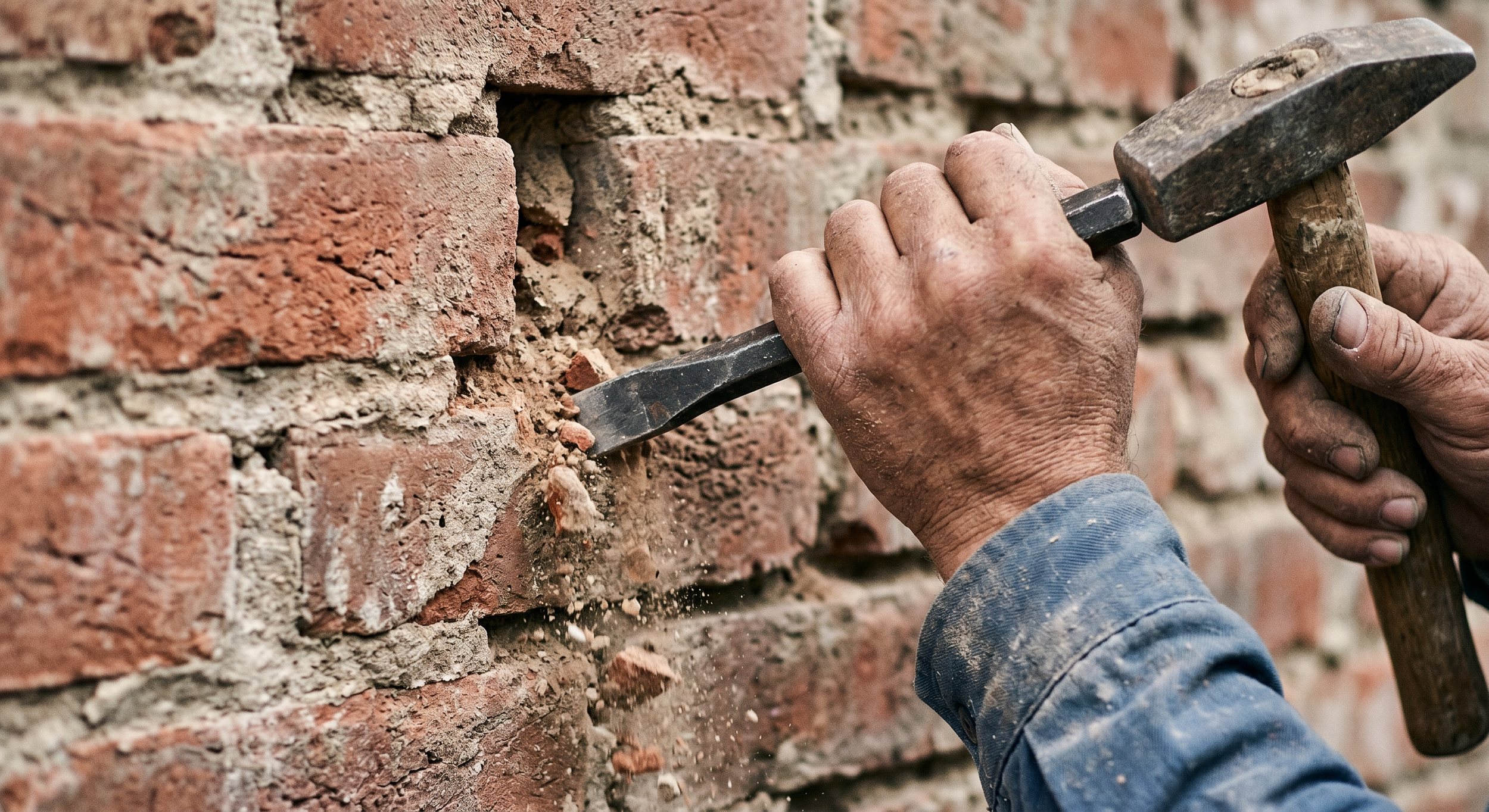
Repointing is the most common repair for deteriorated mortar joints. A mason grinds out the old, crumbling mortar to a depth of roughly 3/4 inch and replaces it with new mortar matched to the original in color, composition, and texture. This is the workhorse of masonry repair — effective for minor to moderate joint erosion across large wall areas.
Tuckpointing is a decorative variation that creates a fine-line appearance by using two contrasting mortar colors. It's most often seen on historic homes and older DFW properties where the original aesthetic is worth preserving. The structural function is the same as repointing, but the visual result is more refined.
Brick replacement is required when individual bricks are too far gone to save — spalled faces, deep cracks, or bricks that have absorbed so much moisture they've lost structural integrity. This is where the matched brick guarantee for Fort Worth specialists becomes critical. Sourcing bricks that match your home's existing color, size, and texture — especially on homes built in the 1960s through 1990s — requires expertise and access to the right suppliers.
Beyond these core techniques, a complete repair often includes weep hole installation or clearing to allow trapped moisture to escape, flashing inspection and repair at wall transitions, and sealing or waterproofing of the repaired surface to reduce future moisture absorption. The cleaning and waterproofing step is frequently skipped by less thorough contractors — but it's what separates a repair that lasts from one that fails in three years.
Ask Your Contractor About Mortar Analysis
A professional mason should perform mortar analysis to determine the composition of your original mortar (lime-based vs. Portland cement). Using the wrong mortar type in repairs can trap moisture and accelerate future deterioration, so this step is essential for long-term durability.
Cost Breakdown: What You'll Pay for Brick Repair in Fort Worth
Repair costs in the DFW market vary significantly based on the extent of damage, accessibility, and material matching complexity. Here's a realistic breakdown for 2026:
| Damage Level | Per Square Foot | Typical Project Range | What's Included |
|---|---|---|---|
| Minor repointing (non-structural) | $5–$25/sq ft | $500–$2,500 | Grinding out deteriorated mortar, replacing with matched mortar |
| Moderate spalling + brick replacement | $25–$75/sq ft | $1,500–$7,500 | Individual brick removal and replacement, repointing, brick matching |
| Extensive damage / structural rebuilding | $75–$150+/sq ft | $10,000–$30,000+ | Wall section demolition, rebuilding, lintel work, weep holes, flashing |
For a deeper look at project-specific pricing examples, see how much it costs to fix a brick wall in DFW.
Beyond the base repair cost, budget for commonly overlooked expenses: water damage remediation behind the veneer ($5,000–$15,000+ if wood rot or mold is present), lintel replacement above windows and doors, efflorescence treatment, scaffolding for above-ground work, and the specialized sourcing required for older or discontinued brick. These hidden costs can easily add 20–40% to an initial estimate.
On timing: spring and fall are peak seasons for masonry contractors in North Texas, with lead times of 4–12 weeks or more for reputable firms. Scheduling in late summer or winter (outside of hard freeze periods) can mean shorter waits and occasionally more competitive pricing. More importantly, addressing minor crumbling now — rather than waiting — is almost always the lower-cost path. Deferred maintenance that costs $2,000–$5,000 today can escalate to $10,000–$50,000+ in combined masonry and water damage repair within three to five years.
DIY vs. Professional Repair: When to Call a Masonry Contractor
The honest answer: very minor cosmetic repointing on a small, ground-level section of wall is technically within reach for a careful, experienced homeowner. But the bar for "DIY-appropriate" is much lower than most people assume.
The most common DIY mistake is using the wrong mortar. Modern Portland cement-based mortar is significantly harder than the lime-based mortars used in older homes. When you apply a harder mortar to a softer brick, the brick becomes the weakest point — moisture and stress concentrate at the brick face rather than the mortar joint, accelerating the very spalling you were trying to fix. A professional mason performs mortar analysis first, then custom-mixes a compatible replacement. That's not a step you can replicate at a hardware store.
Any repair that involves extensive spalling, deep cracks, signs of moisture intrusion behind the wall, structural concerns, or work above ground level requires a licensed professional. This isn't just about quality — it's about liability. Structural masonry repairs in Fort Worth typically require a building permit from the City of Fort Worth Planning and Development Department. Unpermitted structural work can complicate home sales, void insurance claims, and leave you personally liable for any resulting damage. For a clear comparison of what professional expertise delivers versus DIY risk, the analysis of DIY vs. professional masonry for outdoor kitchens and repairs lays out the quality and durability stakes in plain terms.
Professional masons also bring workmanship warranties — typically 5–10 years from reputable firms. If a DIY repair fails in year two, you're starting over at your own expense. That accountability gap alone often justifies the professional cost.
How to Choose a Masonry Contractor in Fort Worth
Texas has no state-level masonry license, which means the market ranges from highly skilled craftsmen with decades of DFW experience to unlicensed storm-chaser crews that disappear after cashing a deposit check. Knowing how to vet contractors is the most important skill a Fort Worth homeowner can develop before getting quotes.
Start with insurance. Ask for a certificate of general liability insurance ($1M+ minimum) and worker's compensation coverage, and request that the certificate name you as an additional insured. This protects you if a worker is injured on your property or if the repair causes collateral damage. Any contractor who hesitates to provide this documentation should be disqualified immediately.
Next, ask for references — not testimonials on their website, but actual contact information for three or more recent Fort Worth brick repair projects. Call those references. Ask whether the repair held up, whether the mortar matched, and whether the contractor communicated clearly about unexpected issues. A portfolio of photos from local projects is also valuable, particularly for matching older brick styles common in Tarrant County neighborhoods.
Require a detailed written quote that specifies the brick type, mortar composition and color, repair method, timeline, and total cost breakdown by labor and materials. Vague quotes — "repair crumbling brick, $X" — are a red flag. A qualified contractor will also explain the root cause of the crumbling and describe how the repair addresses it. If they can't or won't have that conversation, move on.
For a broader look at local providers and what separates the best from the rest, the guide to masonry contractors in Fort Worth and surrounding areas offers useful context on the local market.
Fort Worth's Expansive Clay Soils Are a Real Challenge
If you're seeing stair-step cracks or bowing in your brick, you're not alone — Fort Worth's notorious expansive clay soils cause foundation movement that directly stresses brick veneers. This is a local issue that requires contractors experienced in DFW-specific repair techniques.
Watch for these red flags: pressure for large upfront payments (over 30–40% of the total is a warning sign), no written contract, dismissal of permit requirements for structural work, vague or verbal-only pricing, and refusal to provide references. After major hail events, be especially cautious of crews canvassing your neighborhood — legitimate masonry contractors don't need to knock on doors the day after a storm.
Why Brick and Stone Master is the Right Choice for Fort Worth Homeowners
When your home's brick is crumbling, you need more than a contractor who can mix mortar — you need someone who understands why Fort Worth brick fails and how to fix it so it stays fixed. Brick & Stone Master has been doing exactly that across the DFW metroplex for nearly 30 years.
Owner Bill Schultheis has been in masonry since 1983 — four decades of hands-on experience that includes deep familiarity with the clay soil challenges, freeze-thaw cycles, and hail exposure that make North Texas one of the most demanding environments for brick in the country. That experience isn't just a credential; it shapes how every project is diagnosed and executed.
The guaranteed brick and mortar matching process is a genuine differentiator. On a Fort Worth home built in the 1970s or 1980s, finding brick and mortar that blends seamlessly with the existing wall requires sourcing expertise and a practiced eye. Brick & Stone Master guarantees that match — old-to-new color and texture — so repairs don't look like patches.
The company is fully insured with a .96 EMR safety record, meaning their on-site safety practices are consistently above industry standard. And with 331+ five-star Google reviews reflecting hundreds of completed Fort Worth projects, the track record speaks for itself. Homeowners consistently cite clear communication, professional crews, and repairs that hold up over time.
Schedule a Free Consultation with Brick and Stone Master — get expert diagnosis and a detailed repair plan tailored to your Fort Worth home before small cracks become a structural problem.
Frequently Asked Questions
Very minor cosmetic repointing of a small, shallow area on a ground-level wall is technically within reach for an experienced homeowner — but the margin for error is narrow. Extensive crumbling, spalling, deep cracks, or any signs of moisture intrusion or structural stress always require a professional mason. Using the wrong mortar composition is the most common DIY mistake; it traps moisture against the brick face and accelerates the deterioration you were trying to stop, often leading to more costly repairs within a few years.
Yes — in Fort Worth, this is a real and common scenario. Expansive clay soils cause foundations to shift seasonally, and that movement translates directly into stress on brick veneers. Stair-step cracks in mortar joints, bowing walls, or cracks that extend from the exterior through to interior drywall are all signs that foundation movement may be the underlying driver. A qualified mason should assess the cause before any repair work begins, and if foundation issues are suspected, a structural engineer should also be consulted to evaluate the full picture.
Homeowner's insurance typically covers brick damage that results directly from a sudden, accidental covered peril — severe hail or wind storm damage being the most common in North Texas. It generally does not cover damage from normal wear and tear, long-term neglect, or gradual foundation settlement unless you carry specific coverage for those causes. If you experienced a recent storm and are seeing new crumbling or chipping, document the damage thoroughly with photos and file a claim promptly, as insurers often have strict post-storm filing windows.
Matching is critical — both aesthetically and structurally. Using a mortar that's harder than the original (a common mistake with modern Portland cement mixes) forces moisture and stress into the brick face rather than the joint, causing the very spalling you're trying to prevent. On older Fort Worth homes, the original mortar is often lime-based, requiring a custom mix to match composition, color, and texture. A skilled mason performs mortar analysis before mixing anything, and sources replacement brick by size, color, and surface texture to ensure the repair blends with the existing wall rather than standing out as a patch.
Brick & Stone Master combines three decades of DFW masonry expertise under owner Bill Schultheis — in the trade since 1983 — with a guaranteed brick and mortar matching process that ensures seamless, durable repairs tailored to Fort Worth's unique clay soil and climate challenges. Backed by 331+ five-star Google reviews and fully insured with a .96 EMR safety record, the team delivers professional accountability and quality workmanship that protect your home's long-term structural integrity. Schedule a Free Consultation today to get expert diagnosis and a detailed repair plan for your crumbling brick.
Ready to Stop Crumbling Brick Before It Becomes a Costly Problem?
Fort Worth's clay soils, freeze-thaw cycles, and hailstorms put real stress on brick — and small areas of spalling rarely stay small. Brick & Stone Master will diagnose the root cause, match your existing brick and mortar exactly, and deliver a repair built to last in DFW's demanding climate. Your consultation is free, and there's no obligation.
Schedule a Free Consultation*Pricing, project scope, and material availability mentioned in this article are accurate as of the date of publication and are subject to change. Masonry estimates depend on site conditions, material matching, and access, and are finalized after an on-site evaluation. Please contact us directly for a current quote on your specific project.