
Key Takeaways
- DFW's 69.4 annual freeze-thaw cycles make unsealed mortar joints a critical vulnerability — water trapped in joints expands when frozen, causing spalling, cracking, and structural failure that compounds rapidly without intervention.
- Penetrating silane/siloxane sealers are the only appropriate choice for exterior brick monument signs — film-forming sealers trap moisture inside masonry and accelerate deterioration in freeze-thaw climates.
- Proactive waterproofing costs $0.50–$4.00 per square foot; deferred maintenance can escalate to complete structural repair costing 5–10 times the original estimate — early intervention is the only financially sound strategy.
- Efflorescence removal and thorough mortar joint preparation are non-negotiable before sealing — skipping these steps causes premature sealer failure and allows salt crystals to continue accumulating beneath the coating.
- Trust Brick & Stone Master for expert monument sign waterproofing, guaranteed brick and mortar matching, and nearly 30 years of DFW masonry experience — visit Brick & Stone Master to protect your community's most visible asset.
Why Is Waterproofing Brick Monument Signs Critical for DFW Property Managers?
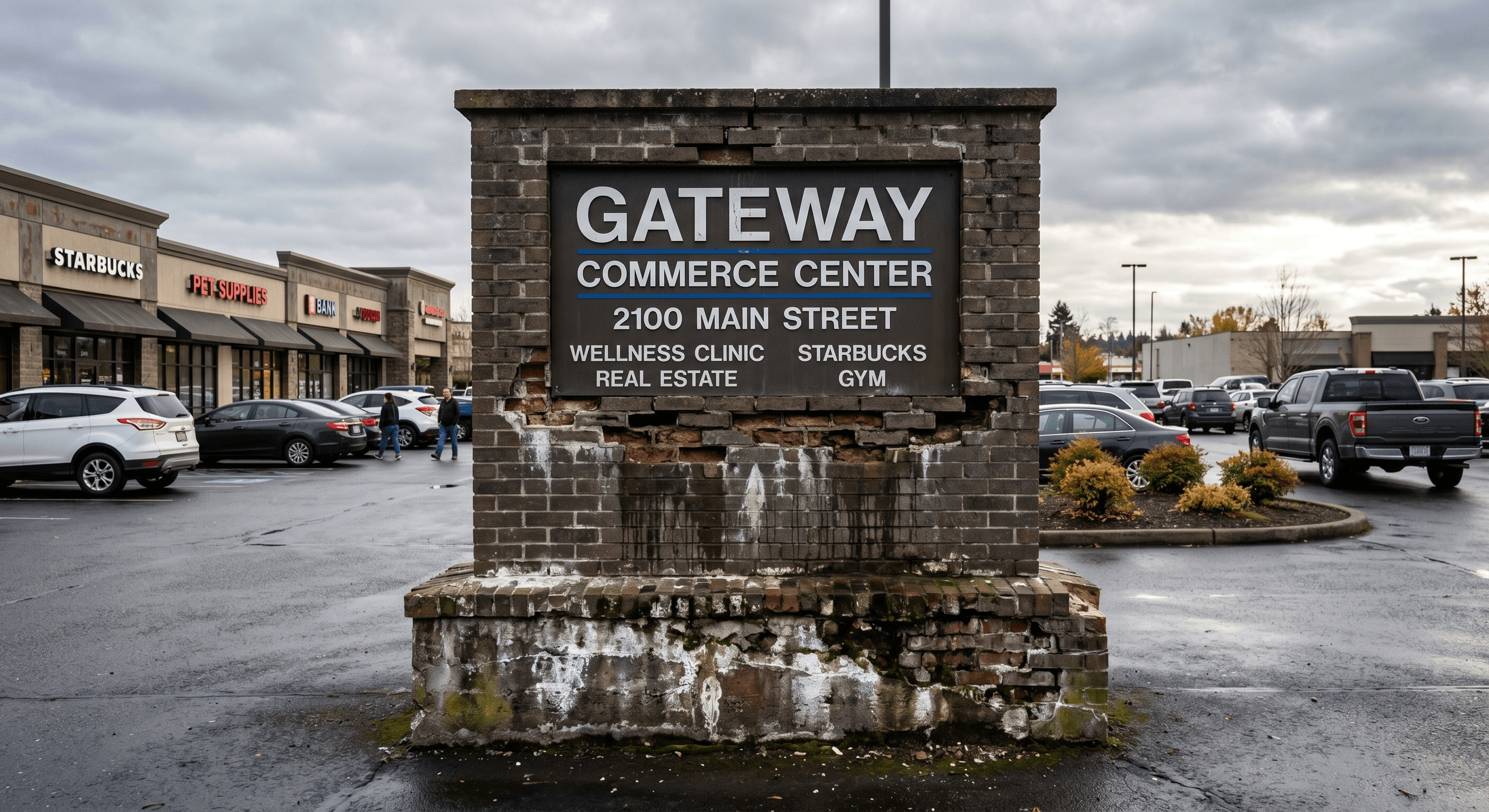
Brick monument signs are constant targets for water infiltration, and in the DFW climate—with 69.4 annual freeze-thaw cycles, intense UV exposure, and expansive clay soils—unsealed mortar joints can lead to catastrophic damage within just a few years. Proactive waterproofing of mortar joints using penetrating sealers is the most cost-effective defense against spalling, efflorescence, structural cracks, and repairs that can cost 5–10 times more than preventive sealing. Understanding how water moves through masonry and when to seal is the difference between a monument sign that lasts decades and one that requires emergency reconstruction.
This guide walks you through the science of water infiltration, the DFW market landscape for waterproofing services, regulatory requirements, and the exact steps to protect your brick monument sign investment.
Brick & Stone Master
Free Consultation & Guaranteed Brick & Mortar Match
Core Service Programs:
- Masonry Repair & Restoration for crack repair, brick and mortar matching, chimney repair, and structural masonry
- New Masonry & Outdoor Living for fireplaces, outdoor kitchens, patios, driveways, columns, and mailboxes
- HOA & Commercial Masonry for screening walls, entryways, monument signs, and commercial buildings
Why Choose Brick & Stone Master:
- ✓ Trusted by customers with 331+ five-star Google reviews
- ✓ Owner Bill Schultheis has worked in masonry since 1983 — four decades of the craft
- ✓ Serving the Dallas-Fort Worth metroplex for nearly 30 years
- ✓ Brick and mortar matches guaranteed — old-to-new color and texture
- ✓ Fully insured and debt-free, with a .96 EMR safety record
- ✓ One masonry partner for homeowners, HOAs, property managers, and commercial
- ✓ Free consultations and a military discount for those who served
Understanding Water Infiltration in Brick Monument Signs
Water infiltration is the leading cause of masonry deterioration — and it's deceptive. Damage often develops silently inside mortar joints for months or years before it becomes visible on the surface. By the time spalling, cracking, or structural displacement is apparent, the underlying deterioration is typically far more extensive than what the eye can see.
Mortar joints are the primary entry point for water into brick masonry. Unlike the brick units themselves, mortar is more porous and more susceptible to weathering. Even hairline cracks — gaps smaller than 1/16 of an inch — allow capillary action to draw moisture deep into the wall system. Once inside, that moisture follows the path of least resistance, saturating the mortar and eventually the brick itself.
In freeze-thaw climates like DFW, the consequences accelerate quickly. Water expands approximately 9% in volume when it freezes. Trapped inside mortar joints, that expansion exerts enormous pressure on surrounding brick and mortar — pressure that exceeds the tensile strength of most masonry materials. Each freeze-thaw cycle widens existing cracks, loosens mortar, and progressively weakens the structure. Understanding how freeze-thaw cycles damage brick structures in North Texas is foundational to making smart waterproofing decisions.
Efflorescence — those white, chalky salt deposits that appear on brick surfaces — is one of the clearest early warning signs of active water movement through masonry. When water migrates through brick and mortar, it carries soluble salts to the surface. When the water evaporates, the salts crystallize and remain. Efflorescence that reappears after cleaning or rain isn't a cosmetic nuisance; it's a diagnostic signal that water infiltration is ongoing and that immediate intervention is warranted.
The DFW Climate: A Perfect Storm for Brick Deterioration
Few metropolitan areas in the country subject brick masonry to the combination of stresses that DFW delivers year-round. The region's climate doesn't just challenge monument signs — it actively tests every weakness in their construction.
At 69.4 freeze-thaw cycles annually, DFW sits well above the national average for many regions. Dallas averages 23 nights per year where temperatures dip to freezing, and those cycles don't occur gradually — they can happen within a single 24-hour period during North Texas winters. Each cycle puts mechanical stress on mortar joints, and unsealed joints accumulate damage with every passing season.
Expansive clay soils compound the problem significantly. North Texas sits on some of the most reactive clay geology in the country. These soils swell when saturated and shrink when dry, creating foundation movement that stresses rigid masonry structures. A monument sign anchored in clay soil experiences micro-shifts throughout the year that gradually open new cracks in mortar joints — even in signs that were properly built and sealed at installation. The relationship between soil movement and masonry integrity is one reason why masonry failures in DFW often have multiple contributing causes.
Add DFW's intense UV exposure and summer heat — temperatures regularly exceeding 100°F — and sealants that might last 10–15 years in moderate climates begin breaking down in 5–8 years. Spring hail seasons deliver sudden hydrostatic pressure to monument sign faces, driving water into any unsealed or deteriorated joint. For property managers and HOA boards, this isn't a worst-case scenario — it's the standard operating environment.
Penetrating vs. Film-Forming Sealers: Choosing the Right Product
Sealer selection is where many well-intentioned waterproofing projects go wrong. The market offers two fundamentally different approaches to protecting brick masonry, and choosing the wrong one doesn't just fail to protect your monument sign — it actively accelerates its deterioration.
Penetrating sealers — typically silane/siloxane-based formulations — work by soaking into the pore structure of brick and mortar. Once cured, they create an invisible, breathable hydrophobic barrier that repels liquid water while still allowing water vapor to escape from within the masonry. This breathability is critical. Brick and mortar always contain some residual moisture, and that moisture needs a path out. Penetrating sealers provide water repellency without trapping what's already inside. In DFW's climate, quality penetrating sealers typically perform for 5–10 years before reapplication is needed, with premium products rated for up to 15 years under more moderate conditions. For comprehensive protection, pairing penetrating sealers with an understanding of flexible vs. rigid masonry sealants for weather expansion helps property managers make fully informed product decisions.
The Film-Forming Sealer Trap
Many property managers are sold film-forming sealers because they're cheaper upfront, but they trap moisture inside brick and mortar, causing spalling and accelerated deterioration in DFW's freeze-thaw climate. Always specify penetrating, breathable sealers for exterior brick.
Film-forming sealers take the opposite approach — they coat the surface, creating a visible or semi-visible membrane. The problem is that this membrane also seals in moisture. When water vapor from inside the masonry can't escape, pressure builds beneath the coating. In freeze-thaw conditions, this trapped moisture freezes, expands, and causes the very spalling and delamination the sealer was supposed to prevent. Film-forming products may be appropriate for some interior applications or specific stone types, but they have no place on exterior clay brick monument signs in North Texas.
Manufacturer-certified applicator status matters here. Many premium silane/siloxane products require certified application to maintain warranty validity. A contractor who isn't certified on the specific product they're applying puts both the warranty and the outcome at risk.
The Professional Waterproofing Process: Preparation Is Everything
The quality of a waterproofing project is determined almost entirely by what happens before the sealer is ever applied. Contractors who skip or rush preparation steps produce results that fail prematurely — often within a year or two — leaving property managers with the same problem plus the cost of remediation.
Thorough cleaning comes first. All dirt, biological growth, and especially efflorescence must be completely removed. Salt deposits left on the surface prevent proper sealer adhesion and continue migrating through the masonry beneath the new coating. Efflorescence removal typically requires specialized cleaners applied in multiple passes, not a single pressure wash.
Mortar joint preparation follows. Loose, deteriorated, or recessed mortar must be removed — typically ground out to a depth of 3/4 inch — before new mortar is installed and the surface is sealed. Applying sealer over compromised joints doesn't fix the underlying problem; it conceals it temporarily while water continues infiltrating through the damaged areas. For signs with significant joint deterioration, repointing vs. tuckpointing for brick wall restoration is an important distinction to understand before authorizing work.
The Water Bead Test: Your Annual Checkup
Once your monument sign is sealed, perform a simple water bead test annually: spray water on the brick surface. If beads form and roll off, the sealer is still effective. If water soaks in, it's time to reseal. This $0 inspection can save thousands in damage.
Capstone and base drainage inspection is a step many contractors overlook entirely. The capstone — the horizontal surface at the top of the sign — is the single highest-risk water entry point. If it isn't properly sloped, sealed, or flashed, water pools directly above the mortar joints and saturates the structure from the top down. Similarly, poor drainage at the sign's base allows water to wick upward through the foundation. Even a flawlessly sealed face can fail if water is entering from above or below.
Sealer application itself requires proper conditions: surface temperatures within the product's specified range, dry masonry, and in some cases, multiple coats applied at timed intervals. Rushing the process or applying sealer to damp brick produces adhesion failures that become apparent within the first season. Annual water bead tests and professional inspections are the ongoing maintenance commitment that keeps a properly sealed sign protected for the long term.
Cost Analysis: Waterproofing vs. Deferred Maintenance
The financial case for proactive waterproofing is straightforward, and the numbers are not close. Basic penetrating sealer application runs $0.50–$4.00 per square foot for a well-maintained surface. Full mortar joint repointing combined with sealing ranges from $10–$40 per square foot depending on brick type, mortar specification, and the extent of existing deterioration. These are manageable, budgetable expenses for any HOA or commercial property maintenance plan.
Deferred maintenance tells a different story. What begins as minor joint deterioration — addressable with cleaning and sealing — progresses to structural cracking, spalling brick faces, and compromised capstones. Each season without intervention allows water to work deeper into the structure, widening cracks and weakening the masonry core. Industry data consistently shows that delayed intervention results in repair costs 5–10 times the original estimate. A $2,000 sealing project ignored for three to five years can become a $15,000–$25,000 structural restoration. For a detailed breakdown of what full-scale repairs actually cost in this market, the monument sign repair costs in Fort Worth and Tarrant County are worth reviewing before making any deferral decisions.
You're Not Alone: HOA Waterproofing Challenges Are Common
Thousands of DFW HOAs face the same decision: invest in proactive waterproofing now or risk emergency repairs later. The good news is that with proper sealing and maintenance, brick monument signs can last 30+ years, protecting your community's curb appeal and property values.
Complete monument sign restoration — structural repair, full repointing, cap replacement, and sealing — can range from $5,000 to $100,000 or more depending on sign size, design complexity, and damage severity. Texas ranks third nationally for HOA prevalence, with approximately 22,900 associations statewide. For the DFW communities driving that number, protecting monument signs through proactive maintenance isn't just good stewardship — it directly supports property values and community aesthetics that HOA boards are accountable for maintaining.
Professionally executed repointing, when done correctly, can last 20–30 years. A quality penetrating sealer extends that protection further. The ROI on proactive waterproofing — measured against the cost of emergency reconstruction — is among the highest available in any property maintenance budget.
Selecting a Qualified Waterproofing Contractor in DFW
The DFW market includes a wide range of masonry contractors, and the quality gap between the best and the worst is significant. For property managers and HOA boards authorizing work on community assets, credential verification isn't optional — it's due diligence.
Start with registration verification. Texas does not issue a statewide general contractor license, but masonry contractors performing specialized work are required to register with the Texas Department of Licensing and Regulation (TDLR). Verify registration status through TDLR's online search tool at tdlr.texas.gov, and confirm business standing through the Texas Secretary of State's SOSDirect portal. Always request a current Certificate of Insurance directly from the contractor's insurance provider — not just a copy from the contractor — confirming general liability coverage at a minimum of $1 million per occurrence and workers' compensation coverage.
Look for Mason Contractors Association of America (MCAA) credentials and manufacturer-certified applicator status for the specific sealer product being proposed. These certifications indicate that the contractor has been trained on the products and techniques they're recommending — and that manufacturer warranties will be honored.
Red flags to watch for: any contractor proposing film-forming sealers on dense exterior brick, proposals that skip mortar joint preparation or efflorescence removal, vague or verbal-only warranty terms, and unsolicited offers following severe weather. Storm chasers offering "free sealing" after hail events are a known predatory pattern in DFW. The Texas Deceptive Trade Practices Consumer Protection Act (DTPA) provides meaningful recourse — successful claims can recover up to three times economic damages — but avoiding bad actors in the first place is far preferable to litigation. For a vetted list of qualified providers in this market, the best brick monument sign repair companies in Fort Worth is a useful starting point for comparison.
Reputable contractors provide written proposals with itemized scope, references from other HOAs or commercial properties, and clear labor and material warranties with specific terms and maintenance requirements. HOA boards should solicit a minimum of three bids for any significant waterproofing project and involve property management professionals in evaluating proposals before authorizing work.
Why Brick & Stone Master Is the Right Choice for DFW Monument Sign Waterproofing
When it comes to protecting brick monument signs in the DFW metroplex, experience with local conditions isn't a nice-to-have — it's the foundation of every sound recommendation. Owner Bill Schultheis has been in masonry since 1983, bringing more than four decades of hands-on craft knowledge to every project. That depth of experience translates directly into better sealer selection, more accurate joint assessment, and waterproofing approaches calibrated to DFW's specific freeze-thaw patterns, clay soil movement, and UV intensity — not generic regional advice.
Brick & Stone Master's guaranteed brick and mortar matching means that any joint preparation or repair work blends seamlessly with original construction. For HOA communities where aesthetic consistency is a board priority, this guarantee removes one of the most common concerns about masonry restoration work. The cleaning and waterproofing services offered by Brick & Stone Master cover the full preparation-to-sealing process — efflorescence removal, joint preparation, proper sealer selection, and ongoing maintenance guidance — so nothing gets skipped in the interest of speed or cost-cutting.
With 331+ five-star Google reviews from satisfied HOAs and commercial property owners across DFW, a fully insured operation with a .96 EMR safety record, and nearly 30 years serving this specific market, Brick & Stone Master has built the kind of track record that property managers can present to boards with confidence. This isn't a contractor who learned masonry in a different climate and relocated — this is a team that has spent decades understanding exactly what DFW does to brick.
Frequently Asked Questions
For exterior brick monument signs, a penetrating sealer — typically silane/siloxane-based — is the correct choice in virtually every situation. These sealers soak into the brick and mortar, creating an invisible, breathable barrier that repels liquid water while allowing trapped moisture vapor to escape from within the masonry. Film-forming sealers coat the surface and seal in moisture, which leads to spalling, peeling, and accelerated efflorescence — especially damaging in DFW's freeze-thaw climate where trapped moisture expands and contracts with every temperature cycle. If a contractor recommends a film-forming product for exterior brick, that recommendation alone is a disqualifying red flag.
Penetrating silane/siloxane sealers typically last 8–15 years in moderate climates, but DFW's combination of 69.4 annual freeze-thaw cycles, intense UV exposure, and temperature extremes shortens that window considerably. In this market, annual professional inspections are the standard recommendation, and reapplication is often needed in the 5–10 year range rather than at the product's maximum rated lifespan. The simplest ongoing check is the water bead test: spray water on the sealed surface annually — if it beads and rolls off, the sealer is still working; if it soaks in, reapplication is due.
The earliest and most reliable indicator is efflorescence — white, powdery salt deposits that appear on brick surfaces and reappear after cleaning or rain. This signals active water movement through the masonry. Other early signs include mortar joints that feel soft or sandy when scratched with a key, subtle darkening or discoloration of joints when wet that takes unusually long to dry, and recessed mortar joints deeper than 1/4 inch. None of these require visible structural cracking to be serious — catching them at this stage is precisely when intervention is most cost-effective.
Yes — completely and without exception. Efflorescence consists of salt crystals that have migrated to the surface through moisture movement. If those salt deposits aren't fully removed before sealing, the sealer cannot bond properly to the masonry surface, leading to blistering, peeling, and premature failure. More critically, salt crystals left beneath a new sealer coating continue to accumulate as moisture moves through the masonry, building pressure that eventually causes the coating to fail from the inside out. Thorough efflorescence removal — typically requiring specialized chemical cleaners applied in multiple passes — is a non-negotiable preparation step, not an optional upgrade.
Brick & Stone Master combines three decades of masonry expertise under owner Bill Schultheis — in the trade since 1983 — with a proven track record built specifically in the DFW metroplex. The company provides guaranteed brick and mortar matching, maintains full insurance with a .96 EMR safety record, and has earned 331+ five-star Google reviews from satisfied HOAs and commercial property owners across the region. The comprehensive waterproofing approach covers thorough joint preparation, complete efflorescence removal, proper sealer selection calibrated to DFW's freeze-thaw climate, and clear ongoing maintenance guidance — nothing is skipped, and the work is backed by the kind of reputation that HOA boards can present to their communities with confidence. Schedule a Free Consultation today to get a detailed assessment of your monument sign's waterproofing needs.
Ready to Waterproof Your DFW Brick Monument Sign?
Your community's monument sign faces 69.4 freeze-thaw cycles, expansive clay soils, and intense UV exposure every year — and unsealed mortar joints don't stand a chance against that combination for long. Proactive waterproofing now is the difference between a sign that lasts 30+ years and one that requires emergency reconstruction within a decade. Brick & Stone Master brings nearly 30 years of DFW masonry expertise, guaranteed brick and mortar matching, and a comprehensive preparation-to-sealing process that protects your investment for the long term.
Schedule a Free Consultation*Pricing, project scope, and material availability mentioned in this article are accurate as of the date of publication and are subject to change. Masonry estimates depend on site conditions, material matching, and access, and are finalized after an on-site evaluation. Please contact us directly for a current quote on your specific project.