
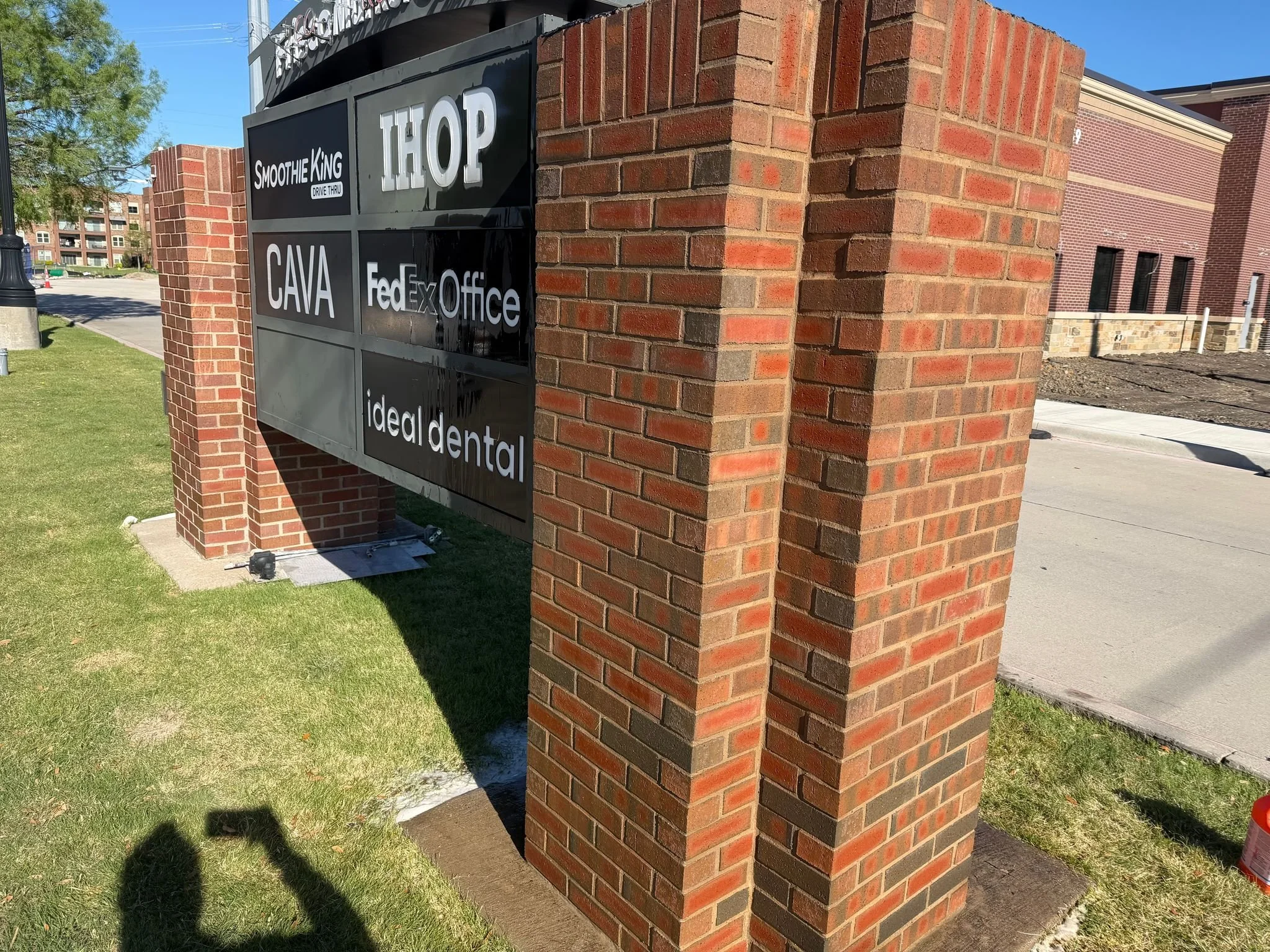
Key Takeaways
- Monument sign repair in Fort Worth ranges from $300 for minor crack sealing to $25,000+ for full structural restoration, with most mid-range projects landing between $2,000 and $8,000.
- Fort Worth's expansive Blackland Prairie clay soils cause severe shrink-swell cycles that crack foundations and tilt signs — a uniquely costly problem that pushes DFW masonry repair pricing 15–30% above the national average.
- Texas has no state-level masonry license; verify that any contractor holds a City of Fort Worth Contractor Registration, active General Liability insurance, and — for illuminated signs — a TDLR Electrical Sign Contractor's license.
- Deferred maintenance turns a $2,000–$5,000 repair into a $15,000–$50,000+ full replacement within 5–10 years; annual inspections and timely tuckpointing are the highest-ROI investments for HOAs and commercial property owners.
- Trust Brick and Stone Master for expert monument sign repair backed by 331+ five-star Google reviews, guaranteed brick and mortar matching, and 30+ years of DFW masonry experience — visit Brick and Stone Master to protect your investment.
How Much Does Monument Sign Repair Cost in Fort Worth and Tarrant County?
Monument sign repair in Fort Worth typically ranges from $500 for minor mortar repairs to $25,000+ for extensive structural restoration, with most mid-range repairs falling between $2,000 and $8,000. The final cost depends on damage extent, material type, foundation issues, and whether electrical components need repair. Understanding these cost drivers — plus local soil conditions, seasonal demand, and contractor credentials — helps property owners and HOA boards budget accurately and avoid costly surprises.
This guide breaks down the full pricing landscape, regulatory requirements, and market dynamics specific to Fort Worth and Tarrant County so you can confidently evaluate repair proposals and protect your investment.
Brick & Stone Master
Free Consultation & Guaranteed Brick & Mortar Match
Core Service Programs:
- Masonry Repair & Restoration for crack repair, brick and mortar matching, chimney repair, and structural masonry
- New Masonry & Outdoor Living for fireplaces, outdoor kitchens, patios, driveways, columns, and mailboxes
- HOA & Commercial Masonry for screening walls, entryways, monument signs, and commercial buildings
Why Choose Brick & Stone Master:
- ✓ Trusted by customers with 331+ five-star Google reviews
- ✓ Owner Bill Schultheis has worked in masonry since 1983 — four decades of the craft
- ✓ Serving the Dallas-Fort Worth metroplex for nearly 30 years
- ✓ Brick and mortar matches guaranteed — old-to-new color and texture
- ✓ Fully insured and debt-free, with a .96 EMR safety record
- ✓ One masonry partner for homeowners, HOAs, property managers, and commercial
- ✓ Free consultations and a military discount for those who served
Local Market Context: Why Fort Worth Monument Sign Repair Costs What It Does
Fort Worth is one of the fastest-growing cities in the United States. It surpassed 1 million residents in 2025 and added 19,512 people between July 2024 and July 2025 alone — the second-largest numeric gain of any U.S. city. The DFW metro now sits at approximately 8.47 million people, and $5.72 billion in commercial building projects were completed in Fort Worth in 2025, a 19% increase over the prior year. That volume of growth means a constant stream of new monument signs being installed — and an equally constant backlog of aging signs in established master-planned communities that need repair.
But population growth alone doesn't explain why repair costs run 15–30% above the national average. The real driver is geology. Fort Worth sits on Blackland Prairie clay — an expansive soil that swells dramatically when wet and contracts sharply during dry spells. This shrink-swell cycle exerts enormous lateral and vertical force on any rigid structure anchored in the ground, including monument sign foundations. More than 70% of land in DFW is reported to be gradually sinking due to groundwater extraction and urban weight, compounding the problem. Understanding brick repair in Texas clay soil and foundation movement is essential context before you evaluate any repair proposal.
Layer on top of that 3–4 severe hail events per year, winter freeze-thaw cycles that crack mortar joints, and a skilled masonry labor market under sustained pressure from commercial development demand — and the pricing premium becomes straightforward to explain. This is not a market where the cheapest bid is the safest choice.
Monument Sign Repair Cost Breakdown: What You'll Actually Pay in 2026
Costs vary widely based on scope, materials, and site conditions. The table below reflects 2026 Fort Worth and Tarrant County market pricing across the most common repair scenarios.
| Repair Tier | Estimated Cost Range | Typical Scope |
|---|---|---|
| Minor / Entry-Level | $300 – $2,500 | Spot tuckpointing, small crack repair, sealant application on limited areas |
| Mid-Range Repair | $1,500 – $8,000 | Brick or stone section replacement, cap/coping repair, minor foundation stabilization |
| Illuminated Sign Components | $2,500 – $8,000+ | LED module replacement, wiring repair, transformer replacement |
| Structural / Foundation Repair | $5,000 – $15,000+ | Helical pier underpinning, major cracking, large-section masonry rebuild |
| Full Masonry Restoration | $8,000 – $25,000+ | Comprehensive overhaul: tuckpointing, brick/stone replacement, cleaning, sealing, structural reinforcement |
Pro Tip: Schedule Repairs During Off-Peak Seasons for Better Pricing
Contractors often offer more competitive pricing and faster scheduling during traditionally slower periods (late fall or deep winter, weather permitting). If your repair is non-emergency, planning ahead and scheduling during off-peak times can yield significant cost savings and greater scheduling flexibility.
Cost Drivers Specific to Fort Worth and Tarrant County
Sign size and material type are the primary variables. Standard brick is the most affordable and easiest to source; natural limestone or granite commands a premium due to quarrying, cutting, and the skill required for seamless installation. Stucco veneer is typically the least expensive to repair but demands a specialist who understands its unique behavior in Texas heat cycles.
Foundation damage caused by expansive clay movement is the single biggest cost escalator. Minor surface stabilization runs $2,000–$7,000, but helical pier underpinning — necessary when a sign has shifted significantly — can push costs past $10,000 before a single brick is replaced. Access difficulty also matters: signs near high-traffic roadways or on uneven terrain require scaffolding or boom lifts, adding both equipment rental and labor time. HOA architectural guidelines that mandate precise material matching or require formal board approval add another layer of cost and scheduling complexity. For a deeper look at mortar matching and why it matters aesthetically, the comparison of color-matched vs. natural gray mortar repair appearance in DFW is worth reviewing before you approve any proposal.
Hidden costs that frequently catch property managers off guard include permit fees ($100 to several hundred dollars), structural engineering assessments ($500–$1,500), electrical subcontractor work for illuminated signs, landscaping restoration after excavation, and specialty material sourcing fees when older or discontinued brick styles need to be matched. Budget for these line items upfront — a contractor who doesn't mention them isn't being thorough.
What Factors Drive Monument Sign Repair Costs Up or Down
Material sourcing complexity is often underestimated. Matching brick manufactured decades ago — with its specific color, texture, and size — can require sourcing from specialty suppliers or salvage yards, adding both time and cost. The same applies to natural stone: a limestone monument sign built in the 1990s may require custom-cut stone to achieve a seamless repair. Shortcuts here are visible and permanent.
Mortar color and texture matching is a skilled craft, not an afterthought. Experienced masons custom-blend sand, cement, and pigments to replicate the exact hue and aggregate texture of aged mortar. Inaccurate matching creates a patchwork appearance that undermines the entire repair investment — and it's one of the most common complaints property managers have about low-bid contractors. This is covered in detail in the guide to repointing vs. tuckpointing brick wall restoration for DFW properties.
Seasonal timing affects both price and scheduling. Spring and early summer — peak hail season — drive a surge in repair demand that extends lead times and reduces contractor flexibility on pricing. Scheduling non-emergency repairs in late fall or early winter, when demand drops, often yields better pricing and faster project starts. Keep in mind that mortar curing requires temperatures between 40°F and 90°F, so winter work may require temporary enclosures and heating, which adds cost but is manageable for a qualified contractor.
The most important cost variable of all is how long you wait. Ignoring a $500 tuckpointing job today can turn into a $15,000–$50,000 structural rebuild within 5–10 years as water infiltrates failed mortar joints, freeze-thaw cycles expand internal cracks, and clay soil movement compounds the damage. The math on deferred maintenance is unambiguous — and it's why proactive annual inspections are the highest-ROI maintenance activity for any masonry monument sign.
Regulatory Requirements and Contractor Licensing in Fort Worth
Texas does not issue a state-level masonry contractor license. That means the primary credential to verify for any masonry work in Fort Worth is a valid City of Fort Worth Contractor Registration with the Development Services Department. Any contractor performing work that requires a permit — which includes most structural or electrical sign repairs — must hold this registration. Don't accept a contractor's word on this; verify the registration number directly with the city.
For illuminated monument signs, the requirements go further. Electrical sign work requires a Texas Electrical Sign Contractor's license from the Texas Department of Licensing and Regulation (TDLR). You can verify active licenses and check for disciplinary history at tdlr.texas.gov/licensing.htm. If a contractor says they handle electrical work but can't produce a TDLR license number, that's a hard stop.
Most structural or electrical sign repairs require a City of Fort Worth building permit. A reputable contractor pulls the permit and includes the fee in the quote — if a contractor tells you a permit isn't necessary for significant structural work, treat that as a red flag. Fort Worth adopts the 2020 Electrical Code and the International Building Code with local amendments, including wind load requirements of 140 mph for North Texas structures. Repairs must comply with current adopted codes.
On insurance: always request a Certificate of Insurance directly from the contractor's insurer — not from the contractor themselves — to confirm active General Liability coverage ($300,000–$1 million minimum) and Workers' Compensation or occupational accident coverage. An uninsured worker injured on your property can become your liability.
Red Flags: What to Avoid When Hiring a Monument Sign Repair Contractor
Avoid contractors who can't provide proof of City of Fort Worth registration, General Liability insurance, or a TDLR license (for electrical signs). Never accept verbal-only quotes or contracts, demand full upfront payment, or work with contractors who dismiss the importance of mortar color matching. Always verify credentials directly with the city or TDLR — don't rely on the contractor's word.
How to Verify a Contractor's Credentials and Check for Disciplinary Actions
Request the contractor's City of Fort Worth Registration number and verify it directly with the Development Services Department. For electrical sign work, search TDLR's online license database at tdlr.texas.gov/licensing.htm to confirm an active license and view any disciplinary actions on record. Request the Certificate of Insurance from the insurer directly. Check Google Reviews, HomeAdvisor, Angi, and Yelp for documented customer experiences — and ask for local references from similar monument sign repair projects in Tarrant County, then actually call them.
Common Monument Sign Damage Patterns in North Texas and Prevention Strategies
You're Not Alone: Monument Sign Damage Is Common in Fort Worth
North Texas's expansive clay soils, frequent hail events, and freeze-thaw cycles make monument sign damage one of the most common property maintenance issues for HOAs and commercial properties. Recognizing the problem early and addressing it proactively is the smart move.
Expansive clay soil movement is the leading cause of cracking, tilting, and structural failure in Fort Worth monument signs — far more prevalent here than in most other U.S. regions. A single cubic foot of saturated Tarrant County clay can exert hundreds of pounds of lateral force against a sign's foundation. Over years, this pressure causes hairline cracks to widen, signs to tilt, and mortar joints to fail from the inside out. The same soil dynamics that damage home foundations are at work on every masonry structure in the ground — as detailed in the guide to how to fix retaining walls in North Texas, where soil engineering principles apply directly.
Hail damage — from 3–4 severe events per year — causes impact cracks and spalling on brick and stone faces. Freeze-thaw cycles compound the problem: moisture that has infiltrated mortar joints expands when it freezes, widening cracks and accelerating deterioration with each winter cycle. Water intrusion through failed mortar joints is particularly damaging for illuminated signs, where moisture reaching electrical components creates both safety hazards and expensive repair scenarios.
Vehicle impacts are more common than most property managers expect, especially for signs positioned near roadways or parking lot entries. Even a low-speed impact can compromise structural integrity in ways that aren't immediately visible on the surface.
Prevention is straightforward: conduct visual inspections at least annually, ensure proper drainage around the sign base to prevent water accumulation, apply a high-quality waterproofing sealant every 5–10 years, and schedule professional tuckpointing every 15–25 years in North Texas's climate. Catching a deteriorating mortar joint early is a $500–$1,500 fix. Waiting until water has compromised the internal structure turns it into a $10,000+ problem.
Financing, Insurance Claims, and ROI for Monument Sign Repair
Most reputable contractors structure payments as a down payment of 20–30% followed by progress payments tied to project milestones. Never pay the full amount upfront — that's a consistent red flag across the industry. For HOA-managed signs, reserve funds are the standard financing mechanism; boards should treat major monument sign repairs as predictable capital expenditures and plan accordingly in long-term reserve studies.
Commercial property insurance and HOA master policies typically cover monument sign damage from sudden, accidental perils — hail, wind, and vehicle impacts are the most common covered events in North Texas. Damage from gradual wear, neglect, or foundation settling is generally excluded, which is why documentation of regular maintenance matters when filing a claim. Working with a contractor experienced in insurance adjustments can significantly streamline the process and improve claim outcomes.
The ROI case for timely repair is strong and straightforward. A well-maintained monument sign communicates professionalism, stability, and attention to detail — it's the first physical impression a customer, tenant, or prospective homebuyer forms of your property. A damaged sign signals neglect, and that perception has measurable consequences for retail foot traffic, tenant retention, and HOA community appeal. Understanding the full spectrum of masonry failures and how to address them helps property owners recognize when a repair is urgent versus when it can be scheduled strategically.
Restoration is typically 2–5 times more cost-effective than full replacement over a 10–15 year horizon. A $3,000–$5,000 repair today preserves a structure that would cost $15,000–$50,000+ to replace from scratch — including new permits, engineering, and construction. The math consistently favors proactive maintenance.
Why Brick and Stone Master Is the Right Choice for Fort Worth Monument Sign Repair
Owner Bill Schultheis has been in the masonry trade since 1983 and has served the DFW metroplex for nearly 30 years. That's not a marketing claim — it's a depth of hands-on experience with North Texas's specific challenges: expansive clay soil movement, freeze-thaw damage, hail impact patterns, and the precise material matching demands of aging brick and stone monument signs. Most contractors can patch a crack. Far fewer understand why the crack appeared and how to address the underlying cause so it doesn't return.
Brick and Stone Master's 331+ five-star Google reviews reflect what that experience looks like in practice: transparent pricing, professional communication, and workmanship that holds up. The company's guaranteed brick and mortar matching means repairs blend seamlessly with existing masonry — not close enough, but actually matched, verified before the job is complete. For HOA boards and commercial property managers who answer to stakeholders about how the property looks, that guarantee matters.
The company is fully insured with a .96 EMR (Experience Modification Rate) safety record — a metric that reflects actual workplace safety performance, not just a certificate on file. A .96 EMR means fewer incidents, better-trained crews, and a contractor that takes accountability seriously on every job site. For monument and entryway sign repair projects where the work happens in visible, high-traffic areas, that level of professionalism is non-negotiable.
Schedule a Free Consultation with Brick and Stone Master — get an accurate, transparent quote from a team with 30+ years of DFW masonry expertise and a track record of 331+ five-star reviews.
Frequently Asked Questions
A detailed quote should specify labor, materials (brick, stone, mortar, rebar), equipment rental (scaffolding, lifts), and debris removal, along with the exact scope of work — for example, tuckpointing a specific linear footage or replacing a defined number of bricks. Common extras to budget for separately include permit fees, structural engineering assessments ($500–$1,500), electrical subcontractor costs for illuminated signs, and unforeseen issues like deteriorated foundations or tree root intrusion discovered during excavation. Always ask for a written, itemized quote — a vague estimate is a setup for cost disputes later.
Repair is the right call when the sign's core structure — its foundation and internal framework — is sound and damage is confined to exterior masonry, caps, or sign faces and lighting components. If the foundation has experienced severe, irreparable movement, or if current building codes require a complete structural redesign, replacement may be the better long-term investment. A professional structural assessment is the only reliable way to make that determination — don't rely on a contractor's verbal opinion without documentation.
Commercial property insurance and HOA master policies generally cover monument sign damage from sudden, accidental perils — hail, wind, and vehicle impacts are the most common covered events in North Texas. Damage from gradual wear, neglect, or foundation settling is typically excluded. Review your specific policy for deductibles, coverage limits, and the claims process before a storm event occurs, not after. Working with a contractor who has experience navigating insurance adjustments can significantly improve the outcome of your claim.
Annual visual inspections for cracks, deteriorating mortar joints, and any signs of foundation shifting are the most important habit you can build. Ensure proper drainage around the sign base to prevent water accumulation — standing water accelerates clay soil movement and mortar deterioration. Apply a high-quality waterproofing sealant every 5–10 years, and schedule professional tuckpointing every 15–25 years in North Texas's climate. Addressing minor issues promptly — a small crack or spalling brick — prevents the exponential cost escalation that comes with deferred maintenance.
Brick and Stone Master brings 30+ years of DFW-specific masonry expertise, with Owner Bill Schultheis in the trade since 1983. The team understands North Texas expansive clay soils, freeze-thaw cycles, and hail damage patterns at a level that generalist contractors simply don't. The company's 331+ five-star Google reviews reflect a consistent track record of guaranteed brick and mortar matching, transparent pricing, and professional communication on every project. Fully insured with a .96 EMR safety record, Brick and Stone Master holds itself to the highest standards of accountability and workmanship. Schedule a Free Consultation today to see how that expertise protects your monument sign investment.
Ready for an Accurate Monument Sign Repair Quote in Fort Worth?
Monument sign damage in Fort Worth's clay soil climate moves fast — what looks like a minor crack today can become a structural failure within a few seasons. Brick and Stone Master has been solving exactly these problems across the DFW metroplex for nearly 30 years, with guaranteed material matching and transparent pricing from the first conversation. Get the expert assessment your property deserves before the next hail season arrives.
Schedule a Free Consultation*Pricing, project scope, and material availability mentioned in this article are accurate as of the date of publication and are subject to change. Masonry estimates depend on site conditions, material matching, and access, and are finalized after an on-site evaluation. Please contact us directly for a current quote on your specific project.