
Key Takeaways
- Concrete block (CMU) has lower base material costs than brick, but mandatory finishing with stucco or stone veneer typically closes the price gap—making total finished project costs comparable for both materials in DFW.
- Both CMU and brick deliver 50+ years of structural life when built on properly engineered, reinforced concrete footings—non-negotiable in DFW's expansive clay soil environment.
- Brick requires minimal long-term maintenance (repointing every 15–20 years), while CMU with stucco or veneer may need crack repair and resealing every 5–7 years, giving brick a slight edge in 10-year cost of ownership.
- DFW outdoor kitchen pricing runs 5–15% above national averages due to local labor rates and strong regional demand; entry-level masonry builds start around $8,000–$12,000 and high-end custom projects can exceed $60,000.
- Trust Brick & Stone Master for DFW outdoor kitchen expertise backed by 30 years of masonry experience and 331+ five-star Google reviews — visit Brick & Stone Master to start planning your build.
Concrete Block vs Brick Outdoor Kitchen: Which Is the Cheapest High-Durability Option for DFW Homeowners?
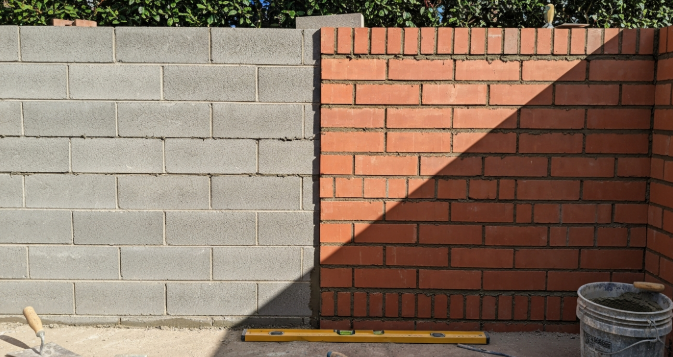
Concrete block (CMU) offers the lowest upfront material cost, but once you factor in finishing materials like stucco or stone veneer, the total project cost often rivals or exceeds a solid brick build. Brick typically costs more per unit but requires minimal finishing, making it the better long-term value for durability and maintenance in DFW's harsh climate. Both materials deliver 50+ years of structural life when properly installed on reinforced footings—the real difference lies in your budget timeline and maintenance tolerance.
Understanding the true cost breakdown, durability profiles, and DFW-specific factors will help you choose the option that delivers the best return on your outdoor living investment.
Brick & Stone Master
Free Consultation & Guaranteed Brick & Mortar Match
Core Service Programs:
- Masonry Repair & Restoration for crack repair, brick and mortar matching, chimney repair, and structural masonry
- New Masonry & Outdoor Living for fireplaces, outdoor kitchens, patios, driveways, columns, and mailboxes
- HOA & Commercial Masonry for screening walls, entryways, monument signs, and commercial buildings
Why Choose Brick & Stone Master:
- ✓ Trusted by customers with 331+ five-star Google reviews
- ✓ Owner Bill Schultheis has worked in masonry since 1983 — four decades of the craft
- ✓ Serving the Dallas-Fort Worth metroplex for nearly 30 years
- ✓ Brick and mortar matches guaranteed — old-to-new color and texture
- ✓ Fully insured and debt-free, with a .96 EMR safety record
- ✓ One masonry partner for homeowners, HOAs, property managers, and commercial
- ✓ Free consultations and a military discount for those who served
Concrete Block vs Brick: Material Costs and Pricing Breakdown for DFW
The sticker price on CMU blocks is genuinely attractive—individual units run $2–$5 each, compared to $1–$3 per brick. But brick requires 3–4 times more units per square foot of wall face, so the raw material math tightens quickly. The bigger variable is what happens after the structural shell goes up. Concrete block is highly porous and lacks visual appeal in its raw state, so virtually every finished outdoor kitchen requires stucco or stone veneer—adding $8–$15 per square foot in materials and labor alone. Brick, by contrast, arrives job-site ready as its own finished exterior, eliminating that entire cost layer.
DFW homeowners should also account for the regional premium: local labor rates and sustained demand push outdoor kitchen pricing 5–15% above national averages. For a detailed look at how masonry project costs stack up across the metroplex, the breakdown of how much a masonry outdoor kitchen costs in DFW is a useful reference before you request your first quote.
The True Cost Advantage: Factor in Finishing
Concrete block's low material cost is deceptive. Once you add stucco or stone veneer finishing, the total project cost often matches or exceeds a solid brick build. Calculate the full finished cost before deciding—not just the structural shell.
| Build Tier | Concrete Block (CMU) — Finished | Brick — Finished |
|---|---|---|
| Entry-Level | $8,000–$15,000 | $12,000–$20,000 |
| Mid-Range | $15,000–$25,000 | $20,000–$35,000 |
| High-End / Custom | $25,000–$40,000+ | $35,000–$60,000+ |
| Material Cost Per Unit | $2–$5 per block | $1–$3 per brick |
| Finishing Required? | Yes — stucco or veneer (+$8–$15/sq ft) | No — self-finished exterior |
| DFW Premium vs. National | 5–15% above national average | 5–15% above national average |
Hidden Costs That Shift the Total Project Budget
The structural shell is only part of the story. Several costs catch homeowners off guard and can swing the budget by thousands of dollars in either direction. In DFW's expansive clay soil, reinforced concrete footings are mandatory for both CMU and brick—plan for this to represent 10–20% of your structural build cost. Waterproofing is equally critical: CMU requires liquid membranes and flashing behind finishes to prevent moisture intrusion, while brick relies on weep holes and cavity drainage built into the wall system.
Beyond the masonry itself, gas line rough-in and dedicated electrical circuits require licensed TDLR-credentialed subcontractors and municipal permits—budget $1,500–$5,000 combined depending on the distance from your home's utilities. Countertops in granite, quartz, concrete, or tile add another $3,000–$10,000. For CMU builds specifically, stucco or stone veneer finishing can add $8,000–$20,000 to the total. Permit fees across Fort Worth, Dallas, and Denton municipalities typically run $500–$1,500. And appliances—a quality built-in grill, refrigerator, sink, and side burner—can easily exceed the cost of the structural shell itself. Understanding all of these line items before you sign a contract is exactly why it pays to ask the right questions of a licensed mason before starting an outdoor kitchen project.
Durability, Maintenance, and Long-Term Cost of Ownership
Both CMU and brick are genuinely durable materials—structural lifespans exceeding 50 years are realistic for either, assuming proper installation and adequate footings. The divergence shows up in the maintenance calendar and the ongoing cost of keeping your outdoor kitchen looking the way it did on day one.
Brick's maintenance profile is straightforward: periodic cleaning and mortar repointing roughly every 15–20 years, with repointing costs typically running $500–$2,000 per instance. SW-rated (severe weathering) brick is engineered to resist spalling through DFW's occasional freeze-thaw cycles. Over a 10-year window, total maintenance costs for a brick outdoor kitchen generally fall in the $300–$1,500 range.
CMU with stucco or veneer requires more active attention. The finish layer—not the block itself—is the vulnerability. Hairline cracks from thermal expansion or soil movement are common every 5–7 years, with repairs running $500–$2,000 per instance. Resealing may also be recommended depending on the finish product. Ten-year ownership costs for a finished CMU kitchen typically land in the $500–$2,000 range. Both materials handle grill heat and grease exposure equally well; neither is combustible, and regular cleaning prevents staining on either surface. For context on how DFW's clay soil affects masonry structures over time, the discussion of brick repair in DFW and how to address foundation movement from clay soil explains the long-term dynamics in detail.
DFW Climate Factors: Heat, Freeze-Thaw, and Expansive Soil Impact
DFW's climate creates a specific set of structural demands that don't apply in most other U.S. markets. The region's expansive black clay soil undergoes dramatic shrink-swell cycles as moisture levels change through wet springs and dry summers. Any permanent masonry structure must be anchored on reinforced concrete footings that extend 24–36 inches below grade—deep enough to reach below the active zone where soil movement is most pronounced.
Summer temperatures exceeding 100°F drive thermal expansion and contraction in both the masonry and any applied finishes. Both CMU and brick handle this well structurally, but stucco and manufactured stone veneer are more susceptible to surface cracking if not properly installed with control joints and expansion allowances. UV intensity in North Texas also degrades certain finish coatings over time; fade-resistant sealers or periodic recoating are worth budgeting for on CMU builds.
Freeze-thaw events are less frequent than in northern climates but do occur. Exterior-grade materials—SW-rated brick and exterior-specification CMU—are engineered to prevent spalling under these conditions. Proper drainage and waterproofing remain critical for both; moisture that accumulates inside the wall assembly is the primary driver of freeze-thaw damage. For a full overview of structural and permitting requirements specific to DFW, the masonry outdoor kitchen construction and permitting requirements in DFW guide covers what local code compliance looks like in practice.
Don't Skip the Footing—It's Non-Negotiable in DFW
DFW's expansive clay soil undergoes dramatic shrink-swell cycles. Any outdoor kitchen built without a properly engineered, reinforced concrete footing will crack and shift within 2–5 years. This is the #1 structural mistake homeowners make, and it's expensive to fix after the fact.
Concrete Block vs Brick: Feature Comparison and Structural Performance
Beyond cost, the two materials have meaningfully different construction and performance profiles. CMU blocks are uniform and modular, which speeds up the laying process and makes it easier to accommodate custom appliance openings and non-rectangular layouts. Brick requires a higher skill level and more precision from the mason, particularly for complex designs—but the result is a finished surface with visible mortar joints that are part of the aesthetic rather than something to be concealed.
Both materials provide excellent thermal mass, which helps buffer heat around the grill area and contributes to fire resistance. Neither requires special fire-rating treatments for standard outdoor kitchen use. The key structural difference is moisture management: CMU's hollow cores require careful internal waterproofing and drainage detailing, while brick's cavity wall design naturally channels moisture out through weep holes. For a deeper look at how these and other masonry materials compare on performance metrics, the guide to best masonry materials for outdoor kitchen construction covers the full landscape.
| Feature | Concrete Block (CMU) | Brick |
|---|---|---|
| Base Material Cost | Lower ($2–$5/block) | Moderate ($1–$3/unit, more units needed) |
| Finishing Required | Yes — stucco or veneer | No — self-finished |
| Labor Skill Required | Moderate (block laying) | Higher (precision bricklaying) |
| Moisture Management | Requires internal waterproofing membrane | Cavity wall with weep holes |
| Aesthetic Flexibility | Depends on chosen finish/veneer | Wide color, texture, and pattern options |
| Thermal Mass / Fire Resistance | Excellent | Excellent |
| 10-Year Maintenance Cost (Est.) | $500–$2,000 | $300–$1,500 |
| Structural Lifespan | 50+ years (with proper footings) | 50+ years (with proper footings) |
Top Outdoor Kitchen Builders in DFW: Concrete Block and Brick Specialists Compared
The DFW market has hundreds of licensed masons, but structural outdoor kitchen builders with genuine expertise in both CMU and brick are a distinct niche. Knowing the difference between provider types helps you avoid costly mismatches between what a contractor promises and what they can actually deliver.
Independent masons often offer competitive pricing but require you to coordinate plumbing, electrical, and countertop trades yourself. General contractors handle the full project but add markup layers, and quality depends heavily on their chosen subcontractors. Outdoor kitchen specialty companies provide turn-key solutions with deep appliance integration expertise but may carry a premium price. Prefab metal-frame systems offer faster installation at a lower initial cost, but they lack the thermal mass, fire resistance, and long-term durability of solid masonry—and their exterior finishes are often the same stucco or veneer applied to CMU anyway. For a side-by-side look at how these provider types compare on credentials and outcomes, the overview of best masonry contractors specializing in outdoor kitchens in DFW is worth reviewing before you start collecting bids.
Regardless of provider type, verify these credentials before signing any contract: active TDLR licenses for all plumbing and electrical subcontractors, General Liability insurance of at least $1–$2 million per occurrence, and a portfolio of completed structural outdoor kitchens—not just general masonry work. Ask specifically how they handle DFW's expansive clay soil in their footing design, and how they waterproof CMU builds or manage moisture in brick cavity walls.
| Provider Type | Typical Cost Profile | Best For | Watch Out For |
|---|---|---|---|
| Independent Mason | Competitive | Homeowners who can self-coordinate trades | Gaps in appliance integration expertise |
| General Contractor | Mid to high | Full-project management convenience | Subcontractor quality varies widely |
| Outdoor Kitchen Specialist | Mid to premium | Turn-key design and appliance integration | Verify structural masonry depth |
| Prefab Metal-Frame Installer | Lower upfront | Speed and basic functionality | Less durable than solid masonry long-term |
| Brick & Stone Master | Competitive for expertise level | DFW-specific masonry expertise, CMU & brick | Book early — peak season fills fast |
You're Making the Right Call Researching This Decision
Outdoor kitchens are a significant investment (often $20,000–$50,000+) and a permanent fixture on your property. Taking time to understand the durability, cost, and maintenance profiles of concrete block vs brick ensures you'll enjoy your space for decades without regret.
Why Brick & Stone Master Is the Right Choice for DFW Outdoor Kitchen Builders
Owner Bill Schultheis has been in masonry since 1983—that's over four decades of hands-on experience with the specific soil conditions, climate extremes, and material behaviors that define construction in North Texas. Brick & Stone Master has served the DFW metroplex for nearly 30 years, building a reputation grounded in structural integrity and honest craftsmanship, not sales volume.
That track record shows up in 331+ five-star Google reviews from homeowners across the metroplex who trusted Brick & Stone Master with significant outdoor living investments and got exactly what they were promised. Whether the project calls for a CMU build with stone veneer or a full brick outdoor kitchen matched to existing home masonry, the team brings the same level of precision to every structural decision—from footing depth to waterproofing details to appliance clearances.
Guaranteed brick and mortar matching is a differentiator that matters more than most homeowners realize until they see mismatched masonry on a finished project. Brick & Stone Master ensures your outdoor kitchen's finish is visually indistinguishable from your home's existing masonry, protecting both the aesthetic cohesion and the resale value of your property. The company is fully insured with a .96 EMR safety record—a metric that reflects rigorous safety protocols on every job site, not just the ones where someone is watching.
Frequently Asked Questions About Concrete Block vs Brick Outdoor Kitchens
While technically possible, exposed concrete blocks are not recommended for a finished outdoor kitchen. CMU is highly porous, prone to staining, and lacks the aesthetic appeal that justifies a significant outdoor living investment. A finish like stucco, manufactured stone veneer, or natural stone is almost always necessary to protect the blocks from DFW's weather, enhance long-term durability, and deliver a polished result. Budget for this finishing cost from the start—it's not optional if you want a kitchen that holds up and looks good for decades.
Both brick and concrete block excel at handling grill heat and grease exposure due to their non-combustible nature and high thermal mass—neither material will ignite or structurally degrade from typical grill temperatures. However, both are porous and can absorb grease over time, leading to staining on the surface. Regular cleaning, a quality vent hood, and a protective backsplash behind the grill mitigate this issue equally for both materials. The choice between them on this specific factor is essentially a draw.
Absolutely yes—a brick outdoor kitchen must be built on a properly engineered and reinforced concrete footing that extends below the frost line and is designed to manage DFW's expansive clay soil movement. Placing a masonry outdoor kitchen directly on an existing patio slab is a critical structural error that will almost certainly lead to cracking and instability within a few years. Proper footings are non-negotiable for both brick and concrete block in this region, and any contractor who suggests otherwise should be disqualified immediately.
Both concrete block (CMU) and brick, when specified correctly for exterior use—SW-rated brick and exterior-grade CMU—are highly resilient to DFW's climate extremes. They handle intense summer heat well due to their thermal mass and are non-combustible. For freeze-thaw resistance, exterior-grade materials are engineered to prevent spalling under the moderate freeze-thaw conditions DFW experiences. The critical factors for both are proper installation, robust footings to manage soil movement, and adequate drainage and waterproofing to prevent moisture accumulation inside the wall assembly.
Brick & Stone Master combines 30 years of DFW masonry expertise with a proven track record that's hard to match: 331+ five-star Google reviews, owner Bill Schultheis's masonry experience since 1983, guaranteed brick and mortar matching, and a .96 EMR safety record. The team understands DFW's unique soil and climate challenges at a level that comes only from decades of building in this specific market—and delivers durable, beautiful outdoor kitchens that stand the test of time. Schedule a Free Consultation to discuss your concrete block vs brick decision with a true DFW masonry specialist.
Ready to Build a High-Durability Outdoor Kitchen in DFW?
Whether you're leaning toward concrete block with stone veneer or a full brick build matched to your home's existing masonry, the right structural decision starts with an expert conversation. Brick & Stone Master has spent nearly 30 years building outdoor kitchens that hold up to DFW's clay soil, summer heat, and occasional freezes—and we'll give you a straight answer on which material fits your budget and your goals. Consultations are free, and there's no pressure to commit.
Schedule a Free Consultation*Pricing, project scope, and material availability mentioned in this article are accurate as of the date of publication and are subject to change. Masonry estimates depend on site conditions, material matching, and access, and are finalized after an on-site evaluation. Please contact us directly for a current quote on your specific project.