
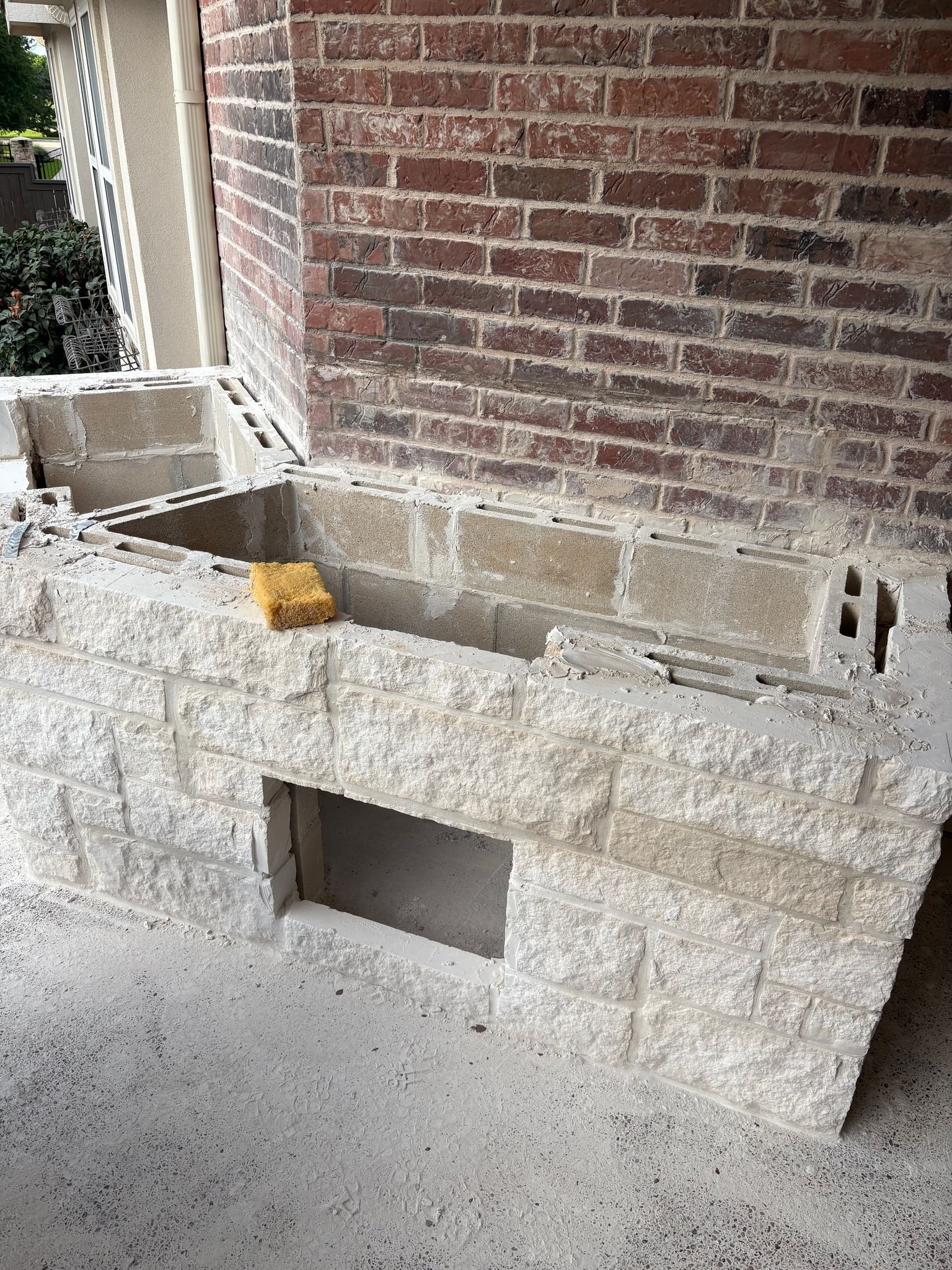
It's a Saturday afternoon in August, and you're standing in your backyard in Roanoke, Texas. The thermometer reads 107°F. You're holding a glass of iced tea, staring at a blank concrete slab, and mentally sketching the outdoor kitchen you've been planning for two years. You know what you want: a built-in grill, a bar, maybe a sink. You've saved up. You're ready. But then the questions start piling up. Brick or stone? Natural or manufactured veneer? Will the mortar crack in this heat? What happens when the clay soil shifts after a heavy rain? How do you even know if a contractor is licensed? Before long, the dream starts feeling like a homework assignment you didn't sign up for.
That overwhelm is completely normal—and completely solvable. This guide was written specifically for DFW homeowners who are serious about building an outdoor kitchen and want to make an informed decision about masonry materials without wading through generic advice that ignores Texas heat, clay soil, and the realities of the North Texas construction market. By the time you finish reading, you'll know exactly which material fits your priorities, what it will realistically cost, and what to look for in a contractor who won't let you down.
Key Takeaways
- DFW's expansive clay soils and 100°F+ summers create unique stressors that make material selection and installation quality more critical here than almost anywhere else in the country.
- Brick is the most cost-effective and durable masonry option ($8K–$20K), natural stone offers premium aesthetics and longevity ($45K–$100K+), and manufactured veneer splits the difference ($20K–$45K) with trade-offs in long-term durability.
- Proper foundation design, flexible mortar joints, and regular sealing are non-negotiable for any outdoor kitchen in North Texas—regardless of material choice.
- Most DFW municipalities require permits for outdoor kitchen structures, gas lines, electrical, and plumbing. Skipping permits creates legal and financial risk.
- Always verify TDLR licensing and request Certificates of Insurance before signing any contract. These are your most important protections as a homeowner.
- Material costs have risen 10–20% over the past two to three years and are expected to remain firm through 2026. Planning ahead saves money.
- Getting 3–5 detailed quotes from qualified, locally experienced contractors is the single most effective way to protect your investment.
Why Masonry Material Choice Matters for DFW Outdoor Kitchens
Not all masonry is created equal—and nowhere is that more apparent than in the Dallas-Fort Worth area. DFW's climate and soil conditions create a uniquely demanding environment for outdoor structures. Summer temperatures routinely exceed 100°F, sometimes pushing past 110°F during peak heat waves. The region's infamous expansive clay soils absorb moisture and swell dramatically during wet periods, then shrink and crack when dry spells hit. Add occasional winter freeze-thaw cycles and intense UV exposure, and you have a recipe for rapid deterioration if the wrong material or installation method is chosen.
The consequences of a poor material or installation decision aren't just aesthetic. Cracked mortar joints allow moisture to penetrate masonry cores, accelerating deterioration. Soil movement can cause structural shifts that compromise the entire outdoor kitchen frame. Contractors who don't understand how clay soil movement affects brick structures in North Texas will often cut corners on foundation depth and mortar formulation—and you'll be paying for expensive repairs within five to ten years.
On the flip side, the right masonry material, properly installed by an experienced local contractor, can last 30 to 40+ years with minimal maintenance. Your outdoor kitchen becomes a permanent feature of your home—one that adds real value, enhances your lifestyle, and holds up through decades of Texas summers. Material choice directly impacts your project's cost, aesthetics, durability, and the ongoing maintenance burden you'll carry for years to come. That's why this decision deserves more than a five-minute Google search.
Feeling Overwhelmed by Material Choices?
You're not alone. Most DFW homeowners struggle to choose between brick, stone, and veneer because each option has real trade-offs. The good news: there's no single "best" choice—only the best choice for your priorities, budget, and lifestyle. This guide will help you figure out exactly which one that is.
The DFW Outdoor Kitchen Market: What's Driving Demand in 2026
The Dallas-Fort Worth metroplex now exceeds 8 million residents, with suburban growth corridors like Roanoke, Keller, Southlake, Haslet, and Denton County continuing to expand rapidly. This population growth, combined with one of the strongest regional economies in the country, has created enormous demand for outdoor living upgrades. Homeowners aged 30 to 65 with properties valued at $400,000 or more are the primary drivers of the outdoor kitchen market—and they're investing heavily.
The post-pandemic shift toward home-based entertaining has proven durable. Homeowners who discovered the joy of backyard gatherings during 2020 and 2021 have continued to invest in making those spaces more functional and beautiful. Rising home equity—fueled by DFW's strong real estate appreciation—has given many homeowners the financial leverage to fund significant projects through HELOCs and home equity loans, with rates typically ranging from 7–10% depending on market conditions and borrower credit.
But there's a catch: a persistent shortage of skilled masonry labor has created longer lead times and higher costs across the board. The best outdoor kitchen masonry construction specialists in DFW are booked weeks or months in advance, particularly during peak seasons. Material costs have risen 10–20% over the past two to three years and are expected to remain firm through 2026, driven by continued demand and supply chain factors affecting natural stone and premium brick. If you're planning a project, starting the planning process now—not next spring—gives you a meaningful advantage in both contractor availability and pricing.
Brick: The Durable, Time-Tested Choice for DFW Outdoor Kitchens
Brick has been the backbone of Texas construction for generations—and for good reason. Standard brick is the most cost-effective masonry option for outdoor kitchens in the DFW area, with basic structures typically ranging from $8,000 to $20,000. But cost-effectiveness doesn't mean compromise. High-quality brick, properly installed, is one of the most durable outdoor kitchen materials available in the Texas climate.
Brick's thermal mass is a genuine advantage in DFW's climate. It absorbs heat slowly during the day and releases it gradually, which helps regulate surface temperatures and reduces thermal shock to the structure. Brick resists UV fading far better than most manufactured alternatives, meaning the color and texture you choose today will still look sharp a decade from now. For a detailed comparison of how brick stacks up against other materials over time, the brick vs. natural stone outdoor kitchen durability and home value comparison is worth reading before you make a final decision.
Brick is also aesthetically versatile. Available in dozens of colors, textures, and profiles, it can complement traditional ranch-style homes, modern farmhouses, and contemporary designs alike. If you're building in an established neighborhood in Keller or Southlake where architectural consistency matters, brick offers a timeless look that integrates naturally with existing home exteriors.
Why Brick Performs Well in DFW Heat and Soil Conditions
The dense composition of high-fired brick makes it naturally resistant to moisture penetration—a critical property in DFW's environment, where clay soil moisture swings can be dramatic. When the soil beneath your outdoor kitchen expands during a wet spring and contracts during a dry August, a properly built brick structure with flexible mortar joints can accommodate that movement without cracking. The key phrase there is "properly built." Brick's performance in DFW depends heavily on the quality of the foundation design and mortar formulation. Standard mortar is not sufficient for Texas conditions; experienced local masons use mortar specifically formulated for high-heat environments and flexible enough to absorb soil movement.
High-fired brick maintains structural integrity even at sustained temperatures above 100°F. Unlike some manufactured materials that can soften, warp, or degrade under prolonged heat exposure, quality brick is essentially impervious to the temperatures DFW summers produce. The weak point in any brick structure is the mortar joint—not the brick itself—which is why mortar quality and installation technique are where experienced masons earn their fee.
Brick Maintenance and Long-Term Costs
One of brick's most underappreciated advantages is its low maintenance profile. Sealing is optional but recommended in DFW, costing approximately $0.50 to $3.00 per square foot and typically reapplied every five to ten years. Mortar repointing—the process of refreshing deteriorated mortar joints—is typically needed every ten to twenty years for quality installations, at a cost of $5 to $15 per linear foot. When you annualize those costs over the life of the structure, you're looking at roughly $100 to $300 per year for a typical outdoor kitchen. That's a remarkably low maintenance burden for a structure that can last 30+ years.
Not sure whether brick, stone, or veneer is the right fit for your DFW backyard? A masonry expert can assess your soil conditions, climate challenges, and budget to recommend the best material for your specific project—at no cost to you.
Schedule a Free ConsultationNatural Stone: Premium Aesthetics and Durability for High-End Kitchens
If brick is the reliable workhorse of outdoor kitchen masonry, natural stone is the thoroughbred. Granite, flagstone, and limestone offer an aesthetic depth and prestige that no manufactured material has fully replicated. Each piece of natural stone is unique—the variation in color, veining, and texture creates a visual richness that photographs beautifully and impresses in person. For homeowners in Southlake, Westlake, or other high-value DFW communities where curb appeal and resale value are paramount, natural stone is often the clear choice.
The cost reflects that premium. Full natural stone outdoor kitchen installations in DFW typically range from $45,000 to $100,000 or more, depending on stone type, project complexity, and appliance integration. That's a significant investment—but the durability data supports it. Dense natural stones like granite can last 40+ years in DFW conditions with proper care, and they tend to hold their value in high-end neighborhoods where buyers expect premium finishes. For a deeper look at how natural stone compares to alternative materials for outdoor bar construction, the natural stone vs. poured concrete for outdoor bar construction in DFW comparison breaks down the trade-offs clearly.
Natural stone requires professional installation and proper sealing to perform well in Texas conditions. The investment in quality masonry cleaning and waterproofing services is not optional with natural stone—it's what separates a 40-year installation from one that starts showing staining and deterioration within five years.
Best Natural Stone Types for DFW Outdoor Kitchens
Granite is the top performer for DFW outdoor kitchens. It's extremely hard, heat-resistant, and naturally stain-resistant—properties that matter enormously in an environment where cooking grease, UV exposure, and temperature extremes are daily realities. Premium granite runs $60 to $100+ per square foot installed, but its longevity and minimal maintenance needs make it a strong long-term value.
Flagstone is an attractive and slightly more affordable alternative, offering a natural, rustic aesthetic that pairs well with Texas Hill Country and transitional home styles. It's durable and performs well in DFW heat, though it requires proper sealing to prevent moisture penetration and staining. Flagstone is a popular choice for outdoor kitchen surrounds and patio extensions that connect to the kitchen structure.
Limestone is beautiful but softer than granite or flagstone, making it more susceptible to etching, staining, and surface wear in high-traffic cooking areas. It requires more frequent sealing and is better suited for decorative elements or lower-traffic surfaces rather than primary cooking and prep areas. If you love the look of limestone, a skilled mason can incorporate it strategically while using harder materials where durability is most critical.
Natural Stone Sealing and Protection in Texas Heat
Sealing is not a finishing touch with natural stone—it's a structural necessity in the DFW climate. Texas heat accelerates the penetration of cooking oils, mineral deposits, and environmental staining into porous stone surfaces. Without proper sealing, even premium granite can develop permanent discoloration within a few seasons. Professional sealing costs $0.50 to $3.00 per square foot and should be reapplied every five to ten years depending on the stone type and exposure level. This is one maintenance cost you should budget for from day one, not discover after the fact when staining has already occurred.
Manufactured Stone Veneer: The Budget-Friendly Middle Ground
Manufactured stone veneer—sometimes called cultured stone—occupies an interesting position in the outdoor kitchen market. It's made from concrete and pigments cast into molds that mimic the look of natural stone, and the best products do a convincing job. The appeal is straightforward: you get the aesthetic of natural stone at 30 to 50% less cost. Mid-range outdoor kitchen installations using quality manufactured veneer typically run $20,000 to $45,000 in the DFW market.
The lightweight nature of manufactured veneer also reduces installation complexity and labor costs. Unlike natural stone, which requires heavy-duty structural support and specialized handling, veneer can be applied to a variety of substrate materials relatively quickly. This makes it an attractive option for homeowners who want a premium look without the premium price tag or extended construction timeline.
However, manufactured veneer has real limitations that are especially relevant in DFW's climate. Durability varies significantly by product quality, and budget-grade options can begin showing color fading, surface deterioration, and cracking within ten to fifteen years under Texas sun and heat. For a thorough comparison of veneer against other low-maintenance alternatives, the stucco vs. cultured stone for BBQ islands and low-maintenance outdoor kitchens breakdown is a useful resource. You can also explore Brick and Stone Master's thin veneer application services to understand what professional installation looks like in practice.
Quality Grades and What to Expect
Premium manufactured stone (NCMA-certified products from established manufacturers) offers better color consistency, improved UV resistance, and stronger warranties. Expect a lifespan of 15 to 20 years with proper installation and regular sealing. These products are appropriate for DFW outdoor kitchens when budget constraints make natural stone impractical.
Standard grade veneer is adequate for DFW conditions with proper sealing and maintenance, typically lasting 10 to 15 years before showing meaningful deterioration. If you're planning to sell within that window and want the aesthetic upgrade without the natural stone price point, standard grade can be a reasonable choice—provided it's installed correctly.
Budget grade veneer should be avoided entirely for outdoor kitchens in DFW. The combination of Texas heat, UV exposure, and clay soil movement will accelerate deterioration to the point where you're facing replacement costs within a decade. The upfront savings evaporate quickly when you factor in early replacement and repair expenses.
Installation and Sealing Requirements
One of manufactured veneer's practical advantages is installation speed. A skilled crew can complete a veneer application significantly faster than a natural stone installation, which reduces labor costs and overall project timeline. That said, the substrate preparation and waterproofing layer beneath the veneer are critical—cutting corners here is where many budget installations fail. Sealing is mandatory in DFW to prevent moisture penetration and UV-related color fading. Resealing every five to ten years is essential; neglect leads to rapid deterioration that is expensive to reverse.
Comparing Materials: Cost, Durability, and Maintenance Side-by-Side
When you're weighing three distinct material options, a side-by-side comparison cuts through the noise. Here's how brick, natural stone, and manufactured veneer stack up across the metrics that matter most for DFW homeowners:
| Factor | Brick | Natural Stone | Manufactured Veneer |
|---|---|---|---|
| Initial Cost (DFW) | $8K–$20K | $45K–$100K+ | $20K–$45K |
| Expected Lifespan | 30+ years | 40+ years | 10–20 years |
| Annual Maintenance Cost | $100–$300/yr | $200–$500/yr | $150–$400/yr |
| Heat Resistance | Excellent | Excellent (granite/flagstone) | Good (premium grade) |
| UV/Fade Resistance | Excellent | Excellent | Moderate (fades over time) |
| Sealing Required? | Recommended | Required | Required |
| DFW Clay Soil Performance | Excellent (with proper foundation) | Excellent (with proper foundation) | Good (premium grade, proper substrate) |
| Resale Value Impact | Strong | Very Strong | Moderate |
When you calculate total cost of ownership over 20 years—factoring in initial construction, maintenance, and potential replacement—brick and natural stone consistently outperform manufactured veneer. The veneer's lower upfront cost is offset by more frequent maintenance requirements and a shorter lifespan before replacement becomes necessary. For homeowners deciding between a fully custom masonry build and a prefabricated alternative, the masonry outdoor kitchen vs. prefab kit durability and cost comparison makes a compelling case for why custom masonry typically wins on long-term value in the DFW market.
Top Masonry Contractors in DFW: Compared and Reviewed
DFW has hundreds of masonry contractors, but the number who specialize specifically in high-end outdoor kitchen construction—with proven expertise in local clay soil conditions and extreme heat—is considerably smaller. Choosing the right contractor is as important as choosing the right material. A premium stone installation by an inexperienced contractor will fail faster than a quality brick build by a skilled local mason. Here's an honest look at the types of providers operating in the DFW market. For a more detailed breakdown, the best masonry contractors specializing in outdoor kitchens in DFW guide provides additional context on vetting and selecting the right professional.
Brick and Stone Master: Custom Masonry Outdoor Kitchen Specialist
Location: 3800 Haslet-Roanoke Road Suite 32, Roanoke, Texas 76262
Service Area: Dallas-Fort Worth metroplex, including Roanoke, Keller, Southlake, Haslet, and surrounding communities
TDLR Status: TDLR-registered masonry contractor with full licensing for residential and commercial projects
Brick and Stone Master is a locally rooted DFW masonry specialist with 20+ years of experience building custom outdoor kitchens, retaining walls, archways, and masonry structures across North Texas. What distinguishes them in the market is their deep, hands-on understanding of DFW's specific challenges: expansive clay soils, extreme summer heat, and the foundation design requirements that those conditions demand.
Every project begins with a site assessment that accounts for soil conditions and grading before a single brick is laid. Their custom stonework services and masonry design services cover the full spectrum from classic brick to premium natural stone installations. They carry full General Liability and Workers' Compensation insurance, pull all required permits, and back their masonry work with a 10-year warranty. Ratings on Google and Houzz are consistently high, with reviewers frequently citing reliability, craftsmanship quality, and clear communication throughout the project. You can browse their completed work in the project portfolio to see DFW outdoor kitchen builds firsthand.
Competitor A: Regional Outdoor Living Design-Build Firm
This type of firm offers a comprehensive design-build approach, handling everything from initial concept through final installation. They typically employ in-house masonry teams alongside landscape designers, which can streamline project coordination for complex outdoor living spaces that integrate kitchens, patios, pergolas, and landscaping. The trade-off is price: full-service design-build firms in DFW typically charge $50,000 to $150,000+ for outdoor kitchen projects, and online reviews sometimes note challenges with project timeline management and cost overruns. Warranties on masonry work typically run around five years—shorter than what specialized masonry contractors offer. Best suited for homeowners who want a single point of contact for a large, complex outdoor living project and have the budget to support it.
Competitor B: Independent Master Mason
Independent master masons with 25+ years of experience represent some of the finest craftsmanship available in the DFW market. These artisans typically work through word-of-mouth referrals, have limited online presence, and keep overhead low—which can translate to competitive pricing on the masonry work itself. The limitation is project management infrastructure: complex outdoor kitchen projects that require coordinating gas, electrical, plumbing, and countertop fabrication alongside masonry work can strain a sole proprietor's capacity. If you find an experienced independent mason with strong local references, they can be an excellent choice for masonry-focused projects where you're comfortable managing some coordination yourself. Warranties typically run around seven years on masonry work.
Competitor C: National Outdoor Kitchen Franchise
National franchise operations offer standardized design templates, material packages, and fast turnaround times. For homeowners who want a functional outdoor kitchen quickly and aren't looking for a highly customized design, franchises can deliver a predictable result at a predictable price. The limitations are real, though: cookie-cutter designs, limited material customization, and quality inconsistency across franchise locations are recurring themes in online reviews. Warranties on masonry components typically run only three years—the shortest in the market. For a DFW homeowner investing $20,000 or more, the lack of customization and shorter warranty coverage are meaningful drawbacks worth weighing carefully.
Cost Breakdown: What You'll Actually Pay for a DFW Outdoor Kitchen in 2026
One of the most common sources of frustration for DFW homeowners is getting sticker shock mid-project because hidden costs weren't discussed upfront. Here's a transparent breakdown of what you'll actually pay, from foundation to finish.
Entry-Level Brick Structure ($8,000–$20,000): This covers a basic block or brick masonry base, a standard built-in grill, and minimal countertop space. It does not include complex utility runs, premium appliances, or elaborate finishes. This is the right starting point for homeowners who want a durable, functional outdoor cooking space without the premium price tag.
Mid-Range Stone Veneer ($20,000–$45,000): This tier typically includes natural stone or quality manufactured veneer cladding, a built-in grill, granite or quartz countertops, and a basic sink. The step up in material quality and aesthetic complexity is significant, and the result is a kitchen that looks and functions like a genuine outdoor entertaining centerpiece.
Premium Custom Stone ($45,000–$100,000+): Full custom stone construction with multiple appliances, an outdoor bar, extensive countertop coverage, integrated lighting, and potentially a pergola or shade structure. These projects require experienced project management and coordination across multiple licensed trades. For a detailed look at how licensed mason pricing breaks down across project scopes, the masonry outdoor kitchen cost guide with licensed mason pricing breakdown provides granular detail that most homeowners find invaluable before entering contractor conversations.
Material Costs by Type
Understanding per-unit material costs helps you evaluate contractor bids more intelligently:
- Standard brick: $0.50–$1.50 per brick; approximately 400–500 bricks per 100 square feet
- Natural stone: $30–$100+ per square foot installed; premium granite runs $60–$100+ per square foot
- Manufactured veneer: $8–$20 per square foot installed; significant savings vs. natural stone
- Countertops: Granite $40–$80/sq. ft.; quartz $50–$100/sq. ft.; concrete $30–$60/sq. ft.
Labor and Installation Costs
Labor typically represents 40 to 60% of total project cost in DFW, reflecting the region's competitive skilled trades market. Skilled mason rates run $50 to $100+ per hour, with most outdoor kitchen projects priced on a project basis rather than hourly. Foundation and site preparation adds $2,000 to $5,000 depending on soil conditions and grading requirements—a cost that's easy to underestimate if you're comparing bids without a detailed scope breakdown. Utility connections for gas, water, and electrical typically add $3,000 to $8,000 depending on distance from the main house and project complexity.
Hidden costs that frequently surprise homeowners: concrete foundation ($2K–$5K), permits ($500–$2K), drainage systems ($1K–$3K), initial sealing and waterproofing ($1K–$3K), and appliance installation fees. Budget for these from the start, not as afterthoughts.
Pro Tip: Timing Your Project for Better Pricing
Starting your outdoor kitchen project in late fall or winter (November–January) can offer better contractor availability and potentially softer pricing, though weather delays are more likely. Spring (April–June) and fall (September–October) are peak seasons with higher demand and longer lead times. If you want the best combination of pricing and scheduling flexibility, initiating your planning process in September or October gives you a meaningful advantage.
Ready to get a detailed cost estimate for your outdoor kitchen? A licensed DFW masonry contractor can provide a transparent breakdown of materials, labor, permits, and utilities specific to your project scope and site conditions—so you know exactly what you're committing to before signing anything.
Get Your Free Cost EstimatePermits, Regulations, and Licensing: What DFW Homeowners Must Know
Permits are not optional—and any contractor who tells you otherwise is giving you advice that could cost you significantly more than the permit fees themselves. DFW municipalities including Fort Worth, Roanoke, Keller, and Denton County require permits for outdoor kitchen structures, gas lines, electrical work, and plumbing. These requirements exist for good reasons: they ensure structural safety, proper utility installation, and code compliance that protects both your family and your home's value.
Skipping permits can result in fines, mandatory removal orders, and serious complications when you sell your home. Appraisers and buyers' agents are increasingly savvy about unpermitted structures—an outdoor kitchen built without permits can become a significant liability during a real estate transaction. The outdoor kitchen masonry permit requirements and process in DFW guide walks through the specific steps for common DFW municipalities, which is worth bookmarking before your first contractor conversation.
On the licensing side, TDLR (Texas Department of Licensing and Regulation) registration is the baseline credential to verify for any contractor performing relevant trade work on your project. Gas line installation requires a licensed plumber under the TDLR Plumbing Program; electrical work requires a licensed electrician. Verify any contractor's active license status at tdlr.texas.gov before signing a contract. General Liability insurance at $1 million or more in coverage and Workers' Compensation insurance are non-negotiable—request Certificates of Insurance directly from the contractor's insurance provider, not just a copy from the contractor.
⚠ Red Flags: Contractors to Avoid
Watch out for contractors who claim permits aren't necessary, offer cash-only deals with no written contract, can't provide current proof of insurance, or pressure you for large upfront deposits before work begins. These are consistent warning signs of unprofessional or predatory practices. Storm-chaser crews that appear after hail events, contractors who claim certifications they don't possess, and anyone who offers vague scope descriptions without written detail are all situations to walk away from. Always verify TDLR licensing at tdlr.texas.gov before hiring.
How to Verify Contractor Credentials
The verification process is straightforward once you know where to look:
- TDLR Public Search: Go to tdlr.texas.gov, navigate to "Search the Public Database," and search by business name or individual name. Check for active license status and any disciplinary actions or complaints on file.
- Texas SOS Business Lookup: Verify the legal status of the contractor's business entity at sos.state.tx.us to confirm they're operating as a legitimate registered business.
- Insurance Verification: Request Certificates of Insurance directly from the contractor's insurance provider—not a copy handed to you by the contractor. Verify that coverage is current and meets minimum thresholds.
- Portfolio and References: Ask for photos or videos of recent DFW outdoor kitchen projects specifically. Contact at least two references and ask directly about project timeline, communication, and whether the final result matched the quoted scope and price.
Understanding DFW's Expansive Soil Requirements
Local building codes in DFW municipalities incorporate specific requirements for foundation design in high-risk expansive soil areas—and for good reason. Clay soil in North Texas can expand by as much as 10% in volume when saturated and contract significantly during dry periods. A masonry structure built on an inadequate foundation in these conditions will crack, shift, and potentially fail within a few years. Experienced contractors understand these requirements and design foundations accordingly; inexperienced ones may cut corners that aren't visible until the damage appears. This is one area where hiring a contractor with genuine local DFW experience—not just general masonry experience—makes a measurable difference in long-term outcomes.
Durability in the DFW Climate: How Materials Perform in Heat, Soil Movement, and Weather
Understanding how DFW's specific environmental stressors affect masonry materials helps you make a more informed decision—and helps you ask better questions when evaluating contractor proposals. The three primary stressors are extreme heat, expansive clay soil movement, and periodic freeze-thaw cycles.
The impact of clay soil movement on masonry structures is significant enough that it deserves its own deep dive. The brick repair from Texas clay soil foundation movement resource explains the mechanics of how soil expansion and contraction stress masonry joints and what proper installation looks like to mitigate that risk. Understanding this dynamic before you hire a contractor will help you ask the right questions and recognize quality answers when you hear them.
UV exposure is another factor that's easy to overlook during the planning phase. DFW receives intense, sustained UV radiation throughout the long summer season. Natural stone and quality brick resist UV-induced color fading far better than manufactured veneer. Premium veneer products include UV-stabilized pigments that slow fading, but even the best manufactured products will show more color change over 15 years than comparable brick or stone installations. If color consistency over decades matters to you, natural materials are the more reliable choice. When masonry issues do arise—whether from soil movement, mortar failure, or weather damage—having access to professional masonry repair services from a contractor who knows DFW conditions is invaluable.
Heat Stress and Thermal Expansion
Mortar joints are the most vulnerable component of any masonry structure in DFW's heat. When temperatures spike above 100°F, mortar can cure too quickly during installation, creating a weaker bond that's more susceptible to cracking. Experienced masons working in Texas heat use mortar formulated for high-temperature conditions and may employ cooling or shading techniques during installation to ensure proper curing. Expansion joints—deliberate gaps in long masonry runs that allow the structure to expand and contract with temperature changes—are another essential element that experienced contractors incorporate automatically and inexperienced ones sometimes skip.
Dark-colored masonry materials absorb significantly more heat than lighter alternatives, which increases thermal stress on mortar joints and can make cooking surfaces uncomfortably hot to the touch. If you're choosing between dark and light material options, the thermal performance difference is worth factoring into your decision—particularly for surfaces near cooking areas.
Moisture and Sealing in DFW's Climate
DFW's climate creates a paradox: extreme heat and periodic drought punctuated by heavy rainfall events. This moisture variability is particularly stressful for masonry. When rain follows an extended dry period, clay soils absorb water rapidly and swell—putting lateral pressure on masonry foundations. Water that penetrates unsealed masonry surfaces can cause efflorescence (white mineral deposits), staining, and in freeze conditions, structural cracking as water expands when it freezes. Proper sealing prevents moisture penetration; proper drainage around the outdoor kitchen prevents water from pooling at the masonry base. Both are essential, and both should be part of any quality contractor's standard scope of work.
Why DFW's Clay Soils Matter for Your Outdoor Kitchen
DFW's expansive clay soils expand and contract dramatically with moisture changes—sometimes shifting several inches vertically over the course of a year. This movement creates stress on masonry structures that can crack mortar joints, shift foundations, and compromise structural integrity if the construction doesn't account for it. Proper foundation depth, reinforcement, flexible mortar joints, and drainage design are not optional extras in North Texas—they're the baseline requirements for a masonry outdoor kitchen that will last decades rather than years.
Maximize Your Outdoor Kitchen's Lifespan
Regardless of material choice, sealing and proper drainage are the two most important factors for long-term durability in DFW. Budget $1,000–$3,000 for initial sealing and plan to reseal every five to ten years. This relatively small ongoing investment prevents expensive structural repairs and keeps your outdoor kitchen looking its best through decades of Texas summers.
Choosing the Right Material: A Decision Framework for DFW Homeowners
All the information in this guide ultimately serves one purpose: helping you make a confident decision that you won't regret five or ten years from now. Here's a practical framework to apply your priorities to the material options:
Choose brick if: You prioritize durability, low maintenance, and strong value for money. You're comfortable with a classic aesthetic that complements most home styles. You want to minimize long-term costs and aren't planning to sell within the next five to ten years. Brick is the right choice for homeowners who think in decades, not seasons.
Choose natural stone if: Premium aesthetics and prestige matter to you. You have the budget to support higher initial costs and are willing to invest in regular maintenance. You're in a high-value neighborhood where natural stone significantly enhances appraisal value and buyer appeal. You want the most durable material available and plan to enjoy the kitchen for 20+ years. Natural stone rewards the homeowners who invest in it properly.
Choose manufactured veneer if: You want the look of natural stone at a lower price point and are comfortable with moderate maintenance requirements. You're planning to sell within ten to fifteen years and want the aesthetic upgrade without the natural stone price tag. You prioritize upfront cost savings and understand that you may face resealing and eventual replacement costs sooner than with natural materials.
"The most expensive outdoor kitchen isn't always the best investment—and the cheapest isn't always the worst. The right choice is the one that aligns your priorities, budget, and lifestyle with the material's honest strengths and limitations in DFW's specific climate."
Critical success factors regardless of material: Hire a TDLR-licensed, fully insured contractor with proven DFW experience. Ensure proper foundation design for expansive soils. Use quality mortar formulated for Texas heat. Plan and budget for regular sealing and maintenance. Obtain all required permits before construction begins. Get three to five detailed quotes from qualified contractors and compare not just price, but material quality, warranty terms, and demonstrated experience with DFW climate challenges.
If you're still weighing whether to hire a professional or attempt any portion of this project yourself, the DIY vs. professional masonry outdoor kitchen construction comparison makes a clear case for why professional installation is critical for outdoor kitchen success in DFW—particularly given the soil and climate challenges that require specialized knowledge and experience to address correctly. You can also explore the full range of concrete and retaining wall services that often complement outdoor kitchen builds in DFW backyards.
Ready to move forward? Connect with a TDLR-licensed DFW masonry specialist who understands the unique challenges of building outdoor kitchens in Texas heat and clay soil. We'll help you choose the right material and get your project started on the right foundation—literally.
Connect with a DFW Masonry ExpertFrequently Asked Questions: DFW Outdoor Kitchen Masonry Materials
What's the best masonry material for an outdoor kitchen in DFW heat and clay soil?
For durability in DFW's climate, dense, sealed natural stones like granite or flagstone, or high-quality sealed brick, are the strongest performers. Both materials withstand sustained heat above 100°F without significant degradation when installed on an adequately reinforced foundation designed for expansive soils. The critical factors aren't just the material itself—flexible mortar joints that accommodate clay soil movement, proper drainage, and regular sealing are what separate a 30-year outdoor kitchen from one that needs repairs within a decade. If budget allows, granite is the single most durable option; if you're working within a tighter budget, quality brick with proper foundation design is an excellent and time-tested alternative.
Brick vs. Stone vs. Manufactured Stone Veneer for my DFW outdoor kitchen—what's the difference in cost and durability?
Standard brick is the most cost-effective and durable masonry option, with DFW outdoor kitchen structures typically ranging from $8,000 to $20,000 and a lifespan of 30+ years with proper installation and minimal maintenance. Natural stone offers superior aesthetics and durability—granite installations can last 40+ years—but costs significantly more, typically $45,000 to $100,000+ for full outdoor kitchen builds. Manufactured stone veneer provides a stone look at mid-range pricing ($20,000–$45,000) but has a shorter lifespan of 10 to 20 years and requires more frequent maintenance and resealing to perform adequately in DFW's climate. When calculated over a 20-year ownership period, brick and natural stone consistently offer better total cost of ownership than manufactured veneer.
Do I need a permit for an outdoor kitchen in Fort Worth or Roanoke?
Yes—most DFW municipalities, including Fort Worth, Roanoke, Keller, and Denton County jurisdictions, require permits for outdoor kitchen construction. This typically covers the masonry structure itself, gas line installation, electrical work, and plumbing connections. Failing to obtain the required permits can result in fines, mandatory removal orders, and significant complications when you sell your home—appraisers and buyers' agents are increasingly diligent about identifying unpermitted structures. Always consult your local building department before construction begins, and always hire a contractor who pulls permits as a standard part of their process, not as an optional add-on.
Will my outdoor kitchen's mortar joints crack in the Texas heat and from soil movement?
Mortar joint cracking is a genuine risk in DFW, and it's one of the most common masonry failure points in the region. The combination of extreme heat fluctuations and expansive clay soil movement creates significant stress on standard mortar formulations. The good news is that this risk is highly manageable with the right approach: using high-quality, flexible mortar specifically formulated for Texas climate conditions, ensuring proper foundation support and depth for expansive soils, incorporating expansion joints in long masonry runs, and hiring an experienced local mason who understands these requirements. Professional installation by a contractor with proven DFW experience is the single most effective way to prevent premature mortar joint failure.
How much does a basic brick outdoor kitchen structure cost in Dallas?
For a basic outdoor kitchen structure built primarily from brick or block in the Dallas area, expect costs ranging from approximately $8,000 to $20,000. This typically includes the masonry base, a standard built-in grill, and minimal countertop space. It does not include complex utility runs (gas, water, electrical), premium appliances, elaborate finishes, or significant site preparation costs. Hidden costs that frequently catch homeowners off-guard include the concrete foundation ($2,000–$5,000), permits ($500–$2,000), and initial sealing ($1,000–$3,000). Budget for these from the start to avoid mid-project surprises.
What maintenance does stone veneer require for an outdoor kitchen in North Texas?
Natural stone requires relatively minimal maintenance—occasional cleaning with appropriate stone-safe products and periodic inspection of mortar joints to ensure they remain sound. Manufactured stone veneer, however, requires more active maintenance: professional sealing every five to ten years is essential to protect against moisture penetration, UV-induced color fading, and staining from cooking grease and environmental exposure in DFW's climate. Both material types benefit from regular visual inspections for early signs of cracking, efflorescence (white mineral deposits), or mortar joint deterioration—catching these issues early prevents minor maintenance from becoming major repairs. Neglecting sealing on manufactured veneer in particular can lead to rapid deterioration that is expensive to reverse.
Ready to Build Your Dream DFW Outdoor Kitchen? Start with Expert Guidance
Choosing the right masonry material for your outdoor kitchen is one of the most consequential decisions in the entire project—and you don't have to make it alone. A TDLR-licensed DFW masonry expert can assess your specific situation: your soil conditions, climate challenges, budget, and aesthetic preferences, and recommend the material and approach that will give you the best combination of durability, beauty, and long-term value.
Whether you're leaning toward classic brick, premium natural stone, or budget-friendly manufactured veneer, the right professional guidance means the difference between a kitchen that lasts 30+ years and one that requires costly repairs within a decade. The DFW outdoor kitchen market moves fast in 2026—the best contractors book up quickly, and material costs are expected to remain firm. Starting your planning process now puts you ahead of the curve.
Reach out today for a free, no-pressure consultation and let's turn your outdoor kitchen vision into a structure that will serve your family for decades to come.
Schedule Your Free Consultation Today