
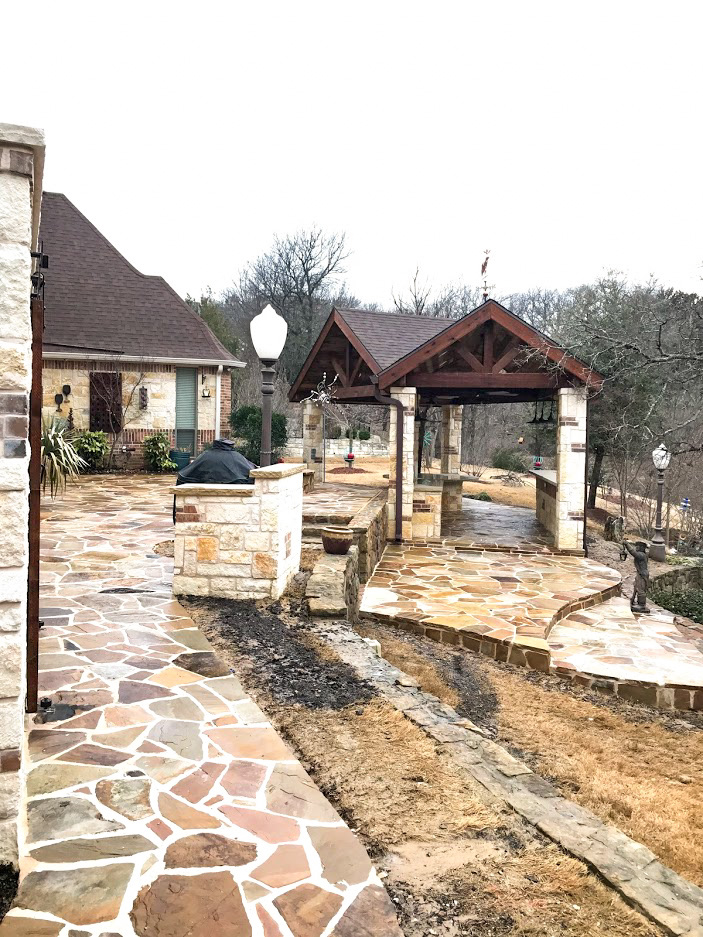
You've invested in a stunning custom home in one of DFW's most exclusive communities. Your brick exterior, stone accents, and hardscaping aren't just construction materials—they're architectural statements that define your property's character and protect a significant financial investment. But finding a masonry contractor who genuinely understands the exacting standards of Westlake's luxury market is harder than it should be. This guide cuts through the noise. You'll get honest contractor comparisons, real pricing data, permit requirements, and a clear framework for making a confident hiring decision—without the runaround.
Key Takeaways
- Masonry contractors in Westlake, TX operate in one of DFW's most demanding luxury markets—standard contractors often lack the expertise required for estate-level work.
- Brick veneer installation in Westlake runs $40–$70+/sq ft; natural stone commands $70–$150+/sq ft; retaining walls range $100–$300+/linear ft.
- DFW/Westlake masonry pricing is 50–100% higher than national averages due to luxury market demand, premium materials, and skilled labor costs.
- Texas does not have a statewide masonry license—verify contractors through the Texas Secretary of State, confirm insurance, and check BBB accreditation.
- Permits are required for retaining walls over 4 feet, new fireplaces, and structural masonry work in Westlake and Tarrant County.
- The five contractors profiled here represent the strongest options serving the Westlake and surrounding luxury DFW market in 2026.
- Annual inspections and periodic sealing are the most cost-effective ways to protect your masonry investment long-term.
Why Westlake Homeowners Need Premium Masonry Expertise
Westlake isn't just another affluent suburb—it's one of the most exclusive residential communities in the entire country. With a population of approximately 1,000 residents and a median household income exceeding $300,000 annually, Westlake represents a tier of homeownership where expectations for craftsmanship, material quality, and aesthetic precision are genuinely different from the broader market. When your neighbors are executives, entrepreneurs, and professional athletes, the masonry on your home's exterior isn't something you cut corners on.
The demand for high-end masonry in Westlake is driven by multiple converging factors. New custom estate construction in the area regularly features elaborate natural stone exteriors, intricate brickwork patterns, custom retaining walls, and hardscaping that functions as outdoor architecture. These aren't projects where a general contractor's subcontractor can show up with a standard mortar mix and call it a day. The work requires masons who have spent years developing expertise in premium materials and complex installations.
Westlake's strict HOA aesthetic standards add another layer of complexity. Exterior masonry must meet specific material, color, and pattern requirements—and any repair or addition must match existing work with a level of precision that only experienced masons can deliver. A contractor unfamiliar with these standards can create compliance issues that cost far more to resolve than the original project.
There's also a geological reality that every Westlake masonry contractor must understand: Tarrant County's expansive clay soils. These soils swell when wet and shrink when dry, creating ground movement that can stress masonry structures over time. Retaining walls, exterior veneers, and hardscaping all need to be designed and installed with this soil behavior in mind. Contractors who work primarily in other parts of DFW—or who lack experience with luxury estate properties—often underestimate this factor, leading to premature cracking and structural issues. Proper retaining wall installation in high-end DFW properties requires both engineering knowledge and hands-on experience with local soil conditions.
The supply side of this equation is equally important to understand. While the DFW metroplex has a significant number of masonry contractors, the subset that genuinely specializes in premium, luxury-tier work is much smaller. These contractors are in high demand across Westlake, Southlake, Colleyville, and Trophy Club—and they book out quickly. If you're planning a significant masonry project, starting your contractor search early is not optional; it's strategic.
Your home in Westlake isn't just another residential project—it's an investment in one of DFW's most exclusive communities. The contractors you hire need to understand that. Standard masonry work won't cut it here; you need specialists who've worked on similar luxury estates and understand the exacting HOA standards that protect your neighborhood's prestige.
Understanding Masonry Costs in Westlake, TX: A Detailed Breakdown
One of the most common frustrations Westlake homeowners face when planning masonry projects is getting wildly inconsistent quotes with no clear explanation for the differences. Understanding what drives pricing in this market—and what you should realistically expect to pay—puts you in a much stronger position when evaluating proposals.
Here's how masonry pricing breaks down in the Westlake and greater DFW luxury market in 2026:
- Brick veneer installation: $40–$70+/sq ft for premium applications on Westlake estates (compared to $15–$25/sq ft for entry-level work elsewhere in DFW)
- Natural stone installation: $70–$150+/sq ft for premium stacked stone and intricate designs on large estates
- Retaining walls: $100–$300+/linear ft for natural stone, engineered walls with significant height, or complex site conditions
- Outdoor fireplaces and custom masonry features: $5,000–$15,000+ depending on design complexity, materials, and integration with surrounding hardscaping
- Chimney work: $500–$5,000+ from basic repair to full rebuilds
For context, national averages for brick veneer installation run $15–$30/sq ft, and natural stone averages $30–$60/sq ft nationally. Westlake pricing is 50–100% higher than these benchmarks—and that premium is justified by the complexity of the work, the quality of materials required, and the expertise level demanded by luxury estate projects.
DFW/Westlake masonry pricing is 50–100% higher than national averages for good reason: luxury market demand, higher labor costs, premium material sourcing, and the need for contractors who understand complex architectural designs and strict HOA standards. You're paying for expertise, not just labor. When comparing quotes, make sure you're comparing equivalent scope, materials, and experience levels—a low bid that uses inferior materials or skips engineering requirements isn't actually a bargain.
When evaluating material options for your project, it's worth understanding the functional and aesthetic differences in depth. Our comparison of natural stone vs. poured concrete for outdoor living spaces breaks down the cost implications and long-term performance differences in detail.
Hidden Costs You Should Budget For
The line items in a masonry proposal don't always tell the full story. Several categories of cost routinely catch homeowners off guard, and they can add 10–20% to your total project budget if you haven't planned for them:
- Permits: Required for retaining walls over 4 feet, structural masonry work, and new fireplaces. Permit fees in Westlake and Tarrant County typically range from $100 to $1,000+ depending on project scope.
- Engineering reports: Complex retaining walls and foundation-adjacent masonry work often require a licensed engineer's stamp. Budget $500–$2,000+ for engineering assessments.
- Waterproofing and sealing treatments: These aren't optional on luxury estates—they're essential for protecting your investment. Ask contractors to include these in their proposals rather than treating them as add-ons.
- Demo and haul-off: If existing structures need to be removed before new work begins, demolition and disposal costs need to be itemized separately.
- Site access challenges: Westlake estates often have limited equipment access, mature landscaping to work around, and long distances from the street to work areas. These factors can significantly increase labor costs and should be discussed upfront.
Most homeowners focus on the visible masonry cost but overlook permits, engineering reports, and waterproofing treatments. These "hidden" costs can add 10–20% to your project budget. Ask contractors upfront to itemize these in their proposals so there are no surprises when the final invoice arrives.
Long-Term Cost of Ownership: Maintenance & Repairs
The purchase price of masonry work is only part of the financial picture. Understanding the ongoing cost of ownership helps you make smarter decisions about materials, installation quality, and maintenance schedules—and it underscores why hiring the right contractor from the start is so important.
- Annual inspections: $100–$300 to catch small issues before they escalate into expensive problems
- Sealing every 5–10 years: $500–$2,000+ to protect against moisture infiltration and staining
- Repointing as needed (every 15–25 years): $5–$25+/linear foot to replace deteriorated mortar joints
The cost of deferred maintenance is severe. Building science research and NAHB estimates consistently show that neglecting minor masonry issues—hairline cracks, minor spalling, deteriorating mortar joints—can double or triple repair costs over a 5–10 year period as water infiltration, freeze-thaw cycles, and secondary structural damage compound the original problem. In Westlake's climate, where summer heat extremes and occasional winter freezes both stress masonry, staying ahead of maintenance is genuinely cost-effective.
Ready to get accurate pricing for your project? A free consultation with an experienced masonry contractor can clarify costs and options specific to your Westlake home—before you commit to anything.
Schedule a Free ConsultationTop 5 Masonry Contractors in Westlake, TX: Compared and Reviewed
The following contractors represent the strongest options serving the Westlake market and surrounding luxury DFW communities in 2026. Each brings distinct strengths, and the right choice depends on your specific project type, timeline, and priorities. For homeowners in similar luxury markets nearby, our roundup of masonry contractors serving Trophy Club and Southlake covers additional options in the region.
1. Brick & Stone Master
Location: 3800 Haslet-Roanoke Road Suite 32, Roanoke, Texas 76262
Brick & Stone Master focuses exclusively on high-end custom masonry for luxury residences across exclusive DFW communities, including Westlake. Their specialization in natural stone and premium brick veneer—combined with a reputation for meticulous material matching on restoration projects—makes them a natural fit for estate-level work where precision and aesthetics are non-negotiable.
Customer feedback consistently highlights their craftsmanship, ability to source hard-to-find materials, and deep understanding of what luxury market clients expect. They're not a high-volume operation—they're selective about the projects they take on, which means every project gets the attention it deserves. Their portfolio spans custom stonework, brick veneer, retaining walls, and architectural masonry features for some of DFW's most distinguished properties.
Best for: Custom estate projects, natural stone applications, material-matching restoration work, and projects where HOA compliance and aesthetic precision are critical.
2. G3 Quality
Location: 4308 Crystal Creek Dr, Colleyville, TX 76034
G3 Quality has built a strong reputation in the Colleyville and Southlake corridor for both new construction and restoration projects. Their emphasis on quality control and meticulous project execution sets them apart in a market where attention to detail is the baseline expectation. They're frequently recommended for complex designs that require architectural precision—the kind of intricate brickwork and natural stone patterns that separate a truly exceptional home exterior from a merely good one.
Customers frequently highlight their professionalism, project management capabilities, and ability to handle multi-phase projects without losing momentum or quality consistency. For Westlake homeowners undertaking large-scale renovations or new construction, G3 Quality's systematic approach to project execution is a meaningful differentiator.
Best for: New construction, large-scale renovation projects, complex architectural masonry designs requiring consistent quality across extended timelines.
3. Southern Star Masonry
Location: 10517 Williamson Rd, Fort Worth, TX 76108
Southern Star Masonry offers a comprehensive range of masonry services—from brick repair and chimney work to outdoor living spaces and new construction—making them a versatile option for homeowners who need a reliable contractor across multiple project types. Their solid presence across Fort Worth and surrounding areas, combined with consistent communication and dependable service, has earned them strong reviews on Nextdoor and Google.
While they may not be as narrowly specialized in ultra-luxury estate work as some competitors, their full-spectrum capability makes them an excellent choice for homeowners who want one trusted contractor for both repairs and new projects. Their chimney services and outdoor living space work are particularly well-regarded.
Best for: Homeowners needing a reliable, full-service masonry contractor for repairs, chimney work, outdoor living spaces, and mid-to-large residential projects.
4. Arch Masonry
Location: 1500 E Debbie Ln #201, Grapevine, TX 76051
Arch Masonry has established itself as a go-to resource for natural stone applications and custom masonry designs in the Grapevine and Southlake area. Their skilled masons are known for handling intricate stonework that demands both technical expertise and an artistic eye—qualities that matter significantly when you're specifying complex stone courses, custom archways, or statement exterior features for a luxury residence.
Customer feedback emphasizes their technical skill and ability to execute designs that less experienced contractors would find challenging. For Westlake homeowners with architecturally ambitious projects—particularly those involving natural stone as a primary design element—Arch Masonry's specialization is worth serious consideration. Their work on custom homes and high-end renovations in the region speaks for itself.
Best for: Natural stone feature work, custom architectural masonry, intricate design execution on luxury residential properties.
5. Tarrant Brick Company
Location: 4001 W 12th St, Fort Worth, TX 76107
Tarrant Brick Company occupies a unique position in the DFW masonry ecosystem. Primarily a supplier rather than an installation contractor, they are nonetheless a cornerstone of the regional industry and frequently referenced in conversations about premium masonry projects. Their vast material selection—including hard-to-find, premium brick types essential for luxury estate work—makes them an invaluable resource for contractors and homeowners alike.
For Westlake homeowners working on restoration projects where matching original brick is critical, Tarrant Brick's deep material knowledge and supplier relationships can be the difference between a seamless repair and a visible mismatch. They work closely with installation partners and can often recommend qualified contractors for specific project types.
Best for: Material sourcing for restoration projects, hard-to-find premium brick, and as an industry resource for connecting with qualified installation contractors.
What to Look for in a Westlake Masonry Contractor
Knowing which contractors are operating in the market is only half the equation. The other half is knowing how to evaluate them rigorously—because in a luxury market like Westlake, the stakes of a poor hiring decision are high. Here's the framework that separates a confident hiring decision from a costly mistake.
Business registration and credentials: Start by verifying the contractor's business registration through the Texas Secretary of State. This is a basic legitimacy check that takes minutes and eliminates a significant number of unqualified operators. Check BBB accreditation and review any complaint history—patterns of disputes or unresolved complaints are meaningful red flags.
Insurance verification: Confirm that the contractor carries General Liability Insurance at a minimum of $1 million and Workers' Compensation coverage for their employees. Request certificates of insurance directly—don't take a contractor's word for it. If a worker is injured on your property and the contractor lacks proper coverage, you may be exposed to liability.
Portfolio review: Ask to see a portfolio of completed projects in similar luxury DFW communities—Westlake, Southlake, Colleyville, Trophy Club. The quality of their work on comparable estates tells you far more than any sales pitch. Pay attention to material quality, joint consistency, and how well repairs blend with existing work. Understanding how to identify masonry failures and structural issues in existing work will help you evaluate portfolio photos more critically.
References from recent projects: Ask specifically for references from Westlake or Southlake projects completed within the last 12–24 months. Call those references and ask direct questions: Was the project completed on time and on budget? Were there any issues, and how were they resolved? Would you hire them again?
HOA and permit knowledge: A contractor who doesn't know Westlake's HOA design standards or who can't speak fluently about permit requirements for your specific project type is not the right contractor for this market. These aren't optional considerations—they're fundamental competencies.
Trade association membership: Membership in the Masonry Contractors Association of America (MCAA) or the Brick Industry Association (BIA) signals a commitment to professional standards and ongoing education. It's not a guarantee of quality, but it's a meaningful indicator of seriousness.
Red Flags to Avoid When Hiring Masonry Contractors
Knowing what to look for is important. Knowing what to walk away from is equally important.
After hail or weather events, contractors from out of state often appear offering quick fixes. They may lack proper Texas licensing, insurance, or familiarity with local building codes. They often disappear after completion, leaving you with warranty issues or further damage. Stick with established, local contractors with verifiable credentials and a track record in the DFW area.
- No verifiable insurance or business registration — walk away immediately, regardless of how compelling the bid looks
- "Storm chasers" offering quick service after weather events — they often lack proper licensing, use inferior materials, and are unreachable when warranty issues arise
- Unusually low bids — a bid that's 30–40% below other quotes almost always signals corner-cutting on materials, labor quality, or both
- Reluctance to provide written contracts or detailed proposals — legitimate contractors welcome written agreements because they protect both parties
- No portfolio or references — experienced contractors have extensive documentation of their work; the absence of this is telling
- Pressure to pay in full upfront — reputable contractors use phased payment schedules tied to project milestones, not lump-sum advance payments
If you're evaluating contractors and want a second opinion, our team can walk you through the selection process and help you understand what separates premium masonry work from standard installations.
Schedule a Free ConsultationMasonry Permits and Regulations in Westlake, TX
Navigating the permit landscape for masonry work in Westlake requires understanding both state-level regulations and local municipal requirements—and the two don't always align in ways that are intuitive.
First, the state-level picture: Texas does not have a statewide masonry contractor license administered through TDLR (Texas Department of Licensing and Regulation). Unlike electricians or plumbers, masons in Texas are not required to hold a state-issued trade license. This means contractor legitimacy is primarily verified through business registration with the Texas Secretary of State, insurance documentation, and local permit compliance—not a state license number.
At the local level, Westlake and Tarrant County have specific permit requirements that apply to common masonry projects:
- Retaining walls over 4 feet in height require permits and often engineering reports
- New fireplaces and outdoor fireplace structures require building permits
- Structural masonry repairs that affect load-bearing elements require permits
- New masonry construction on additions or detached structures requires permits
Building codes in Westlake follow the International Building Code (IBC) with local amendments. Engineering reports are frequently required for retaining walls and any masonry work adjacent to foundations—a requirement that's particularly relevant given Tarrant County's expansive clay soils. For specific permit requirements on outdoor kitchen and fireplace projects, our outdoor kitchen masonry permit guide for DFW covers the requirements in detail.
A critical point: your contractor should pull permits and manage inspections as part of the project scope. If a contractor suggests skipping permits to save time or money, that's a serious red flag—not a convenience. Unpermitted work can create significant complications when you sell your home, and it may leave you without recourse if the work is later found to be deficient.
To verify permit requirements for your specific project and address, contact the City of Westlake Planning & Development office directly. They can confirm what permits are required before work begins and help you avoid costly compliance issues after the fact.
Brick Veneer vs. Natural Stone: Which Is Right for Your Westlake Home?
One of the most consequential decisions in any major masonry project is material selection. In Westlake's luxury market, both brick veneer and natural stone are widely used—but they serve different aesthetic and functional purposes, and they come with meaningfully different cost profiles.
Brick veneer is a manufactured product applied as a facing layer over a structural wall. It offers a consistent, uniform appearance that's easier to match for future repairs, and it's generally less expensive than natural stone—running $40–$70+/sq ft in the Westlake market. Brick is durable, relatively low-maintenance, and available in a wide range of colors and textures. For traditional architectural styles common in Westlake's estate homes, high-quality brick veneer can be an excellent choice that satisfies HOA requirements while delivering a refined, timeless appearance.
Natural stone is quarried material—limestone, granite, travertine, or other stone types—that varies in size, shape, color, and texture. This variability is precisely what makes it so visually compelling: no two natural stone installations look exactly alike. Natural stone commands $70–$150+/sq ft in the Westlake market, reflecting the additional labor required for fitting and installation. For statement exteriors, feature walls, and hardscaping elements where visual impact is the priority, natural stone is often the preferred choice in Westlake's luxury market.
For projects where budget is a consideration but the aesthetic of stone is desired, thin veneer applications for custom masonry designs offer a middle path—real stone material in a thinner profile that reduces weight and installation complexity while preserving the visual character of natural stone.
Both materials require proper installation and ongoing maintenance to prevent water infiltration—a critical consideration in North Texas's climate. The choice ultimately comes down to your home's architectural style, your aesthetic priorities, and your budget. An experienced masonry contractor can help you evaluate which material makes the most sense for your specific project and HOA requirements.
Seasonal Considerations for Masonry Work in North Texas
Timing your masonry project strategically can affect both project quality and contractor availability. North Texas's climate creates distinct seasonal patterns in masonry demand—and understanding them helps you plan more effectively.
Spring brings freeze-thaw damage repairs and post-hail work; fall is ideal for completing projects before winter. If you're flexible on timing, scheduling during slower periods—late fall or early spring before storm season—might yield slightly better contractor availability and pricing. But don't wait too long: premium contractors in Westlake book out quickly regardless of season.
Spring is peak demand season. Winter freeze-thaw cycles cause mortar deterioration, spalling, and cracking that homeowners want addressed as soon as temperatures stabilize. Add post-hail repair demand on top of that, and spring backlogs at quality masonry contractors can stretch for weeks.
Summer presents a different challenge: extreme heat. High temperatures slow mortar curing and create worker safety concerns. Experienced contractors schedule summer work for early morning hours and adjust their mortar formulations to account for heat—but the work takes longer, and costs can be slightly higher to account for the reduced productivity.
Fall is generally the ideal season for major masonry projects. Temperatures are moderate, mortar cures properly, and there's sufficient time to complete work before winter. The catch is that many homeowners have the same idea, so fall also tends to be busy for quality contractors.
Winter is the slowest season, and while freezing temperatures do impose constraints on mortar work, experienced contractors can often work through mild winter days. If your project isn't weather-sensitive and you have flexibility on timing, winter scheduling may offer slightly better availability.
Tarrant County's expansive clay soils add another seasonal dimension: soil moisture fluctuations throughout the year affect the stability of masonry foundations and retaining walls. Understanding how to address retaining wall damage from North Texas weather is important context for any homeowner planning or maintaining masonry structures in this region.
Common Masonry Problems in Westlake and How to Address Them
Knowing what to look for in your existing masonry can save you significant money by catching problems early—before they escalate into structural issues or extensive water damage. Here are the most common masonry problems affecting Westlake homes and what they mean.
Spalling refers to the crumbling or flaking of the brick or stone surface, and it almost always indicates moisture infiltration. Water gets into the masonry material, freezes, expands, and breaks the surface apart. Spalling requires prompt repair—left unaddressed, it accelerates rapidly and can compromise the structural integrity of the veneer.
Stair-step cracks running diagonally through brick mortar joints are one of the most significant warning signs in residential masonry. These patterns indicate differential settlement or foundation movement—the structure is shifting unevenly, and the masonry is expressing that stress through cracking. Understanding the cost to fix stair-step cracks in brick walls is important context, but more importantly, these cracks warrant a professional structural assessment before any repair work begins.
Efflorescence—the white powdery residue that appears on brick or stone surfaces—is caused by water carrying soluble salts through the masonry and depositing them on the surface as it evaporates. It's often cosmetic, but persistent efflorescence can indicate ongoing moisture infiltration that needs to be addressed at the source.
Deteriorated mortar joints are one of the most common and most overlooked masonry problems. Mortar has a finite lifespan—typically 25–50 years depending on exposure conditions—and when it deteriorates, it creates pathways for water to enter the wall assembly. Repointing (replacing deteriorated mortar) is a relatively straightforward repair when caught early, but extensive water damage behind the veneer can make it far more complex and expensive.
Leaning or bowing walls indicate serious structural problems that require immediate professional assessment. This is not a cosmetic issue—it's a safety concern that needs to be evaluated by an experienced masonry contractor or structural engineer without delay.
For a comprehensive understanding of masonry deterioration patterns and what they signal, our resource on identifying masonry failures and structural issues provides detailed guidance on what to look for and when to call a professional.
Concerned about existing damage on your property? A professional masonry inspection can identify issues early and prevent costly repairs down the road. Our masonry repair services cover everything from minor repointing to structural restoration.
Explore Masonry Repair ServicesGetting Quotes and Comparing Masonry Contractors Fairly
The quote process is where many homeowners make their most consequential mistakes—either by not getting enough quotes, or by comparing proposals that aren't actually measuring the same scope of work. Here's how to do it right.
Start by obtaining 3–5 detailed quotes from established contractors. This isn't just about finding the lowest price—it's about understanding the market, identifying outliers (both high and low), and developing a baseline understanding of what your project should cost. DFW homeowners typically obtain this number of quotes for significant masonry projects, and the comparison process itself is educational.
Every proposal you receive should specify, at minimum: the exact materials to be used (including manufacturer, grade, and color specifications), the scope of labor, the project timeline with milestones, the payment schedule, warranty terms, and what's included in cleanup and haul-off. A proposal that's vague on any of these points is a proposal you can't fairly compare to others—and it's a proposal that leaves you exposed to scope disputes later.
When you receive quotes that vary significantly—say, one bid is 40% lower than the others—ask the contractor to explain the difference. Sometimes lower bids reflect legitimate efficiency; more often, they reflect material substitutions, scope omissions, or experience gaps. Understanding how much it costs to fix a brick wall in DFW gives you a useful benchmark for evaluating whether quotes are in a reasonable range.
Confirm that every quote includes permits, inspections, and site cleanup. These items are sometimes excluded from initial proposals to make the bid look more competitive—and then added back as change orders once work has begun. A reputable contractor will include them upfront.
Before any work begins, get a written contract. It should include the full scope of work, material specifications, timeline, payment schedule tied to milestones, warranty terms, and a clear process for handling disputes or change orders. This protects both you and the contractor—any contractor who resists a written agreement is not a contractor you want working on your property.
Masonry Maintenance Tips to Protect Your Westlake Investment
The most expensive masonry repair is always the one that could have been prevented. A consistent maintenance routine is the most cost-effective way to protect the significant investment your Westlake home represents—and it's far less disruptive than dealing with major structural repairs or water damage remediation.
Annual inspections are the foundation of good masonry maintenance. At $100–$300 per inspection, they're among the highest-ROI maintenance activities available to homeowners. An experienced mason can identify early-stage deterioration, minor cracking, and drainage issues before they escalate into expensive problems. Schedule inspections in fall, after the summer heat, to identify any issues before winter.
Sealing is one of the most protective treatments available for exterior masonry. Applied every 5–10 years, a quality breathable sealer ($500–$2,000+ depending on surface area) repels moisture while allowing vapor to escape—preventing the trapped moisture damage that causes spalling and efflorescence. The key word is "breathable": non-breathable sealers can trap moisture and cause more damage than they prevent. Consult a masonry professional about the right sealer type for your specific materials. Our team specializes in cleaning and waterproofing masonry for long-term durability—it's one of the most impactful maintenance investments you can make.
Regular cleaning prevents algae, mold, and mildew growth that can degrade masonry surfaces and create aesthetic issues that violate HOA standards. In North Texas's humid summers, biological growth on north-facing masonry surfaces is common and should be addressed before it becomes entrenched.
Prompt repointing when mortar joints show deterioration is far less expensive than dealing with the water damage that results from ignoring them. At $5–$25+/linear foot, repointing is a manageable maintenance cost that prevents exponentially more expensive repairs down the road.
Drainage management is often overlooked but critically important. Keep gutters clear and ensure downspouts direct water well away from masonry foundations and retaining walls. Standing water against masonry structures is one of the fastest paths to serious damage, particularly in Tarrant County's clay soils where drainage can be slow.
Why Hire a Local Westlake Masonry Expert Over a Regional Chain
The argument for hiring a local masonry expert over a large regional contractor or out-of-area company isn't just sentimental—it's practical. Local contractors who specialize in the Westlake and luxury DFW market bring specific advantages that translate directly into better project outcomes.
HOA and design standard fluency: Westlake's HOA requirements are specific and non-negotiable. A contractor who works regularly in Westlake, Southlake, and similar communities has navigated these standards on dozens of projects. They know what materials are approved, what patterns are acceptable, and how to document work for HOA review—knowledge that saves you time, money, and potential compliance headaches.
Soil and climate knowledge: Tarrant County's expansive clay soils require a different approach to masonry foundations and retaining walls than you'd find in other parts of the country. Local contractors have worked with these soils for years and understand how to design and install structures that remain stable through the seasonal moisture cycles that cause ground movement.
Material supplier relationships: Local contractors have established relationships with regional suppliers—including specialty material sources for premium brick and stone. When your restoration project requires matching a discontinued brick or sourcing a specific Texas limestone, a contractor with deep local supplier relationships can often find what you need. A contractor from outside the region typically cannot.
Reputation and accountability: In a community as tight-knit as Westlake, a contractor's reputation is their most valuable asset. Local contractors are invested in the community and motivated to stand behind their work—because their next project often comes from a referral from your neighbor. This accountability structure is genuinely different from a contractor who completes a project and moves on to the next market.
For homeowners in surrounding communities, our coverage of masonry contractors serving Southlake and surrounding luxury communities provides additional context on the regional contractor landscape and what to expect from premium-tier masonry services in this part of DFW.
Frequently Asked Questions: Masonry Contractors in Westlake, TX
Masonry costs in Westlake are premium, reflecting the high-end market and the expertise required for luxury estate work. Brick veneer installation ranges from $40–$70+/sq ft, natural stone commands $70–$150+/sq ft, and retaining walls run $100–$300+/linear ft depending on height, material, and site complexity. These figures are 50–100% higher than national averages, driven by luxury market demand, higher labor costs, premium material requirements, and the need for contractors who understand complex architectural designs and strict HOA standards. Always budget an additional 10–20% for permits, engineering reports, and waterproofing treatments that are often not included in initial proposals.
Yes, permits are typically required in Westlake and Tarrant County for significant masonry projects, including retaining walls over 4 feet in height, new fireplaces, and structural masonry repairs. Building codes follow the International Building Code (IBC) with local amendments, and engineering reports are often required for retaining walls and complex foundation-adjacent work. It's essential to verify specific requirements with the City of Westlake Planning & Development office before starting work—unpermitted masonry can create serious complications when you sell your property and may leave you without recourse if the work is found to be deficient. Your contractor should pull permits and manage inspections as part of the project scope.
Start by looking for contractors with a strong portfolio of completed work in similar high-end DFW communities—Westlake, Southlake, Colleyville, or Trophy Club. Verify positive reviews on Google, Houzz, and Nextdoor, and check for affiliations with trade organizations like the Masonry Contractors Association of America (MCAA). Always verify business registration through the Texas Secretary of State, confirm General Liability Insurance ($1M+ recommended) and Workers' Compensation coverage, and ask for references from recent projects in comparable luxury communities. Referrals from neighbors, architects, or custom home builders who work regularly in Westlake are often the most reliable source of qualified contractor recommendations.
Experienced masons can often source salvaged bricks or work with specialty suppliers like Tarrant Brick Company to find materials that closely match aging originals. Custom mortar mixes can also be formulated to match the color and texture of weathered joints. However, a perfect match is genuinely challenging—brick colors and textures change with decades of weathering and UV exposure, and many original brick types are no longer manufactured. The goal is the best possible visual integration, and a skilled mason with strong supplier relationships will get you much closer to seamless than a generalist contractor.
Sealing can provide meaningful protection against moisture infiltration and staining, particularly in North Texas's climate where summer heat, heavy rain events, and occasional winter freezes all stress exterior masonry. However, the wrong type of sealer can trap moisture inside the masonry and cause more damage than it prevents—including spalling and accelerated deterioration. Always consult with a masonry professional before sealing to confirm that your specific material is a good candidate for sealing and to identify the right type of breathable, vapor-permeable sealer. Applied correctly, sealing every 5–10 years is one of the most cost-effective maintenance investments available.
Brick veneer is a manufactured product applied as a facing layer over a structural wall—it offers uniform appearance, consistent sizing, and easier material matching for future repairs, typically at $40–$70+/sq ft in the Westlake market. Natural stone involves quarried materials—limestone, granite, travertine, and others—that vary in size, shape, color, and texture, creating a unique visual character that manufactured products can't replicate. Natural stone installation is more labor-intensive, requires greater mason skill, and commands $70–$150+/sq ft in this market. The right choice depends on your home's architectural style, your aesthetic priorities, your HOA requirements, and your budget—an experienced masonry contractor can help you evaluate which material makes the most sense for your specific project.
Ready to Find Your Ideal Masonry Contractor in Westlake?
You've done your research. You know what to look for, what to expect to pay, and which contractors have the expertise to handle your project. Your home in Westlake represents a significant investment, and it deserves masonry work that matches its standard. The next step is a conversation with a specialist who understands this market—not a sales pitch, just an honest discussion about your project, your options, and what quality work actually looks like.
Schedule a free consultation to discuss your project, get accurate pricing, and see how Brick & Stone Master can help protect and enhance your investment.
Schedule a Free Consultation