
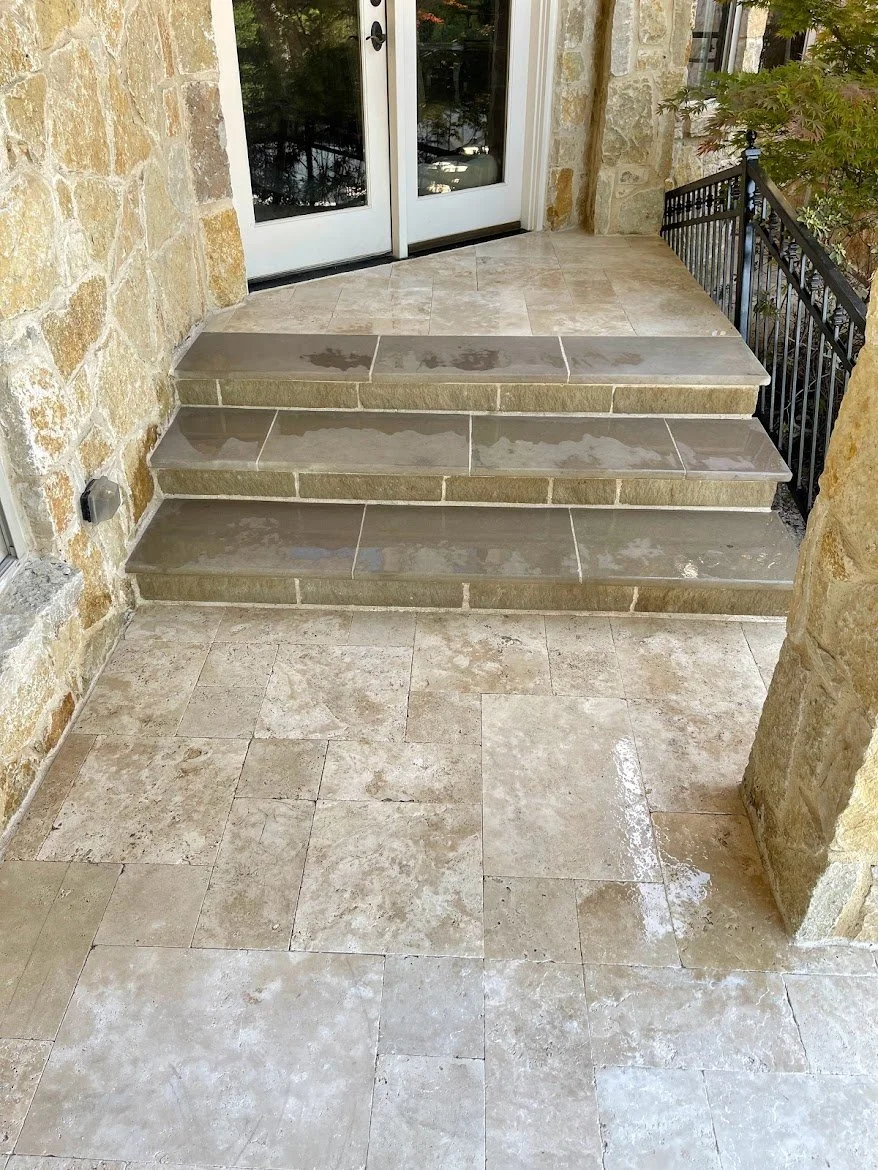
Key Takeaways
- Filled and sealed travertine outperforms most flagstone types in DFW's freeze-thaw cycles and stays cooler underfoot during extreme summer heat — a meaningful advantage in North Texas.
- Flagstone durability varies dramatically by stone type: slate and quartzite rival travertine's longevity, while sandstone and limestone require more diligent sealing and maintenance in DFW's climate.
- DFW's expansive clay soils make base preparation non-negotiable — a 4–10 inch compacted gravel base is essential for both materials to prevent cracking, shifting, and freeze-thaw damage.
- Installed costs range from $12–$35/sq ft for travertine and $15–$30/sq ft for flagstone in DFW; both require ongoing sealing every 2–4 years to protect the investment.
- Trust Brick and Stone Master for nearly 30 years of DFW masonry expertise, 331+ five-star Google reviews, and guaranteed workmanship — visit Brick and Stone Master to start your patio project.
Travertine vs Flagstone For Patio: Which Withstands Weather Better?
Travertine edges out flagstone for DFW's extreme heat and freeze-thaw cycles when properly sealed and installed with a robust base, thanks to its density and cooler surface temperature. However, denser flagstone types like slate and quartzite can match travertine's durability if installed correctly on a deep, compacted gravel foundation to counteract clay soil movement. The real winner depends on your aesthetic preference, budget, and commitment to maintenance.
Understanding how each material performs under DFW's specific climate stressors—intense heat, occasional freeze-thaw cycles, and expansive clay soils—will help you choose the patio that lasts decades without costly repairs.
Brick & Stone Master
Free Consultation & Guaranteed Brick & Mortar Match
Core Service Programs:
- Masonry Repair & Restoration for crack repair, brick and mortar matching, chimney repair, and structural masonry
- New Masonry & Outdoor Living for fireplaces, outdoor kitchens, patios, driveways, columns, and mailboxes
- HOA & Commercial Masonry for screening walls, entryways, monument signs, and commercial buildings
Why Choose Brick & Stone Master:
- ✓ Trusted by customers with 331+ five-star Google reviews
- ✓ Owner Bill Schultheis has worked in masonry since 1983 — four decades of the craft
- ✓ Serving the Dallas-Fort Worth metroplex for nearly 30 years
- ✓ Brick and mortar matches guaranteed — old-to-new color and texture
- ✓ Fully insured and debt-free, with a .96 EMR safety record
- ✓ One masonry partner for homeowners, HOAs, property managers, and commercial
- ✓ Free consultations and a military discount for those who served
Travertine vs Flagstone: Material Properties and DFW Climate Performance
Travertine is a dense limestone formed from mineral spring deposits. Its natural porosity is actually an asset in DFW summers — the stone absorbs and releases heat more slowly than concrete, keeping the surface noticeably cooler underfoot when temperatures push past 100°F. That said, the same porosity that keeps your feet comfortable can work against you if the stone isn't sealed: oils, grease, wine, and acidic substances penetrate quickly and leave permanent stains.
Flagstone is a broader category — it refers to any sedimentary rock (sandstone, slate, quartzite, or limestone) that splits naturally into flat slabs. This means "flagstone" isn't a single material with predictable performance. Slate and quartzite are dense, low-porosity stones that resist staining and weathering well. Sandstone and limestone are softer and more porous, requiring more aggressive sealing schedules to hold up in DFW's climate.
The factor that matters most for both materials in DFW isn't the stone itself — it's what's underneath it. DFW's expansive clay soils expand when wet and contract when dry, generating significant vertical movement that can crack or shift any patio not anchored by a proper base. Understanding brick repair in clay soil and foundation movement illustrates just how aggressively this region's soil behaves — and why a 4–10 inch compacted gravel base isn't optional for either travertine or flagstone.
Durability Comparison: Freeze-Thaw Resistance and Longevity
DFW doesn't see the brutal winters of the northern US, but freeze-thaw cycles do occur — and even a handful of freeze events per year can do real damage to improperly installed or unsealed stone. Water that penetrates a porous surface expands when it freezes, and that expansion fractures stone from the inside out over time.
Filled and honed travertine handles freeze-thaw cycles well because the pits and voids in the stone's surface are filled with grout or resin, leaving nowhere for water to pool and freeze. Properly maintained travertine can last 75–100 years — a genuine lifetime investment. Unfilled travertine, by contrast, traps water in its natural pits and is far more vulnerable to freeze-thaw damage. If you're choosing travertine for a DFW patio, filled is the only sensible option.
Among flagstone types, slate and quartzite are the freeze-thaw champions — their low porosity leaves little room for water infiltration. A well-installed slate or quartzite patio can last 20+ years with modest maintenance. Sandstone and limestone flagstone are more vulnerable; without consistent sealing, they absorb moisture and deteriorate faster under DFW's weather swings. Comparing natural stone vs poured concrete for outdoor applications puts these durability differences into broader perspective.
Pro Tip: Filled Travertine for DFW
If you choose travertine, always specify filled and honed travertine, not unfilled. Unfilled travertine's pits trap water, which expands during freeze-thaw cycles and causes cracking. Filled travertine is more durable and easier to maintain in DFW's climate.
| Factor | Travertine (Filled) | Flagstone — Slate/Quartzite | Flagstone — Sandstone/Limestone |
|---|---|---|---|
| Freeze-Thaw Resistance | High (when filled & sealed) | High | Moderate (requires diligent sealing) |
| Estimated Lifespan | 75–100 years | 20+ years | 10–20 years |
| Sealing Frequency | Every 1–3 years | Every 2–4 years | Every 1–2 years |
| Hail Resistance | Good | Very Good | Moderate |
| Surface Temperature (DFW Summer) | Cooler than concrete | Moderate | Moderate |
Cost Breakdown: Installation and Long-Term Maintenance
Travertine installed in DFW typically runs $12–$35 per square foot. The wide range reflects real variables: travertine grade, finish type (filled vs. unfilled, chiseled edge vs. honed), pattern complexity, and the depth of base preparation required for your specific site. A 300 sq ft patio lands somewhere between $3,600 and $10,500 depending on those factors. Premium French-pattern layouts or high-grade imported travertine push toward the upper end.
Flagstone installed costs in DFW run $15–$30 per square foot. Sandstone sits at the lower end; slate and quartzite command higher prices due to material cost and the precision required to work with denser stone. Installation method matters too — dry-laid flagstone is less labor-intensive and generally cheaper, while concrete-set flagstone adds stability that DFW's soil movement demands. A 300 sq ft flagstone patio typically costs $4,500–$9,000. The retaining wall cost guide for North Texas provides useful context on what excavation and base preparation add to any hardscape project in this region.
Neither number tells the full story. Hidden costs that routinely catch homeowners off guard include excavation, 4–10 inches of compacted crushed stone base, polymeric sand or grout for joints, edge treatments, sealers, debris removal, and permits. Budget for these from the start.
| Cost Item | Travertine | Flagstone |
|---|---|---|
| Installed Cost (DFW) | $12–$35/sq ft | $15–$30/sq ft |
| 300 sq ft Patio Estimate | $3,600–$10,500 | $4,500–$9,000 |
| Professional Sealing | $1–$2/sq ft every 1–3 yrs | $115–$245/application every 2–4 yrs |
| Joint Maintenance | Minimal (mortar/concrete-set) | Re-sanding every 1–3 yrs (dry-laid) |
| 10-Year Maintenance Outlook | Lower frequency, higher per-event cost | More frequent joint upkeep; sealing costs comparable |
| ROI Potential | Premium aesthetic, long lifespan | 30%–70% ROI cited (Forbes Home) |
Installation Methods and Base Preparation: Why DFW's Clay Soil Matters
DFW's clay soils are notorious among contractors who work here. When it rains, the soil swells. When it dries out — which happens fast in a Texas summer — it contracts. That cycle of expansion and contraction generates enough vertical movement to crack stone, pop mortar joints, and shift entire patio sections if the foundation beneath isn't engineered to absorb it. This isn't a theoretical risk; it's the most common cause of patio failure in North Texas.
The solution is a deep, well-compacted gravel base — typically 4–10 inches of crushed stone, compacted in lifts — that creates a stable, draining platform beneath the stone. Proper grading is equally important: water needs a clear path away from the patio surface and the structure of your home. Without both, you're building on a foundation that will work against you from the first wet season. For guidance on base materials and soil stabilization techniques, the best retaining wall blocks for DFW residential and commercial projects covers related principles that apply directly to patio base construction.
Travertine is typically mortar-set or concrete-set, which provides excellent stability but requires skilled labor and proper curing time. Flagstone can be dry-laid — a more affordable, rustic approach — or concrete-set for greater stability. In DFW's soil conditions, concrete-set flagstone is the more reliable long-term choice, even though it costs more upfront. Dry-laid installations aren't wrong, but they require more frequent joint maintenance and are more susceptible to shifting in areas with significant clay soil movement.
Red Flag: Skipped Base Preparation
Contractors who skip or minimize base preparation are setting your patio up for failure. In DFW's clay soil, a deep, well-compacted gravel base (4–10 inches) is non-negotiable. If a contractor quotes a suspiciously low price or doesn't detail base preparation, get a second opinion.
Stain Resistance and Maintenance: Which Material Stays Cleaner Longer?
Travertine's porosity is its biggest maintenance liability. Oils from grilling, red wine, citrus, and even fertilizer can penetrate an unsealed surface and leave stains that are difficult or impossible to remove without professional intervention. The fix is consistent sealing — every 1–3 years depending on traffic and exposure — and prompt cleanup of spills. Let a cooking oil splatter sit for an afternoon on unsealed travertine and you may be looking at a permanent mark.
Flagstone's stain resistance is a function of which stone you choose. Slate and quartzite are naturally dense; spills bead up rather than soaking in, and they're far more forgiving if you don't catch a spill immediately. Sandstone and limestone are another story — they're porous enough that sealing isn't optional, it's urgent. For any flagstone patio, the sealing schedule should match the stone type: denser stones every 2–4 years, more porous types annually. Professional cleaning and waterproofing services for masonry can extend the life of your sealer and catch deterioration before it becomes a repair bill.
Sealing Is Not Optional—It's Insurance
Both travertine and flagstone require regular sealing to protect against stains, moisture, and UV damage. Yes, it's an ongoing cost, but it's far cheaper than replacing a stained or damaged patio. Think of sealing as insurance for your investment.
Travertine vs Flagstone: Feature Comparison Table
| Feature | Travertine (Filled) | Flagstone — Dense (Slate/Quartzite) | Flagstone — Porous (Sandstone/Limestone) |
|---|---|---|---|
| Material Origin | Mineral spring limestone | Metamorphic sedimentary rock | Sedimentary rock |
| Porosity | Moderate (reduced when filled) | Low | Moderate to High |
| Freeze-Thaw Resistance | High | High | Moderate |
| Installed Cost (DFW) | $12–$35/sq ft | $20–$30/sq ft | $15–$22/sq ft |
| Lifespan (with maintenance) | 75–100 years | 20+ years | 10–20 years |
| Sealing Frequency | Every 1–3 years | Every 2–4 years | Every 1–2 years |
| Stain Resistance | Moderate (seal promptly) | High | Low to Moderate |
| Surface Temp (DFW Summer) | Cooler than concrete | Moderate | Moderate |
| Aesthetic | Refined, classic, uniform | Natural, varied, contemporary | Rustic, warm, irregular |
| DFW Clay Soil Sensitivity | Requires deep compacted base | Requires deep compacted base | Requires deep compacted base |
| Maintenance Burden | Low-moderate (sealing + spill response) | Low | Moderate to High |
Why Brick and Stone Master is the Right Choice for DFW Patio Installation
Choosing between travertine and flagstone is only half the decision. The other half — the half that determines whether your patio looks great in 20 years or starts cracking in three — is who installs it. DFW's clay soils, extreme heat, and occasional freeze-thaw cycles don't forgive shortcuts, and the difference between a contractor who understands this region's specific challenges and one who doesn't shows up fast.
Brick and Stone Master has been serving the DFW metroplex for nearly 30 years, and owner Bill Schultheis has been in masonry since 1983. That depth of experience means he's seen what happens when base preparation gets skipped, when the wrong stone gets specified for a particular site, and when sealing schedules get ignored. The 331+ five-star Google reviews the company has earned reflect a consistent track record of getting these details right — not just on the first project, but across decades of work in this specific market.
Brick and Stone Master's guaranteed brick and mortar matching ensures that any new patio work integrates seamlessly with your home's existing masonry — a detail that matters enormously for curb appeal and resale value. The company is fully insured with a .96 EMR safety record, meaning professional standards extend to every aspect of how they operate on your property. Whether your project calls for travertine's refined elegance or flagstone's natural character, the team brings the same rigorous approach to base preparation, drainage, and material specification that DFW's demanding soil and climate require. You can explore the full range of stonework services Brick and Stone Master offers for outdoor living projects across the metroplex.
Frequently Asked Questions
Both are excellent natural stone options, and the right answer depends on your priorities. Travertine stays cooler underfoot — a meaningful advantage when DFW summers push surface temperatures to uncomfortable levels — and offers superior freeze-thaw resistance when filled and sealed. Flagstone offers a more rustic, natural aesthetic and can be extremely durable, especially in denser types like slate or quartzite, provided it's installed with a proper base to counteract clay soil movement. Consider your desired look, budget, and tolerance for ongoing maintenance when making the call.
Installed costs for travertine patios in DFW typically range from $12 to $35 per square foot, depending on travertine grade, finish (filled vs. unfilled, chiseled vs. honed), pattern complexity, and site-specific factors like base preparation depth. A 300 sq ft patio might cost $3,600 to $10,500. Premium French-pattern layouts or high-grade imported stone push toward the upper end of that range, and excavation and base prep costs should be budgeted separately if not itemized in the contractor's quote.
Installed costs for flagstone patios in DFW generally range from $15 to $30 per square foot, with significant variation based on stone type (sandstone is more affordable; slate and quartzite command higher prices), thickness, installation method (dry-laid vs. concrete-set), and the soil preparation required for DFW's clay soils. A 300 sq ft flagstone patio typically costs $4,500 to $9,000. Concrete-set installations cost more upfront but provide greater long-term stability in DFW's challenging soil conditions.
DFW's expansive clay soils expand when wet and contract when dry, generating significant vertical movement that can crack or shift any patio not built on a stable foundation. A deep, well-compacted gravel base — typically 4–10 inches of crushed stone — absorbs that soil movement and provides the drainage needed to prevent water accumulation beneath the surface, which accelerates both freeze-thaw damage and soil instability. Proper grading to direct water away from the patio is equally essential. Any contractor who doesn't detail base preparation in their quote is a red flag worth taking seriously.
Brick and Stone Master brings 331+ five-star Google reviews, nearly 30 years of DFW-specific experience, and owner Bill Schultheis's masonry expertise dating back to 1983. The company guarantees brick and mortar matching, maintains a .96 EMR safety record, and has a deep understanding of DFW's clay soil challenges that most contractors simply don't have. Every project — whether travertine, flagstone, or any other masonry work — gets the same rigorous attention to base preparation, material specification, and long-term durability. Schedule a free consultation to see how Brick and Stone Master can transform your outdoor space.
Ready to Build a Patio That Handles DFW Weather for Decades?
Whether you're leaning toward travertine's refined elegance or flagstone's natural character, the right installation makes all the difference in DFW's demanding climate. Brick and Stone Master will help you choose the right material, specify the right base, and install it correctly the first time — backed by nearly 30 years of DFW masonry experience and 331+ five-star reviews.
Schedule a Free Consultation*Pricing, project scope, and material availability mentioned in this article are accurate as of the date of publication and are subject to change. Masonry estimates depend on site conditions, material matching, and access, and are finalized after an on-site evaluation. Please contact us directly for a current quote on your specific project.