
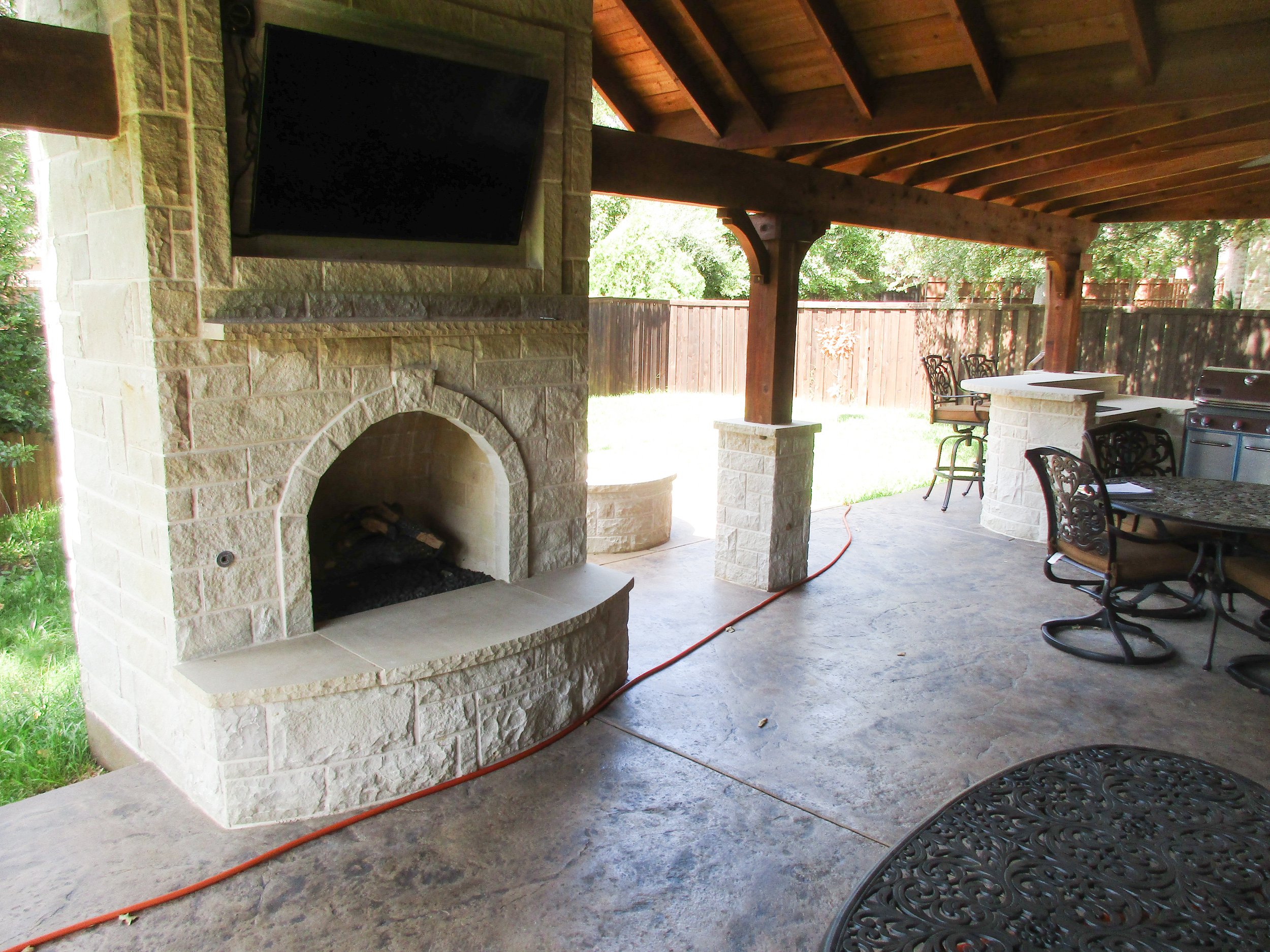
You've spent months imagining it: a fully equipped outdoor kitchen in your DFW backyard, where weekend cookouts become real events and summer evenings stretch long into the night. You've pulled up photos, talked to a couple of contractors, and narrowed your material choice to two front-runners—brick or natural stone. And now you're stuck. Brick feels proven, practical, and built for the long haul. Natural stone looks stunning, like something out of a luxury magazine. But which one actually holds up in North Texas heat? Which one adds more to your home's resale value? And which one won't quietly drain your wallet in maintenance costs over the next decade?
These are exactly the right questions to be asking—and the honest answer is that neither material is universally better. The right choice depends on your climate reality, your budget, your maintenance tolerance, and your long-term vision for the space. The good news: once you understand the real trade-offs, the decision becomes much clearer. Let's break down exactly what you need to know.
Key Takeaways
- Brick outdoor kitchens cost $15,000–$30,000 entry-level; natural stone runs $30,000–$60,000 mid-range—stone is typically 1.5x to 3x more expensive.
- Both materials can last 50–100+ years with proper installation; granite tops the durability chart at 100+ years, while porous stones like sandstone may last 40–60 years with diligent sealing.
- DFW's expansive clay soils and freeze-thaw cycles make foundation quality more important than material choice—budget $3,000–$10,000 for proper slab work.
- Outdoor kitchens can increase perceived home value by 5–15% in DFW and recoup 50–60% of their cost at resale.
- Brick requires less frequent maintenance (sealing every 1–2 years); natural stone demands more attention (sealing every 2–5 years, more costly repairs).
- Permits are required in most DFW municipalities for permanent outdoor kitchen structures—contractors who skip them are a serious red flag.
- Book your contractor by December or January if you want a spring installation—peak season fills up fast.
Brick vs Natural Stone: The Durability Showdown in DFW's Climate
Durability isn't just about which material is harder or denser in a laboratory setting. In the real world—specifically in North Texas—durability is about how a material performs against 110°F summers, periodic hard freezes, intense UV radiation, and the relentless movement of expansive clay soils beneath your foundation. Both brick and natural stone have long track records in outdoor applications, but they respond to DFW's specific climate challenges in meaningfully different ways.
Properly installed and maintained brick typically lasts 50 to 100+ years. It's a dense, fired material that has been used in Texas construction for well over a century, and it handles temperature extremes reliably. Natural stone's lifespan is far more variable: granite can outlast virtually everything at 100+ years, while porous stones like limestone or travertine may deliver 50–75 years with regular sealing, and sandstone can start showing wear in 40–60 years if maintenance lapses. Understanding how masonry contractors handle DFW's expansive clay soils is essential before committing to either material, because the foundation beneath your kitchen matters more than what's on top of it.
How DFW's Extreme Heat Affects Brick and Stone
Both brick and natural stone handle high temperatures well as structural materials—neither is going to melt or warp in a Texas summer. But heat affects them in subtler ways that matter over time. Darker-colored materials absorb significantly more heat, which can cause minor thermal expansion and put stress on mortar joints over years of repeated heating and cooling cycles. Lighter-colored materials—think travertine, light limestone, or tan brick—stay cooler to the touch and resist UV-related fading better than their darker counterparts.
UV exposure is a particular concern in DFW. Intense sun degrades sealants faster than in cooler climates, meaning you'll need to reseal more frequently here than national guidelines typically suggest. It also fades mortar over time, which affects both appearance and water resistance. Proper sealing—and the right sealant product for your specific material—is your best defense against heat-related degradation for both brick and stone.
Freeze-Thaw Cycles and Water Penetration
North Texas isn't Minnesota, but it does experience periodic hard freezes—sometimes dropping well below 32°F for multiple days. When water infiltrates porous masonry and then freezes, it expands and can cause spalling (surface flaking) or cracking from the inside out. This is where material porosity becomes a critical factor in the brick vs natural stone outdoor kitchen debate.
Brick is generally denser than most natural stones and less prone to freeze-thaw damage when properly installed. Dense natural stones like granite share this resilience. But porous stones—limestone, travertine, sandstone—can absorb water readily if unsealed, making them vulnerable to freeze-thaw spalling even in DFW's relatively mild winters. Proper drainage design, adequate slope away from the structure, and diligent sealing are non-negotiable for either material. And because DFW's clay soils shift seasonally, even a perfectly sealed surface can develop cracks if the foundation beneath it moves—which is why engineered foundation work is the real starting point for any outdoor kitchen project.
Feeling Overwhelmed by the Choice?
You're not alone—choosing between brick and stone is one of the biggest decisions in an outdoor kitchen project. The good news: both materials can deliver decades of durability in DFW's climate. The key is understanding your priorities (budget, maintenance, aesthetics) and matching them to the right material. The sections below will help you do exactly that.
Cost Breakdown: Initial Investment and Long-Term Expenses
Cost is where the brick vs natural stone outdoor kitchen comparison gets concrete—and where a lot of homeowners get surprised. The sticker price you see in a contractor's initial quote rarely tells the full story. Understanding both the upfront investment and the total cost of ownership over five years gives you a much more accurate picture of what you're actually committing to. For a detailed breakdown of what licensed masons charge and why, the masonry outdoor kitchen cost breakdown for licensed masons is worth reading before you start collecting quotes.
In DFW's market, expect to pay 10–20% more than national averages. This reflects higher labor costs, strong demand for premium materials, and an affluent buyer base that expects quality finishes and integrated features. That premium is real, and it's worth factoring into your budget from day one.
Material Costs: Brick vs Stone Price Comparison
Brick runs approximately $5–$15 per square foot installed. Its manufactured consistency means less on-site cutting, fitting, and adjustment—which keeps labor costs lower. Natural stone ranges from $15–$50+ per square foot installed, with the wide spread reflecting dramatic differences between stone types. Granite sits at the high end; standard limestone is more accessible; travertine falls somewhere in between. The quarrying, transportation, and specialty cutting required for natural stone add significant costs that brick simply doesn't carry.
At the project level, entry-level brick outdoor kitchens in DFW typically run $15,000–$30,000. Mid-range natural stone projects run $30,000–$60,000. Premium custom builds in either material can reach $60,000–$150,000 or more, depending on features like built-in fireplaces, full kitchen setups, and extensive stonework. The labor intensity of natural stone is a major cost driver—it's why DIY vs professional masonry for outdoor kitchens is such a common question, and why the answer almost always points toward professional installation for anything involving stone.
Hidden Costs That Surprise Homeowners
The most common budget shock in outdoor kitchen projects isn't the material itself—it's everything that has to happen before the first brick or stone gets laid. Here's what frequently gets underestimated or left out of initial quotes:
- Foundation and slab work: $3,000–$10,000. In DFW's expansive clay soil environment, this isn't optional—it's the single most important investment you'll make in your outdoor kitchen's longevity.
- Utility rough-ins (gas lines, electrical wiring, water supply): $1,000–$5,000. A functional kitchen needs these, and they require licensed tradespeople and separate permits.
- Drainage and site grading: $1,000–$5,000. Proper slope and drainage prevent water from pooling against your masonry and accelerating deterioration.
- Initial sealing and waterproofing: $500–$2,000. Critical in DFW's climate and should be factored into your opening budget, not treated as an afterthought.
- Permits: $100–$1,000 depending on your municipality and the scope of work involved.
Add these to your material and labor costs and you have a much more realistic project budget. A quote that doesn't include these line items isn't necessarily dishonest—but it's incomplete, and you need to ask about each one explicitly.
5-Year Total Cost of Ownership
When you look at five-year total cost of ownership, the gap between brick and stone widens further. Brick's lower initial cost is compounded by lower ongoing maintenance expenses: annual or biannual sealing, periodic cleaning, and repointing every 15–25 years. Total five-year maintenance for a brick outdoor kitchen typically runs $1,000–$4,000.
Natural stone carries higher initial costs and more frequent, more expensive maintenance. Sealing every 2–5 years (depending on stone type), quarterly or biannual cleaning with pH-neutral products, and the higher cost of crack or spall repairs push five-year maintenance to $2,000–$7,000. Combined with the higher upfront investment, the five-year total cost of ownership for brick runs approximately $16,000–$34,000; for stone, $32,000–$67,000. That's a meaningful difference—and one worth factoring into your material decision alongside aesthetics and durability.
Not Sure What a Realistic Budget Looks Like for Your Project?
Hidden costs catch a lot of DFW homeowners off guard. A free consultation is the fastest way to get a realistic number for your specific backyard, material choice, and feature list—before you commit to anything.
Schedule a Free ConsultationHome Value Impact: Which Material Adds More ROI in DFW?
For most homeowners, the investment in an outdoor kitchen isn't purely about personal enjoyment—it's also about what it does to the home's market value. DFW's outdoor living culture is real and well-documented. Buyers in this market, particularly in affluent suburbs like Southlake, Keller, Trophy Club, and Roanoke, actively seek homes with well-designed outdoor spaces. That demand creates genuine value.
Nationally, outdoor kitchens recoup approximately 50–60% of their cost at resale. In DFW's premium suburban markets, that figure can trend higher, particularly for well-integrated, high-quality masonry kitchens. Well-built masonry outdoor kitchens can increase perceived home value by 5–15%, depending on the quality of finishes, the coherence of the design, and how well the space integrates with the home's existing architecture and landscaping. Working with the best masonry contractors for outdoor kitchens in DFW is one of the most reliable ways to ensure your investment translates into real resale value.
Resale Value Expectations for Brick Outdoor Kitchens
Brick outdoor kitchens appeal strongly to value-conscious buyers and those who prioritize durability and low maintenance. The perception of longevity that brick carries—rooted in its century-long track record in Texas construction—gives buyers confidence. They're not wondering if it'll need to be rebuilt in ten years. That confidence translates into a willingness to pay a premium.
In DFW's suburban growth areas, brick outdoor kitchens typically achieve ROI in the 50–65% range. Brick's timeless aesthetic also works with a wide range of home styles—from traditional ranch homes to newer craftsman and transitional designs—which broadens its buyer appeal. A brick kitchen that looks like it belongs to the home will always outperform one that looks like an afterthought, regardless of material quality.
Resale Value Expectations for Natural Stone Outdoor Kitchens
Natural stone carries a higher perceived luxury value, and in the right context—affluent DFW neighborhoods, high-end home architecture, flawless execution—it can command ROI in the 60–70% range. Buyers in luxury segments respond to the visual richness of premium stone, particularly granite and high-quality limestone, in ways that brick simply can't replicate.
The risk with natural stone is that its value proposition is more fragile. Visible damage—spalling, staining, cracking—significantly reduces perceived value and can make a premium investment look like a liability to buyers. Poor sealing, inadequate drainage, or substandard installation can turn a $50,000 stone kitchen into a negotiating point that costs you more at closing than you'd expect. Flawless execution isn't just aesthetically important with natural stone—it's financially critical.
Factors That Maximize Home Value Beyond Material Choice
Here's something most material comparison guides don't tell you: the material you choose matters less than how well the entire project is executed. Buyers and appraisers respond to the totality of the space—how it looks, how it functions, and how well it integrates with the home. The factors that most reliably maximize value include:
- Architectural integration: Does the outdoor kitchen look like it was designed for this home, or does it look like it was dropped into the backyard?
- Quality of appliances and finishes: Premium grills, integrated refrigeration, quality countertops, and thoughtful lighting all contribute to perceived value.
- Proper permits and documentation: Buyers and their agents ask about permits. Having them in order is a selling point; not having them is a liability.
- Visible condition at time of sale: A well-maintained outdoor kitchen in excellent condition communicates pride of ownership and reduces buyer hesitation.
Maximize Your ROI: Focus on Integration
The material you choose matters, but how well your outdoor kitchen integrates with your home's architecture and landscape matters more. A beautifully designed brick kitchen that complements your home's style will outperform a premium stone kitchen that looks disconnected. Work with your contractor on design cohesion from the very first conversation—it's one of the highest-return decisions you can make.
Maintenance Requirements: What You'll Actually Need to Do
Maintenance is where the lifestyle reality of your material choice becomes clear. Both brick and natural stone require ongoing care to perform well in DFW's climate—but the frequency, complexity, and cost of that care differ significantly. Setting honest expectations here prevents the frustration that comes from discovering your beautiful stone kitchen needs more attention than you bargained for.
The cleaning and waterproofing services required for outdoor masonry in North Texas are more demanding than in cooler, less UV-intense climates. DFW's extreme heat accelerates sealant degradation, meaning national maintenance guidelines often underestimate what's actually needed here. If you're planning to hire out maintenance rather than DIY it, factor those recurring costs into your total cost of ownership from the start.
Brick Maintenance Schedule and Costs
A realistic brick maintenance schedule for a DFW outdoor kitchen looks like this:
- Annual inspection: Look for cracks, spalling, or mortar deterioration. Catching small issues early prevents expensive repairs later.
- Sealing: Every 1–2 years in DFW's climate. Expect to pay $500–$1,500 for a typical outdoor kitchen. Don't skip this—DFW's UV intensity degrades sealants faster than most homeowners expect.
- Cleaning: Annual pressure washing or gentle hand cleaning; $200–$500. Avoid high-pressure settings that can damage mortar joints.
- Repointing: Every 15–25 years, depending on exposure and mortar quality. Runs $5–$15 per linear foot. This is where brick repair and restoration in North Texas becomes relevant—professional repointing done right extends your kitchen's life by decades.
- Crack repair: $200–$1,000+ depending on severity. Most cracks in well-installed brick kitchens are minor and cosmetic, but foundation-related cracks need immediate professional attention.
Natural Stone Maintenance Schedule and Costs
Natural stone demands more from you—and from your budget. Here's what a realistic maintenance schedule looks like:
- Sealing: Every 2–5 years depending on stone type and porosity. Porous stones like travertine and limestone need more frequent attention. Cost: $800–$2,000 for a typical outdoor kitchen.
- Cleaning: Quarterly or biannual with pH-neutral cleaner—standard household cleaners can etch or stain many natural stones. Cost: $300–$800 per cleaning.
- Spall repair: $500–$2,000+ per repair. More common in porous stones, especially after freeze-thaw events. Granite is far less susceptible.
- Crack repair: $1,000–$3,000+ depending on stone type and visibility. Matching stone for repairs can be challenging and expensive, particularly for less common varieties.
- Grout maintenance: Similar to brick but may require more frequent attention in high-use areas around cooking surfaces.
DFW-Specific Maintenance Challenges
A few DFW-specific factors push maintenance requirements beyond what you'd find in national guidelines. Extreme summer heat—consistently above 100°F—accelerates sealant breakdown, meaning you may need to reseal on the shorter end of the recommended interval. Intense UV exposure fades mortar and can affect stone color over time; lighter materials show less of this fading. DFW's expansive clay soils mean you should inspect for new cracks annually, particularly after wet-dry cycles that cause significant soil movement. And while DFW's freezes are less severe than northern climates, they're real enough to cause damage to unsealed porous materials—something that catches homeowners off guard after mild winters lull them into skipping a sealing cycle.
Material Selection Guide: Brick, Stone Types, and Best Uses
Not all brick is the same, and natural stone is an entire category of materials with wildly different performance characteristics. Understanding the specific options available to you—and how each performs in DFW's climate—is essential to making a choice you'll be happy with for decades. If you're weighing stone against other alternatives, the comparison of natural stone vs poured concrete for outdoor bars and kitchens offers useful context on how stone stacks up against other popular options.
Brick Varieties for Outdoor Kitchens
Three main types of brick are commonly used in DFW outdoor kitchen projects:
- Clay brick: The gold standard for outdoor masonry. Fired at high temperatures, clay brick achieves exceptional density and durability—50 to 100+ year lifespan with proper care. Classic aesthetic, moderate cost, and proven performance in Texas climates. This is the most common choice for outdoor kitchens and the one with the longest track record.
- Concrete brick: More affordable than clay, with a consistent, clean appearance that suits modern and contemporary designs. Slightly less durable than clay brick over the very long term, but still a solid performer for outdoor kitchens. Good option for budget-conscious projects where aesthetics lean modern.
- Reclaimed brick: The premium aesthetic choice—aged character and warmth that new brick simply can't replicate. Variable durability depending on source and condition; requires careful vetting. Highest cost and most challenging to source. Best for homeowners who prioritize a specific look and are willing to invest in proper evaluation.
Color matters more than many homeowners realize. In DFW's intense sun, lighter-colored bricks (tan, cream, light gray) resist fading better and stay cooler to the touch than darker reds and browns. If your outdoor kitchen will see heavy barefoot traffic, this is worth factoring into your selection.
Natural Stone Options and Durability Ranking
From most to least durable for DFW outdoor conditions:
- Granite: The clear durability leader. Hardest, densest, most resistant to water penetration, heat, and freeze-thaw damage. Lifespan: 100+ years. Minimal sealing required compared to other stones. Most expensive, but the lowest long-term maintenance cost of any natural stone. Premium aesthetic with a wide range of colors and patterns.
- Limestone: Moderate durability—50 to 75 years with proper sealing. Mid-range cost. Requires regular sealing due to moderate porosity. Elegant, classic appearance that complements many DFW home styles. A solid choice if you're committed to maintenance.
- Travertine: Warm tones and distinctive texture make it visually appealing. Moderate durability (50–75 years), but more porous than limestone and requires frequent sealing. Popular in luxury DFW builds, but demands consistent maintenance to perform well outdoors.
- Sandstone: Beautiful natural color variation, but the least durable option for outdoor kitchens. Most porous, most susceptible to freeze-thaw damage, and requires the most intensive sealing regimen. Lifespan of 40–60 years with diligent care. Best suited to covered or partially sheltered applications where exposure to moisture is limited.
Choosing Based on DFW Climate and Lifestyle
The right material for your outdoor kitchen isn't just about what looks best in photos—it's about what fits your actual life. Here's a practical framework:
- Low-maintenance preference: Granite or quality clay brick. Both require the least frequent sealing and are the most forgiving if you miss a maintenance cycle.
- Budget-conscious: Clay brick or concrete brick. Lower upfront cost, proven durability, and manageable ongoing maintenance.
- Aesthetic priority: Travertine or reclaimed brick. Premium visual impact, but plan for higher maintenance investment.
- Maximum durability: Granite. The highest initial cost but the lowest long-term risk and the longest expected lifespan.
Installation Quality and Foundation: Why It Matters More Than Material
This is the section most homeowners wish they'd read before signing a contract. The single biggest predictor of your outdoor kitchen's longevity isn't whether you chose brick or granite—it's whether the foundation was properly engineered and the installation was executed by someone who genuinely understands DFW's soil conditions. A premium stone kitchen on a weak foundation will fail faster than a basic brick kitchen on a properly engineered slab. Every time.
Before any masonry work begins, you need to understand the outdoor kitchen masonry permit requirements in DFW—because the permit process is what ensures your foundation work gets inspected and meets code. Skipping permits doesn't just create legal exposure; it removes the oversight that protects you from substandard foundation work.
Why DFW's Expansive Clay Soils Matter
North Texas sits on expansive clay that swells when wet and shrinks when dry. This seasonal movement can crack masonry structures if the foundation isn't properly engineered to accommodate it. That's why a robust foundation—often $3,000–$10,000—isn't an optional upgrade. It's the foundation (literally) of everything else. Skimping here leads to cracking and premature failure, regardless of whether you choose brick or stone.
Foundation Requirements for DFW's Expansive Clay Soils
DFW's expansive clay soils expand significantly when saturated and contract during dry periods. This cyclical movement—which can be substantial over a single season—puts constant stress on any structure sitting on top of it. For an outdoor kitchen, which is a heavy, rigid masonry structure, this means the foundation must be engineered to either resist that movement or flex with it in a controlled way.
A slab-on-grade with proper grading and drainage is the standard approach for DFW outdoor kitchens. The slab must be thick enough, reinforced appropriately, and graded to direct water away from the structure. For larger or more complex projects, a geotechnical assessment may be warranted. Budget $3,000–$10,000 for this work. It's the most important money you'll spend on the entire project.
Mortar Mix and Installation Techniques
Mortar is the connective tissue of any masonry structure, and the wrong mix can undermine even the best materials. Type N mortar is standard for many applications; Type S offers greater strength and is better suited to structural outdoor applications; Type O is softer and typically used for interior or non-structural work. In DFW's climate, mortar needs to be flexible enough to accommodate soil movement and temperature swings without cracking.
Professional masons adjust their mortar mix based on the specific material, climate exposure, and application. This is not something that can be reliably replicated with a bag of pre-mixed mortar from a home improvement store. DIY outdoor kitchen projects frequently fail within 5–10 years due to improper mortar selection and application—a costly lesson that professional installation prevents from the start. The stonework services offered by experienced DFW masons reflect this specialized knowledge.
Why Permits and Inspections Protect Your Investment
Permits aren't bureaucratic overhead—they're your protection. When a permit is pulled and inspections are conducted, an independent third party verifies that the foundation meets code, the electrical work is safe, and the gas lines are properly installed. That verification protects you in three specific ways: it ensures the work is done right, it creates documentation that supports your home's resale value, and it gives you recourse through your local building department if something goes wrong.
Unpermitted work can complicate or derail a home sale, affect your homeowner's insurance coverage, and leave you with no legal recourse if the contractor's work fails. Any contractor who suggests skipping permits to save time or money is telling you something important about how they operate—and it's not reassuring.
Concerned About Foundation Work and DFW's Soil Challenges?
If you want to talk to a contractor who has engineered foundations for DFW's expansive clay soils hundreds of times and can walk you through exactly what your project needs, a free consultation is the right next step.
Schedule a Free ConsultationFinding and Vetting Contractors in DFW: Red Flags and Best Practices
DFW has no shortage of masonry contractors. What it does have is a shortage of skilled masons who specialize in outdoor kitchens, understand the local climate's specific demands, and operate with the transparency and accountability that a $30,000–$100,000 project deserves. Finding the right contractor is arguably as important as choosing the right material—and it requires more than checking Google reviews.
Red Flag: Contractors Who Skip Permits
If a contractor says "we don't need permits" or suggests skipping them to save money or speed up the timeline, walk away immediately. Permits aren't optional in most DFW municipalities for permanent outdoor kitchen structures—they're required. A contractor who skips them is either uninformed about local codes or deliberately cutting corners. Either way, you're the one who pays the price.
Essential Contractor Credentials and Verification
Texas does not have a statewide masonry license, which means the burden of verification falls on you as the homeowner. Here's what to check before signing anything:
- Texas Secretary of State business registration: Verify the company is a registered business entity. This is your baseline check for legitimacy.
- General liability insurance: Minimum $1 million. Ask for the certificate directly—don't take their word for it.
- Workers' compensation insurance: Required if they have employees. Protects you from liability if a worker is injured on your property.
- References: Ask for 3–5 outdoor kitchen projects completed in DFW within the past 2–3 years. Call those references. Ask specifically about foundation work, timeline adherence, and post-completion support.
- Portfolio: Review photos of completed projects using your chosen material. General masonry experience doesn't automatically translate to outdoor kitchen expertise.
- MCAA membership: Membership in the Mason Contractors Association of America indicates a commitment to industry standards and continuing education.
Questions to Ask Potential Contractors
The questions you ask reveal as much as the answers. A contractor who hesitates, deflects, or gives vague responses to any of these is showing you something important:
- "Can you provide examples of outdoor kitchens using [your chosen material] in DFW's climate?"
- "What is your warranty on both labor and materials, and how long does it cover?"
- "How do you handle foundation requirements for DFW's expansive clay soils?"
- "What permits are required for this project, and will you handle the permit process and inspections?"
- "Can you provide references from similar outdoor kitchen projects completed in the past 2–3 years?"
Red Flags That Indicate Predatory or Unqualified Contractors
Beyond the permit issue, watch for these specific warning signs:
- "Warranty is only on materials" — This means they're not standing behind their labor. If the installation fails, you're on your own.
- "Any stone works fine here" — A contractor who doesn't differentiate between stone types for DFW's climate doesn't understand the material they're selling you.
- Demanding more than 30% upfront — Standard payment structure is 30% deposit, 30% at milestones, 40% at completion. Anything that deviates significantly from this is a warning sign.
- Unwillingness to provide insurance certificates or references — If they won't show you proof, assume they don't have it.
- Vague or verbal-only proposals — Everything should be in writing: materials, quantities, timeline, payment schedule, warranty terms, and permit responsibilities.
DFW homeowners typically get 3–5 quotes for outdoor kitchen projects. The lowest quote is often the most expensive in the long run—because it usually reflects corners being cut on foundation work, mortar quality, or sealing. Get detailed, itemized proposals and compare them line by line, not just by total price.
Top Outdoor Kitchen Contractors in DFW: Brick and Stone Specialists Compared
With the vetting criteria established, here's how to think about the contractor landscape in DFW—and specifically what Brick and Stone Master brings to the table for homeowners weighing brick vs natural stone outdoor kitchen options. Whether you're in Southlake, Keller, Haslet, or Grapevine, the contractor you choose should have demonstrable experience with your specific material in your specific climate.
Brick and Stone Master — DFW's Outdoor Kitchen Specialists
Service Area: Dallas-Fort Worth metroplex, including Southlake, Keller, Haslet, Roanoke, Grapevine, Trophy Club, and surrounding communities
Address: 3800 Haslet-Roanoke Road Suite 32, Roanoke, Texas 76262
Specialties: Custom outdoor kitchens in brick and natural stone, foundation engineering for DFW's expansive clay soils, sealing and waterproofing, masonry repairs and restoration
Credentials: Licensed masonry contractor, full general liability and workers' compensation insurance, permits handled professionally on all qualifying projects
Differentiators: Deep DFW climate expertise, comprehensive foundation solutions, warranty on both labor and materials, transparent itemized pricing, strong communication throughout the project
Customer Feedback: Consistently recognized for quality craftsmanship, attention to detail, and responsiveness—particularly on complex projects involving natural stone and custom designs
For homeowners in the northwest DFW suburbs, Brick and Stone Master's combination of local climate expertise and material versatility makes them a strong first call. Their portfolio spans both brick and natural stone outdoor kitchens, and their approach to foundation work reflects a genuine understanding of what DFW's clay soils demand. You can explore their completed projects at the Brick and Stone Master project gallery.
Regional Masonry Contractors — Alternative Options
DFW's size means there are qualified contractors operating across the metroplex. If you're in specific suburban areas, it's worth researching local specialists—for example, masonry contractors in Southlake, TX or masonry contractors in Grapevine, TX who have established track records in those specific communities. Regardless of which contractor you're evaluating, apply the same vetting criteria: verify insurance, check references specific to outdoor kitchens, review portfolios for your chosen material, and confirm they pull permits.
How to Compare Contractors: Key Evaluation Criteria
When you're comparing proposals side by side, evaluate each contractor on these dimensions:
- Experience with your chosen material (brick vs stone) specifically in DFW's climate
- Portfolio quality and relevance to your project's scope and style
- Transparency on pricing, permits, timeline, and what's included vs excluded
- Insurance and business registration verification
- Warranty terms on both labor and materials
- Quality and specificity of customer references
- Communication style and responsiveness during the quote process—this predicts how they'll communicate during construction
Ready to Discuss Your Specific Project?
You've done the research. Now get a realistic timeline, material recommendation, and estimate from a contractor who specializes in outdoor kitchens across DFW. A free consultation costs you nothing and answers the questions that matter most for your specific backyard.
Schedule a Free ConsultationTimeline and Seasonal Considerations for Your DFW Project
Timing your outdoor kitchen project correctly can save you money, reduce stress, and result in better craftsmanship. DFW's seasonal patterns have real implications for scheduling, material availability, and even mortar curing quality. For homeowners in specific areas like Haslet, understanding masonry contractors in Haslet, TX and their seasonal availability is part of planning a successful project.
Best Times to Schedule Your Outdoor Kitchen Project
DFW's outdoor kitchen installation seasons break down like this:
- Spring (April–June): The most popular installation window. Pleasant temperatures, good mortar curing conditions, and high contractor availability—but that availability fills up fast. If you want a spring start, book by December or January.
- Fall (September–October): Excellent conditions—lower humidity, cooler temperatures, good light. Contractor availability is moderate. A strong second choice if spring is already booked.
- Summer (July–August): Extreme heat affects mortar curing and makes material handling more challenging. Experienced contractors schedule early morning work to mitigate this. Not ideal, but projects do get completed in summer—just expect some schedule adjustments.
- Winter (November–February): Cooler temperatures are actually ideal for mortar curing, and some contractors offer better availability and pricing in the off-season. The trade-off is weather delays from rain and occasional freezes. A viable option for homeowners with flexible timelines.
Pro Tip: Book Your Contractor Early
DFW's peak outdoor kitchen season (April–June and September–October) fills up fast. If you want to start your project in spring, book your contractor by December or January. This also gives you time to lock in pricing before material costs increase—construction cost indices project 3–5% annual increases in both materials and labor.
Material Lead Times and Sourcing
Brick is widely available in DFW with typical lead times of 2–3 weeks. Natural stone is more variable: standard options like limestone and travertine may be available within 4–6 weeks, while specialty stones or specific granite varieties can require 6–8 weeks or longer. If you have a specific stone in mind, discuss sourcing timelines with your contractor before finalizing your project schedule. Order materials 6–8 weeks before your desired installation start date to avoid delays.
Material costs have been rising at 3–5% annually. Locking in pricing through a signed contract with your contractor protects you from increases between the quote date and project start—particularly relevant if you're planning several months in advance.
Realistic Project Timeline from Start to Finish
Here's what a realistic timeline looks like for a DFW outdoor kitchen project, from first conversation to first cookout:
- Planning and design: 2–4 weeks (permits, material selection, contractor coordination, final design approval)
- Foundation and utility work: 2–4 weeks (critical phase; DFW soil conditions require careful execution and curing time)
- Masonry installation: 3–6 weeks depending on complexity and material (stone takes longer than brick)
- Sealing and finishing: 1–2 weeks
- Mortar curing: 2–4 weeks before full use (varies by mortar type and weather conditions)
- Total: 10–20 weeks from initial consultation to project completion
If you're hoping to be hosting by Memorial Day, start your contractor search no later than February. If your target is a fall entertaining season, begin conversations in June or July.
Financing Your Outdoor Kitchen: Options and Considerations
A well-built outdoor kitchen is a significant investment—and for most homeowners, it's not a cash purchase. Understanding your financing options before you start collecting quotes helps you set a realistic budget and negotiate from a position of clarity. For a complete picture of what you're financing, the detailed guide on how much does a masonry outdoor kitchen cost is worth reviewing alongside your financing research.
Home Equity Loans and HELOCs
For most DFW homeowners with meaningful equity, a home equity loan or HELOC is the most cost-effective financing option for an outdoor kitchen project. Home equity loans offer a fixed rate and fixed term with a lump sum disbursement—ideal if you have a defined project scope and cost. HELOCs offer a variable rate and draw-as-needed flexibility, which works well for phased projects or those with uncertain final costs.
As of 2026, rates on home equity products typically range from 6–10% depending on your credit profile and equity position. Interest may be tax-deductible when the funds are used for home improvement—consult your tax advisor for specifics. Approval timelines are typically 1–2 weeks, so apply before you're ready to sign a contractor agreement to avoid delays.
Contractor Financing and Payment Plans
Some larger masonry contractors offer in-house financing or partnerships with third-party lenders. If a contractor offers financing, compare the terms carefully against what you'd get through a home equity product—rates and fees vary significantly, and contractor-arranged financing isn't always the most competitive option.
Regardless of how you finance the project, the standard payment structure for masonry work is 30% deposit at contract signing, 30% at defined project milestones, and 40% at completion. Any contractor who demands more than 30% upfront—or asks for full payment before work begins—is a significant red flag. This payment structure protects both parties and ensures the contractor has financial incentive to complete the work to your satisfaction.
The Cost of Waiting: Inflation and Material Price Increases
One factor that often gets overlooked in the "should I do this now or wait?" calculation is the cost of delay. Construction material costs are projected to increase 3–5% annually, and skilled labor costs in DFW are rising alongside them. A $40,000 outdoor kitchen project delayed by two years could realistically cost $45,000–$50,000 by the time you start. That's $5,000–$10,000 in additional cost for the same project—money that could have gone toward premium appliances or upgraded stone. If you're seriously considering this investment, getting quotes now and locking in pricing sooner rather than later is a financially sound decision.
Permits, Codes, and Regulations: What You Need to Know
Permits are one of the most misunderstood aspects of outdoor kitchen projects—and one of the most consequential. Many homeowners assume that because the kitchen is in their backyard, it's exempt from building codes. It's not. Understanding the outdoor kitchen masonry permit requirements and process in DFW before you start protects your investment and prevents expensive surprises down the road.
What Permits Are Required for Outdoor Kitchens in DFW?
The specific requirements vary by municipality, but most DFW cities require permits for:
- Building permit: Required for permanent structures exceeding certain size and height thresholds. Most outdoor kitchens qualify.
- Electrical permit: Required for any electrical wiring, outlets, or lighting integrated into the structure.
- Gas permit: Required for gas line installations serving grills, heaters, or other gas appliances. This is one of the most commonly overlooked permit requirements.
- Plumbing permit: Required if your kitchen includes water supply and drainage (sink, refrigerator water line, etc.).
Always verify requirements with your specific municipality's building department before starting. Cities like Haslet, Roanoke, Keller, and Southlake each have their own thresholds and processes, though most follow similar frameworks based on the International Building Code.
Texas Contractor Licensing and Verification
Texas does not have a statewide masonry license issued through the Texas Department of Licensing and Regulation. Masonry contractors operate as registered businesses, which you can verify through the Texas Secretary of State. Related trades—electrical, plumbing, gas—do require specific state licenses, which is why reputable contractors either hold those licenses themselves or work with licensed subcontractors for those elements.
Beyond business registration, check BBB accreditation and complaint history, verify insurance certificates directly, and look for MCAA membership as an indicator of professional engagement. The masonry repair services offered by established contractors also reflect their accountability—companies that stand behind long-term repairs are companies that care about their reputation.
Why Permits Protect Your Investment
Permits create a paper trail that protects you in multiple ways. Inspections verify that foundation work meets code, electrical connections are safe, and gas lines are properly installed—all things that affect both safety and longevity. That documentation becomes an asset when you sell your home: buyers and their agents ask about permits, and having them in order is a genuine selling point. Unpermitted work, by contrast, can complicate or derail a sale, affect your homeowner's insurance coverage, and leave you without recourse if the work fails. The cost of pulling permits ($100–$1,000) is trivial compared to the protection they provide.
Frequently Asked Questions: Brick vs Natural Stone Outdoor Kitchen
Which lasts longer in Texas—brick or natural stone for an outdoor kitchen?
Both can last 50–100+ years with proper installation and maintenance. Brick typically delivers 50–100+ years of reliable performance; natural stone varies dramatically by type—granite can last 100+ years, while porous stones like limestone and travertine may last 40–75 years with regular sealing. The key variable isn't the material itself—it's the quality of the foundation work, the consistency of sealing, and the professionalism of the installation. DFW's expansive clay soils and periodic freeze-thaw cycles make foundation engineering more important than material choice when it comes to long-term durability.
Does an outdoor kitchen add value to my home in DFW?
Yes—outdoor kitchens are a genuine value driver in DFW's market, where outdoor living culture is strong and buyers actively seek homes with well-designed outdoor spaces. Well-built masonry kitchens can increase perceived home value by 5–15% and typically recoup 50–60% of their cost at resale, with higher returns possible in affluent DFW neighborhoods. The ROI depends heavily on design quality, integration with the home's architecture, and the condition of the kitchen at time of sale—a well-maintained outdoor kitchen is an asset; a neglected one can become a liability in negotiations.
How much more does natural stone cost than brick for an outdoor kitchen?
Natural stone is generally 1.5x to 3x more expensive than brick, driven by higher material costs and more labor-intensive installation. At the project level, entry-level brick outdoor kitchens in DFW run $15,000–$30,000; mid-range stone projects run $30,000–$60,000. The specific stone type makes a significant difference—granite sits at the high end of the cost spectrum, while standard limestone is more accessible. Five-year total cost of ownership further widens the gap, with brick running $16,000–$34,000 and stone $32,000–$67,000 when maintenance costs are included.
What maintenance does a brick outdoor kitchen need in DFW?
A brick outdoor kitchen in DFW requires annual or biannual sealing ($500–$1,500 per application), periodic cleaning ($200–$500 annually), and repointing of mortar joints every 15–25 years ($5–$15 per linear foot). DFW's extreme heat and UV intensity accelerate sealant degradation, meaning you'll likely need to reseal on the shorter end of the recommended interval compared to cooler climates. Total five-year maintenance cost typically runs $1,000–$4,000—significantly lower than natural stone's $2,000–$7,000 five-year maintenance range.
Is natural stone or brick better for DFW's extreme heat and freeze-thaw cycles?
Both materials handle DFW's heat well structurally, but surface temperature varies by color—lighter materials stay cooler and resist UV fading better than darker ones. For freeze-thaw resistance, dense brick and granite are the most resilient options; porous stones like limestone, travertine, and sandstone are more vulnerable to spalling if they absorb water before a freeze. Proper sealing and drainage are critical for both materials—an unsealed porous stone in a DFW winter is a real risk, even if the freezes here are less severe than northern climates.
Do I need a permit for an outdoor kitchen in DFW?
Yes—permits are required in most DFW municipalities for permanent outdoor kitchen structures, and almost certainly required if your project includes electrical work, gas lines, or significant foundation modifications. The specific requirements vary by city, so verify with your local building department before starting. Permits ensure proper foundation work, structural safety, and electrical and gas compliance—and they create documentation that protects your home's resale value. Any contractor who suggests skipping permits is a serious red flag and should be disqualified from consideration.
Ready to Build the Outdoor Kitchen You've Been Planning?
You've done the hard work of understanding the trade-offs. You know what brick and natural stone each bring to the table—in durability, cost, maintenance, and home value. You know what to look for in a contractor and what red flags to avoid. The only thing left is taking that first step.
Brick and Stone Master has helped DFW homeowners navigate exactly this decision—material selection, foundation engineering, permits, and everything in between—across Roanoke, Haslet, Keller, Southlake, Grapevine, Trophy Club, and the surrounding communities. The conversation starts with a free consultation where you can ask every question on your list and get honest, specific answers for your backyard and your budget.
There's no pressure and no obligation—just clarity on what your project actually needs to succeed.
Schedule a Free Consultation