
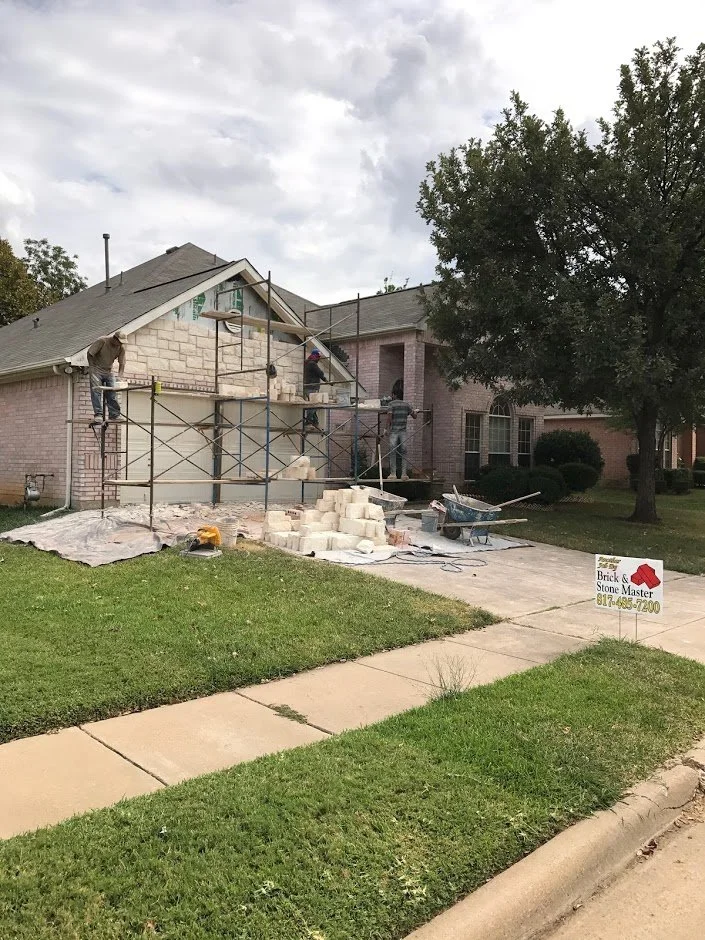
You're walking around your 1970s Bedford home and you notice it: the mortar between the bricks is crumbling, cracking, or pulling away from the joints. Maybe there's a stair-step crack running diagonally across the wall near your garage. Maybe you've seen a few bricks starting to flake and pit on the south-facing side of the house. You know something needs to be done, but before you call a single contractor, you want to know what "fair" looks like. How much should this actually cost? And how do you know if the person you hire is going to do it right?
Those are exactly the right questions to ask. Bedford's housing stock — a large portion of which was built between the 1960s and 1990s — is hitting an age where masonry maintenance isn't optional anymore. Add in North Texas's notorious expansive clay soils, which push and pull on foundations year-round, and you've got a recipe for mortar failure and brick stress that affects thousands of homes in the mid-cities area. This guide gives you the specific pricing data, contractor vetting criteria, and local context you need to move forward with confidence.
Key Takeaways
- Tuckpointing and repointing in the DFW area typically costs $10–$25+ per linear foot, higher than the Texas statewide average due to labor demand.
- Single brick replacement runs $200–$500+ per brick; extensive spalling or full section rebuilds can reach $10,000–$15,000+.
- Bedford's aging housing stock and expansive clay soils make brick repair a near-universal maintenance need for older homes.
- Delaying minor repairs can increase total costs by 2x–5x within just 3–5 years due to water infiltration and structural damage.
- Texas has no statewide masonry license — always verify business registration, insurance, and references independently.
- Getting 2–3 quotes is standard practice; the lowest bid is rarely the best value when brick matching and structural integrity are involved.
- Homeowners can recoup 70–90% of professional brick repair costs at resale, making it one of the smarter home maintenance investments.
Why Brick Repair Costs Vary So Much in Bedford, TX
If you've gotten even one quote for brick repair and felt confused by the number — either surprisingly low or shockingly high — you're not alone. Masonry repair is one of the most variable home services in terms of pricing, and that variability isn't arbitrary. It reflects real differences in scope, materials, labor skill, and site conditions that are especially pronounced in a market like Bedford.
Bedford has a population of approximately 48,000 and a homeownership rate of around 70%, with a significant portion of those homes built during the 1960s through 1990s — a period when brick construction was the dominant exterior choice in North Texas. That means a large share of Bedford homes are now 30 to 60 years old, and the mortar holding those bricks together has a lifespan. Mortar joints typically last 15 to 25 years under normal conditions. In Bedford, "normal conditions" includes some of the most challenging soil dynamics in the country.
North Texas sits on expansive clay soils that absorb water and swell, then dry out and contract — sometimes dramatically — with seasonal changes. This constant movement puts stress on masonry structures that were never designed to flex. The result is cracked mortar joints, displaced bricks, and in more serious cases, stair-step cracks that signal foundation settlement. Understanding how foundation movement affects brick walls is essential context before you even start getting quotes, because the root cause of your damage directly determines what kind of repair you need — and what it will cost.
Beyond soil conditions, the type of repair needed is the single biggest driver of cost variation. There's a massive difference in price between routine tuckpointing on a single wall section, replacing a handful of spalled bricks, and rebuilding a chimney from the crown down. And then there's brick matching — sourcing or recreating bricks that look identical to 40-year-old originals is genuinely difficult and adds significant cost that many homeowners don't anticipate until they're already mid-project.
Brick Repair Cost Breakdown: What You'll Actually Pay in DFW
Let's get specific. The pricing below reflects current 2026 estimates for the DFW market, including Bedford and the mid-cities area. These are real ranges based on contractor data, not national averages that don't account for local labor costs. For a broader look at how much it costs to fix a brick wall in DFW, the full cost guide covers additional scenarios and variables.
- Tuckpointing / Repointing: $10–$25+ per linear foot. Entry-level work on accessible, straightforward joints starts around $10/LF. Difficult matching, high walls, or specialized mortar types push this to $25 or more.
- Single Brick Replacement: $200–$500+ per brick, including labor and material sourcing. Matching difficulty is the primary cost driver here.
- Spalling Brick Repair: $500–$2,000 for small affected areas; $10,000+ for extensive damage across large wall sections.
- Chimney Repair: $500–$5,000+ depending on scope. A simple cap or crown repair is on the lower end; chimney repair and rebuilding involving flashing, firebox work, and full tuckpointing can exceed $5,000 significantly.
- Retaining Wall Repair: $30–$100+ per linear foot for entry-level patching and repointing; $100–$250+ per linear foot for structural rebuilds.
- Full Section Rebuild: $50–$150+ per square foot, depending on brick type, height, and structural complexity.
For comparison, the Texas statewide average for tuckpointing runs roughly $7–$15 per linear foot. DFW pricing is higher — typically $10–$25+ — because of the region's strong construction market, high demand for skilled labor, and the premium that experienced masons can command in a metro area where quality work is consistently in demand.
Why DFW Pricing Is Higher Than the Texas Average
Bedford's median household income sits around $82,000, which reflects a community that invests in quality home maintenance. The local labor market for skilled masons is competitive — experienced, insured contractors have plenty of work and don't need to discount aggressively to fill their schedules. The DFW construction market has remained robust, and while the supply of masonry contractors in the mid-cities area is generally adequate, the subset who can do precise brick matching and structural repair is smaller and commands higher rates. That's not price gouging — it's the market reflecting genuine skill scarcity.
Hidden Costs That Surprise Bedford Homeowners
The line items on a masonry quote don't always tell the whole story. Here's what tends to catch homeowners off guard:
- Permit fees: $100–$500+ for structural work. Required in Bedford for chimney rebuilds, retaining walls over 4 feet, and major structural repairs.
- Scaffolding and equipment rental: High walls or extensive repairs require scaffolding, which adds to labor cost and sometimes appears as a separate line item.
- Water damage remediation: If moisture has already infiltrated behind the brick — which is common in homes with long-neglected mortar joints — you may need interior remediation work that goes beyond masonry.
- Foundation assessment: If settlement is suspected as the root cause of cracking, a structural engineer or foundation specialist assessment typically runs $300–$1,000+. This isn't optional — repairing the brick without addressing the underlying foundation issue is money wasted.
It's Normal to Feel Overwhelmed by Brick Repair Costs
Brick repair pricing varies wildly depending on what's wrong, how old your home is, and how hard it is to match materials. You're not alone in wondering if you're getting a fair deal — that's exactly why getting multiple quotes and understanding the factors that drive cost is so important. Most homeowners get 2–3 quotes before committing, and that's the right approach.
Common Brick Repair Types in Bedford Homes
Before you can estimate your costs accurately, you need to identify what type of repair your home actually needs. This sounds obvious, but many homeowners call contractors describing "cracked brick" when what they're seeing could be anything from routine mortar erosion to a symptom of active foundation movement — two very different problems with very different price tags and urgency levels.
Mortar joint failure is the most common issue in older Bedford homes. Mortar is softer than brick by design — it's meant to absorb movement and weather stress so the bricks themselves don't crack. Over time, it erodes, cracks, and pulls away from the brick faces. This is normal aging, and it's addressed with repointing or tuckpointing. Left alone, it becomes a water infiltration pathway.
Spalling bricks — where the face of the brick flakes, pits, or breaks away — result from freeze-thaw cycles and water that's already infiltrated the brick's porous surface. North Texas doesn't get severe winters, but the occasional hard freeze combined with existing moisture damage is enough to cause spalling, especially in bricks that are already 40–50 years old.
Stair-step cracks are the pattern that should make any homeowner pay close attention. These diagonal cracks running along mortar joints in a stair-step pattern are a classic indicator of differential foundation settlement — meaning one part of your foundation is moving more than another. Understanding stair-step cracks in brick and what they mean is critical before you invest in any masonry repair, because patching the cracks without addressing the foundation is a temporary fix at best.
Chimney damage is its own category. Chimneys are exposed on all sides to weather, temperature swings, and moisture, making them among the most maintenance-intensive masonry structures on a home. Common issues include deteriorated chimney caps and crowns, failed flashing, spalling bricks on the chimney stack, and mortar erosion in the firebox itself.
Tuckpointing vs. Repointing: What's the Difference?
These terms get used interchangeably, but they're not identical. Repointing is the broader process: old, deteriorated mortar is cut or ground out to a depth of about ¾ inch, and new mortar is packed in to restore structural integrity. It's fundamentally a functional repair.
Tuckpointing is more precise and more aesthetic. It involves using two different mortar colors — one to fill the joint and one to create a thin, contrasting line that makes the joints look sharp and uniform. This technique requires more skill and time, and it's the preferred approach for visible, historic, or high-end homes where appearance matters as much as function. For a 1970s Bedford home with standard brick, repointing may be perfectly adequate. For a prominent front elevation or a home with distinctive brick character, tuckpointing is worth the premium.
Not sure whether your brick damage is cosmetic or a sign of something structural? A professional assessment can tell you exactly what you're dealing with — and what it will cost to fix it.
Schedule a Free ConsultationWhat Drives Brick Repair Costs Up (and Down) in North Texas
Once you understand the type of repair you need, the next question is what's going to make your specific project more or less expensive than the averages. Some of these factors are within your control; others are fixed by your home's age, location, and condition.
Mortar type and replication: Standard Portland cement mortar is inexpensive and widely available. But many older homes used lime-based mortars with specific sand ratios that behave differently and require careful replication. Using the wrong mortar type — particularly a mortar that's harder than the brick itself — can cause the bricks to crack rather than the mortar absorbing stress as intended. Replicating historic or specialized mortar adds 20–40% to cost but is non-negotiable for doing the job correctly.
Brick matching: This is often the single biggest cost driver for older homes. Bricks made 30–50 years ago have different clay sources, firing temperatures, and color variations than anything available new today. A skilled mason will analyze color, texture, size, and surface character, then source salvaged bricks or custom-blend mortar to get as close as possible. This expertise and sourcing effort can add thousands of dollars to a project — but the alternative is a repair that looks obviously patched and detracts from your home's appearance and value.
Accessibility: A ground-level wall section is straightforward to work on. A two-story chimney, a high gable end, or a wall with difficult site access requires scaffolding, lifts, or other equipment that can increase labor costs by 30–50%. This isn't padding — it's real overhead that goes into getting the job done safely.
Foundation involvement: If the root cause of your brick damage is foundation movement — which is common in Tarrant County's clay soil environment — the masonry repair is only part of the solution. You may need a structural engineer assessment ($300–$1,000+) and potentially foundation repair work before the masonry can be properly addressed. Exploring retaining wall repair and structural issues in North Texas gives useful context on how soil movement affects different masonry structures.
Extent of damage: This one is straightforward — more damaged area means more labor and materials. But it's worth noting that costs don't always scale linearly. Mobilization costs (getting a crew to your home, setting up, and cleaning up) are relatively fixed, so a small job can feel disproportionately expensive on a per-square-foot basis. Combining multiple smaller repairs into a single project visit is often more cost-efficient.
Why Brick Matching Is So Hard (and Expensive)
Bricks made 30–50 years ago have different clay sources, firing processes, and color variations than modern bricks. A skilled mason will analyze color, texture, and size, then source salvaged bricks or custom-mix mortar to match. This expertise is why brick matching can add thousands to a repair cost — and it's one of the clearest ways to distinguish an experienced mason from someone who just fills joints and moves on.
Seasonal Pricing and Timing: When to Schedule Masonry Repairs in Bedford
Masonry repair in North Texas follows a fairly predictable demand cycle, and understanding it can help you plan your project more strategically — especially if your repair isn't an emergency.
Spring is the busiest season for masonry contractors in the DFW area. Winter freezes — even mild ones — can exacerbate existing mortar cracks and cause spalling. Then spring hail storms arrive and damage mortar joints and brick faces across thousands of homes simultaneously. The result is a surge in demand that can stretch contractor schedules and, in some cases, push pricing up for less established contractors who know they have a full queue.
Fall is the second peak period. Homeowners who noticed issues over the summer want them addressed before winter, and contractors are busy through October and into November. It's still a good time to get work done — temperatures are ideal for mortar curing — but availability can be tight with established companies.
Summer demand dips slightly due to extreme heat, but repairs are still being done. The heat actually creates some challenges for mortar work — rapid drying can compromise curing quality if the contractor doesn't take precautions — but experienced masons know how to manage this.
If your repair isn't urgent, scheduling in late winter or early spring before the hail season rush can sometimes get you faster turnaround and better contractor availability. The key is not to wait until you have an emergency — reactive repairs are almost always more expensive than planned ones, and the best contractors book out weeks in advance during peak season.
Schedule Repairs in Shoulder Seasons for Better Availability
Spring and fall are peak demand periods for masonry repair in North Texas. If your repair isn't urgent, scheduling in late winter or early spring might get you faster turnaround and potentially better pricing as contractors manage their workload. The best masonry companies in Bedford book out quickly after major hail events — don't wait until you're competing with hundreds of other homeowners for the same contractors.
How to Find and Vet Masonry Contractors in Bedford, TX
Finding a good mason in Bedford isn't hard — finding a great one who will do the job correctly, match your brick properly, and stand behind their work takes more effort. The DFW market has plenty of contractors, but quality varies significantly. Here's a systematic approach that separates the reliable from the risky.
Start with business registration. Any legitimate contractor operating in Texas should be registered with the Texas Secretary of State. This takes two minutes to verify online and immediately filters out fly-by-night operators who haven't bothered to establish a formal business entity.
Verify insurance before anything else. Ask for certificates of insurance showing active general liability coverage (minimum $1 million recommended for masonry projects) and workers' compensation if they have employees. Don't accept verbal assurances — get the certificates and call the insurer to confirm they're current. If a worker is injured on your property and the contractor lacks workers' comp, you could be liable.
Check reviews with a critical eye. Google reviews, Angi, and the Better Business Bureau all provide useful signals, but look for patterns rather than star ratings. A contractor with 4.2 stars and 80 reviews is more informative than one with 5.0 stars and 4 reviews. Look specifically for comments about brick matching quality, communication, and whether the work held up over time. You can also look at how masonry contractors in Trophy Club and other nearby communities are reviewed to get a sense of regional standards.
Ask for and actually call references. Most homeowners ask for references and never call them. The ones who do call get real intelligence: Was the contractor on time? Did the final cost match the estimate? How does the repair look six months or a year later? Did they handle any issues that came up professionally?
Look for trade affiliations. Membership in organizations like the Mason Contractors Association of America (MCAA) or the Brick Industry Association (BIA) isn't a guarantee of quality, but it signals that a contractor takes their craft seriously enough to invest in professional development and industry standards.
For additional context on evaluating contractors across the region, the guide to top masonry contractors in the DFW area covers the full vetting framework in detail.
Red Flags: Contractors to Avoid in the Mid-Cities Market
The DFW market, unfortunately, attracts its share of problematic contractors — particularly after hail events. Here's what to watch for:
- Out-of-state "storm chasers": After major hail events, contractors from other states flood the DFW market offering quick repairs. Many do mediocre work and disappear before problems surface. Always verify local business registration.
- Large upfront payment demands: A deposit of 10–30% is normal. Demanding 50% or more upfront — especially before work starts — is a significant red flag.
- Vague scopes and unclear warranties: A legitimate contractor provides a written estimate with specific scope, materials, timeline, and warranty terms. "We'll fix your brick" is not a scope of work.
- Refusal to pull permits: If a contractor tells you permits aren't needed for work that clearly requires them, they're either uninformed or trying to cut corners. Either way, you're the one who bears the liability.
- High-pressure sales tactics: "This price is only good today" is a manipulation tactic, not a legitimate business practice. Quality contractors don't need to pressure you.
⚠ Watch Out for 'Storm Chasers' After Hail Events
After spring hail storms, out-of-state contractors flood the DFW market offering quick fixes and then disappearing after poor-quality work. Always verify local business registration, insurance, and references — especially if a contractor approaches you unsolicited after a weather event. Legitimate local masons don't need to knock on doors to find work.
Questions to Ask Every Masonry Contractor Before Hiring
Walk into every contractor conversation with these questions ready. A good contractor will answer all of them without hesitation:
- "Are you licensed and insured? Can you provide current certificates of insurance?"
- "Will you pull the necessary permits for this work?"
- "Can you provide at least three references from similar projects in the Bedford or mid-cities area?"
- "How will you match the existing brick and mortar? Can you show me samples?"
- "What is your warranty on the repair work, and what specifically does it cover?"
- "What is your estimated timeline, and how do you handle weather delays?"
Pro Tip: Get Brick Samples Before Committing
Before signing any contract, ask the contractor to provide physical samples showing how they'll match your existing brick and mortar. A skilled mason will either have samples on hand or will source them for your approval before work begins. If a contractor waves off this request or says "it'll match fine," that's a warning sign — brick matching is a craft skill, and experienced masons take it seriously.
If you'd rather work with a contractor who's been serving Bedford and the mid-cities area for years and has a portfolio of quality work to show for it, we're here to help — no pressure, just honest answers.
Schedule a Free ConsultationLicensing, Permits, and Regulations for Brick Repair in Bedford, TX
Texas's licensing landscape for masonry contractors is one of the more confusing aspects of hiring in this market, and it's worth understanding clearly so you don't get misled.
Texas does not have a specific statewide masonry contractor license issued by the Texas Department of Licensing and Regulation (TDLR). This means there's no single license number you can look up to verify a mason's credentials the way you might with an electrician or plumber. Masonry work typically falls under general contractor activity, and verification happens through business registration with the Texas Secretary of State rather than a trade-specific license.
This doesn't mean the work is unregulated — it means the regulation happens at the project level through permits rather than at the contractor level through licensing. Understanding masonry permit requirements for outdoor projects in DFW provides useful context on how the permitting process works across the region.
In Bedford specifically: Permits are required for significant structural masonry work. This includes chimney rebuilds, retaining walls over 4 feet in height, and major structural repairs. Minor tuckpointing or single brick replacements generally don't require permits, but the line between "minor" and "significant" isn't always obvious. When in doubt, call the City of Bedford Building Department directly — it's a free call and takes five minutes.
How to Verify Contractor Credentials in Texas
Since there's no single masonry license to check, use this multi-source verification approach:
- Texas Secretary of State: Search the business name to confirm active registration and good standing. This is your primary verification tool for masonry contractors.
- TDLR: Check whether the contractor holds any relevant licenses (e.g., general contractor license if they operate under that classification).
- Better Business Bureau: Check for accreditation status and any complaint history. Look at how complaints were resolved, not just whether they exist.
- City of Bedford Building Department: You can ask whether a contractor has pulled permits for past projects in the city — this is public record and tells you whether they've been operating legitimately in the area.
Your Rights If Something Goes Wrong
If you hire a contractor and the work is substandard, fraudulent, or incomplete, you have real recourse under Texas law. The Texas Deceptive Trade Practices Act (DTPA) provides consumer protections against fraud and misrepresentation — complaints can be filed with the Texas Attorney General's Consumer Protection Division. For financial disputes over unsatisfactory work, small claims court is an accessible option for amounts under the jurisdictional limit. The most important thing you can do to protect yourself is document everything: photograph the damage before work begins, keep all written communications and contracts, and photograph the completed work. This documentation is your evidence if a dispute arises.
The Real Cost of Delaying Brick Repair in North Texas
One of the most common mistakes Bedford homeowners make is treating crumbling mortar or a few spalled bricks as a low-priority cosmetic issue. It's understandable — the damage often looks minor, and repair costs feel like an optional expense when budgets are tight. But masonry deterioration doesn't pause while you decide. It accelerates.
Here's the math that matters: minor repointing on a wall section costs $5–$15 per linear foot when addressed promptly. That same wall section, neglected for 3–5 years, can develop mortar crumbling, brick erosion, and water infiltration that requires full section replacement at $50–$150+ per square foot. The cost multiplier for deferred maintenance is real — research from the National Association of Home Builders and building science literature consistently shows that water infiltration through failed mortar joints can increase total repair costs by 2x to 5x over a 3–5 year window.
Water is the mechanism that turns a manageable repair into a major project. Once moisture penetrates behind the brick veneer, it can cause:
- Interior wall damage, including drywall deterioration and insulation saturation
- Mold growth in wall cavities — a health issue that adds remediation costs on top of masonry repair
- Wood framing rot behind the brick, which can compromise structural integrity
- Accelerated spalling as freeze-thaw cycles affect already-saturated bricks
- Foundation stress if water is consistently pooling near the foundation due to failed drainage at the wall base
Understanding the full spectrum of masonry failures and structural damage that can result from deferred maintenance helps put the cost of acting now in proper perspective. Annual inspections ($100–$300) and periodic tuckpointing every 15–25 years are genuinely the most cost-effective masonry maintenance strategy available to homeowners.
Don't let minor mortar issues become major structural problems. A professional inspection can identify what needs attention now and what can safely wait — giving you a clear plan instead of ongoing uncertainty.
Schedule a Free ConsultationFinancing Options for Brick Repair in Bedford
Sticker shock is real in masonry repair, especially for projects involving structural work, chimney rebuilds, or extensive spalling. The good news is that you have more financing options than most homeowners realize, and several of them are well-suited to home repair projects in the $2,000–$15,000 range.
Contractor payment plans: Many masonry companies offer phased payment structures tied to project milestones — a deposit at signing, a payment at project midpoint, and the balance on completion. This is the most common arrangement for mid-size projects and doesn't require any credit application.
Home improvement personal loans: Banks and credit unions offer fixed-rate personal loans specifically for home improvement, typically with terms of 2–7 years and rates that vary based on credit score. These are unsecured (no collateral required) and fund quickly, making them a practical option for urgent repairs.
Home equity loans and HELOCs: For larger projects, tapping your home's equity is often the most cost-effective financing option. With Bedford's strong real estate market, many homeowners have significant equity to draw on. As of 2025 data, HELOC rates in DFW were running approximately 6–10%, and the interest may be tax-deductible when used for home improvements. Consult a tax advisor to confirm your specific situation.
Third-party financing platforms: Some contractors work with platforms like Affirm or GreenSky that offer point-of-sale financing with various term options. These can be convenient but often carry higher rates than bank products — read the terms carefully.
Homeowners insurance: This one is often overlooked. If your brick damage was caused by a covered event — hail, wind, a falling object — your homeowners insurance policy may cover some or all of the repair cost, minus your deductible. Review your policy and file a claim before assuming you're paying out of pocket. Hail damage in particular is frequently covered, and given how often DFW gets hail, it's worth checking.
ROI and Property Value: Why Brick Repair Is a Smart Investment
It's easy to think of brick repair as a pure expense — money out the door to fix something that's broken. But in the context of your home's value, professional masonry repair is one of the better-returning maintenance investments you can make.
Studies from the National Association of Home Builders and real estate market analysis consistently show that homeowners can recoup 70–90% of brick repair costs upon resale when the work is done professionally. That's a strong return for a maintenance investment, comparable to kitchen updates and significantly better than many cosmetic upgrades.
The flip side is equally important: neglected brick damage is a red flag for buyers and home inspectors. In the competitive DFW real estate market, a home inspection that flags deteriorated mortar, spalling bricks, or stair-step cracks gives buyers negotiating leverage and can result in price reductions that far exceed what the repair would have cost. Brick is a premium exterior material — it signals durability and quality. Maintaining it tells buyers the home has been cared for. Neglecting it tells the opposite story.
Beyond resale, there's the ongoing value of a structurally sound, water-tight exterior. Every year you avoid interior water damage, mold remediation, and structural repairs is money saved. Brick maintenance isn't glamorous, but it's one of the most reliable ways to protect a significant asset.
If you're considering broader exterior improvements alongside your masonry repair, it's worth exploring brick cleaning and waterproofing services that can extend the life of your masonry and improve its appearance simultaneously.
Top Masonry Contractors in Bedford, TX: How to Compare and Choose
Bedford and the mid-cities region have a solid supply of masonry contractors, ranging from individual craftsmen to full-service firms. The challenge isn't finding someone — it's finding the right someone for your specific project. Here's how to think about the comparison.
The masonry market in Tarrant County is robust but not unlimited when it comes to highly specialized skills. Contractors who can do precise brick matching on 1970s homes, handle complex structural repairs, or execute high-quality chimney rebuilds are in genuine demand. Expect top-tier contractors to book out 2–4 weeks during peak season. That's not a problem — it's a signal that they're worth waiting for.
For context on how the market looks in nearby communities, the guides to masonry contractors in Grapevine and masonry contractors in nearby Keller provide useful regional comparisons on pricing, contractor types, and what to expect from the vetting process.
What to Look for in a Bedford Masonry Contractor
When evaluating contractors specifically for Bedford-area projects, prioritize these criteria:
- Active business registration with the Texas Secretary of State — non-negotiable
- Current general liability insurance ($1M+) and workers' compensation — get certificates, not verbal confirmation
- Portfolio of similar projects in Bedford, Hurst, Euless, Colleyville, or the broader mid-cities area — local experience matters for brick matching and understanding local soil conditions
- Trade affiliations with MCAA, BIA, or local builder associations
- Clear, detailed written estimates specifying scope, materials, timeline, and warranty terms
- Demonstrated ability to match existing brick and mortar — ask to see samples or photos of comparable matching work
Sole Proprietors vs. Small Crews vs. Full-Service Masonry Firms
The type of contractor you choose should match the complexity and scale of your project:
Sole proprietor masons often offer lower prices and may be highly skilled craftsmen. The risk is that they may lack formal insurance, have limited capacity for larger projects, and offer less accountability if something goes wrong. For small, straightforward repairs where you have a strong personal referral, they can be a good option. For structural work or projects requiring permits, the risk increases.
Small regional crews are the most common contractor type in the mid-cities market. They typically have 2–6 workers, carry proper insurance, and have established local reputations. They offer a good balance of cost and reliability and are generally easier to vet through references and online reviews.
Full-service masonry companies bring formal processes, comprehensive insurance, written warranties, and the capacity to handle complex or large-scale projects. Their pricing is typically higher, but for significant structural repairs, chimney rebuilds, or projects where you want maximum accountability and warranty protection, the premium is justified. Companies like Brick & Stone Master (3800 Haslet-Roanoke Road Suite 32, Roanoke, Texas 76262) serve the Bedford and mid-cities area with the full range of masonry repair and restoration services, from tuckpointing and brick replacement to retaining wall repair and construction.
"The best contractor for your project isn't necessarily the cheapest or the most expensive — it's the one whose credentials, experience, and communication style give you confidence that the work will be done right and stand up over time."
Frequently Asked Questions: Brick Repair in Bedford, TX
How much does brick repair cost in Bedford, TX?
Brick repair costs in Bedford and the broader DFW area vary significantly by project type. Tuckpointing and repointing typically range from $10–$25+ per linear foot, which is higher than the Texas statewide average due to local labor demand. Replacing a single brick costs $200–$500+ including labor and material matching. Extensive spalling damage or full section rebuilds can run $5,000–$15,000 or more depending on scope. Factors like brick matching difficulty, accessibility, and whether foundation issues are involved all influence the final price — which is why getting 2–3 detailed quotes from local contractors is the best way to understand your specific project cost.
Do I need a permit for brick repair in Bedford, TX?
Permits are generally required in Bedford for significant structural masonry work — this includes chimney rebuilds, retaining walls over 4 feet tall, and major structural repairs involving the home's structural masonry system. Minor tuckpointing, single brick replacements, and cosmetic mortar repairs typically don't require a permit, but the definition of "minor" can be ambiguous. The safest approach is to confirm directly with the City of Bedford Building Department before work begins. A reputable contractor will know which permits apply to your project and should pull them on your behalf — if a contractor tells you permits aren't needed for clearly structural work, that's a red flag worth taking seriously.
How do I find a good mason to repair my brickwork in Bedford?
Start with business registration verification through the Texas Secretary of State, then request and review certificates of insurance showing active general liability and workers' compensation coverage. Check Google reviews and the Better Business Bureau for patterns in feedback — look specifically for comments about brick matching quality, communication, and long-term durability of the work. Ask for at least three references from similar projects and actually call them. Seeking masons affiliated with trade organizations like the MCAA or BIA adds another layer of credibility. The single most important differentiator for older Bedford homes is the contractor's ability to properly match your existing brick and mortar — ask to see samples before committing.
What's the difference between tuckpointing and repointing?
Repointing is the broader term for the process of removing deteriorated mortar from joints and packing in new mortar to restore structural integrity and weatherproofing. It's fundamentally a functional repair. Tuckpointing is a more specialized and aesthetically precise version of the same process — it involves using two different mortar colors and careful joint profiling to create a visually seamless, sharp result that closely matches or improves on the original appearance. Both address failing mortar joints, but tuckpointing requires more skill and time and is the preferred approach for prominent, historic, or high-end homes where the visual result matters as much as the structural fix.
Is crumbling brick mortar a serious problem?
Yes — crumbling mortar is more than a cosmetic issue, and it tends to accelerate if left unaddressed. Deteriorated mortar joints compromise the structural integrity of the brick wall, allow water to penetrate behind the brick veneer, and can lead to spalling bricks, interior moisture damage, mold, and in severe cases, foundation stress. In Bedford's clay soil environment, where foundation movement already puts stress on masonry, failed mortar joints are particularly problematic. Prompt repointing is the appropriate response — and it's far less expensive than addressing the cascading damage that results from ignoring it for several years.
How long does tuckpointing typically last in North Texas?
Properly executed tuckpointing using the correct mortar mix and application techniques can last 15–25 years or more, even in North Texas's demanding climate. The key qualifiers are "properly executed" and "correct mortar mix" — using a mortar that's too hard for the brick, or applying it in conditions that prevent proper curing, can significantly shorten that lifespan. Annual visual inspections (which you can largely do yourself) help catch early signs of deterioration before they become larger problems. When you do need tuckpointing again, catching it early and addressing a small area is far less expensive than waiting until the damage is widespread.
Ready to Get Your Bedford Brick Repair Started?
You now have a clear picture of what brick repair costs in Bedford, what to look for in a contractor, and what's at stake if you wait. The next step is a professional assessment of your specific situation — because every home is different, and a real inspection is the only way to know exactly what you're dealing with and what it will cost.
We offer free consultations to evaluate your brick damage, walk through your options, and provide a transparent, detailed estimate. No pressure, no obligation — just honest answers from a masonry team that knows the mid-cities market and takes brick matching seriously.
Schedule a Free Consultation