
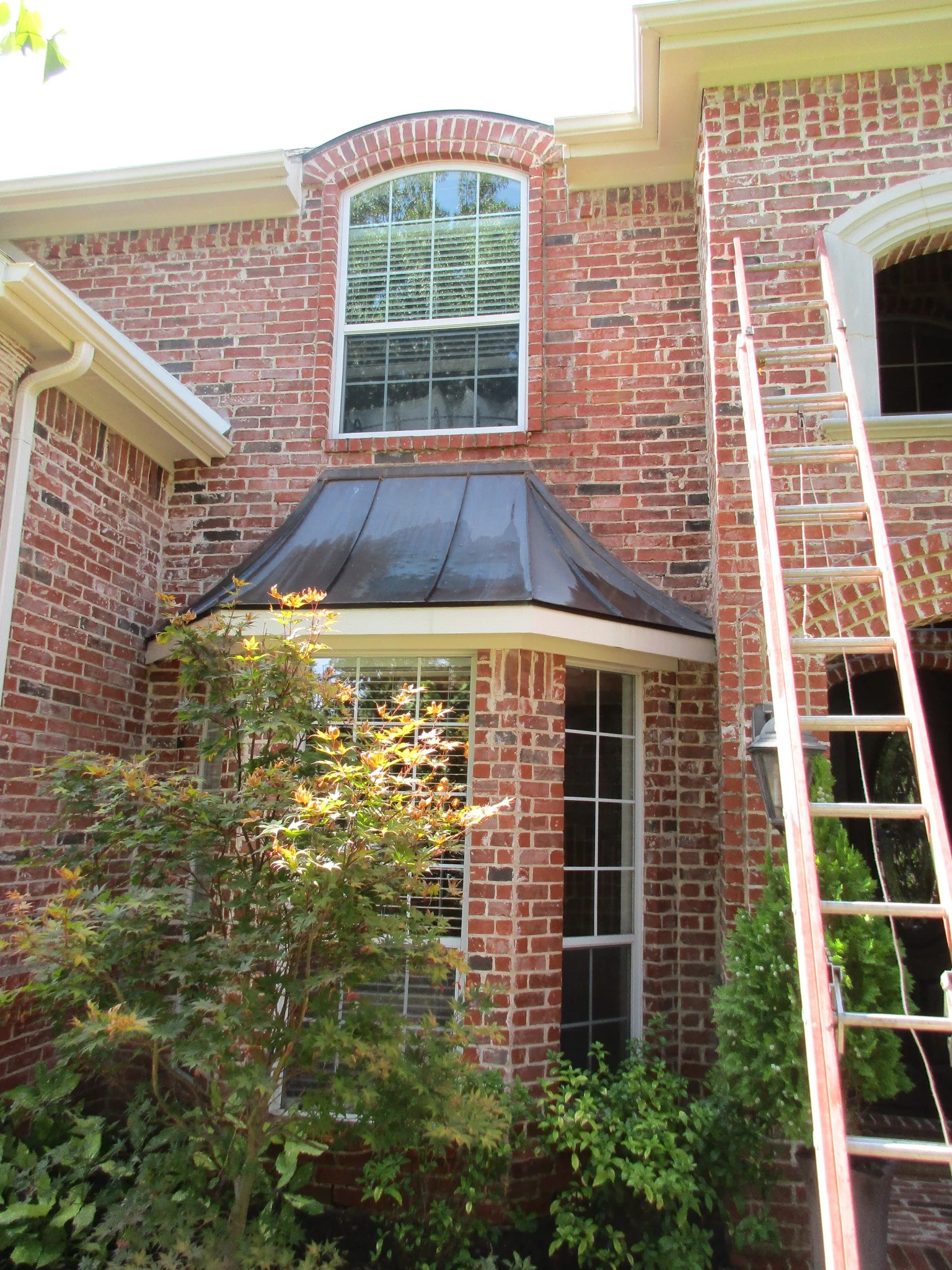
A hailstorm rolls through Colleyville on a Tuesday night. By Wednesday morning, you're walking the perimeter of your home and you notice it — mortar crumbling between the bricks, a hairline crack tracing a stair-step pattern up the corner of your wall, maybe a section near the chimney that looks like it's been slowly powdering away for longer than you'd like to admit. You're not sure if this is urgent, cosmetic, or somewhere in between. You don't know what it will cost to fix, and you definitely don't know who to trust with a repair on a home you've invested everything into.
That uncertainty is exactly what this guide is designed to resolve. We'll walk through what brick and stone repair actually costs in Colleyville in 2026, which local contractors are worth your time, what questions to ask before you sign anything, and how to protect your home long after the repair is done. No vague estimates, no contractor jargon — just the practical information you need to make a confident decision.
Key Takeaways
- Colleyville's brick homes — most built between the 1980s and early 2000s — are now entering the prime repair cycle for mortar deterioration and masonry damage.
- Tuckpointing costs in the DFW area range from $5–$20+ per linear foot, with Colleyville pricing running 10–20% above Texas state averages due to local labor demand.
- Expansive clay soils, frequent hail, and freeze-thaw cycles are the primary drivers of masonry damage in North Texas — and they don't slow down on their own.
- Deferred repairs can turn a $5,000 tuckpointing job into a $20,000+ structural repair within 5–10 years.
- Texas does not issue a specific masonry contractor license — knowing how to verify credentials through TDLR is essential before hiring anyone.
- Proper tuckpointing using the correct mortar mix can last 20–50 years when done right — the quality of the contractor matters enormously.
- Getting 2–4 itemized quotes from licensed, insured contractors is the single most important step before committing to any repair.
Why Brick & Stone Repair Is Critical in Colleyville, TX
Colleyville isn't just any DFW suburb. With a median household income exceeding $160,000 and a homeownership rate approaching 90%, it's a community where people have invested significantly in their properties — and where the housing stock reflects that. A large portion of Colleyville's homes were built between the 1980s and early 2000s, predominantly with brick exteriors. Those homes are now 25 to 45 years old, and that means they're squarely in the window where mortar joints begin to fail, brick faces start to spall, and the cumulative effects of North Texas weather become impossible to ignore.
This isn't a coincidence or a construction flaw — it's simply the natural lifecycle of masonry. Mortar joints in a well-built brick home typically last 20 to 30 years before they need professional attention. When you combine that timeline with Colleyville's specific climate and soil conditions, the need for brick and stone repair becomes almost inevitable for homeowners in this area.
Noticing deteriorated mortar joints is a sign you're paying attention to your home. In Colleyville's climate, this is a common issue for homes 20+ years old, and addressing it now prevents much costlier water damage and structural problems down the road. The fact that you noticed it early puts you in a much better position than most homeowners who wait until damage is visible inside the house.
Expansive Clay Soils: Colleyville's Hidden Masonry Enemy
Texas A&M AgriLife Extension research has documented the pervasive impact of North Texas's expansive clay soils on residential structures. These soils absorb water and swell significantly during wet seasons, then shrink and crack during drought — a cycle that happens repeatedly every year. That constant ground movement puts direct stress on masonry walls and mortar joints. Understanding how foundation movement affects brick walls is essential context for any Colleyville homeowner, because what looks like a cosmetic crack is often the visible symptom of something happening underground.
When the ground moves, brick walls move with it — but not always uniformly. That differential movement is what creates the characteristic stair-step cracks, bowing sections, and displaced mortar joints that are so common in this region. Addressing the masonry damage without understanding the soil context can lead to repairs that fail prematurely.
DFW Weather: Hail, Freeze-Thaw, and Extreme Heat
The DFW area ranks among the most hail-active regions in the United States. Insurance industry data confirms millions of dollars in annual hail damage claims across the region, and brick and mortar are not immune. Direct hail impact can chip brick faces, fracture mortar joints, and create micro-cracks that allow water to penetrate. Once water gets into a mortar joint, the freeze-thaw cycle does the rest — water expands when it freezes, widening cracks incrementally with each winter weather event.
Extreme summer heat adds another layer of stress, affecting mortar curing and causing surface degradation over time. The result is a climate that's genuinely hard on masonry — which is why proactive maintenance and timely repair aren't optional for Colleyville homeowners who want to protect their investment.
The Real Cost of Waiting
The most important thing to understand about brick and stone repair is that it's not a problem that stays the same size. Minor mortar erosion that costs $3,000–$5,000 to address today can evolve into water intrusion, wood rot behind the wall, mold growth, and structural compromise that costs $20,000 or more to remediate. Research suggests that delaying masonry repair can increase total repair costs by a factor of 3 to 5 times over a 5–10 year period. That's not a scare tactic — it's the documented reality of how masonry failure progresses when left unaddressed.
Understanding Brick & Stone Repair Costs in Colleyville
One of the most common frustrations homeowners face when researching masonry repair is the wide range of prices they encounter. A quote for tuckpointing might come in at $2,500 from one contractor and $8,000 from another — and without context, it's impossible to know which one is realistic. Understanding what drives costs in the Colleyville and DFW market helps you evaluate quotes with confidence. For a deeper breakdown of what influences pricing, the guide on how much it costs to fix a brick wall in DFW provides additional context on cost variables across the region.
Contractors have more availability and may offer more flexible scheduling in the slower season (fall/winter). You'll also get a clearer picture of winter-related damage like freeze-thaw cracks before spring storms hit. Booking your assessment in October or November means you're ahead of the spring rush — and potentially ahead of the next hail season too.
Here's a realistic breakdown of what common brick and stone repair services cost in the Colleyville area in 2026, based on current DFW market data:
- Tuckpointing: $5–$8 per linear foot for basic joint repair with standard mortar; $8–$12 per linear foot for deeper joints with color matching; $12–$20+ per linear foot for historic mortar matching, difficult access, or specialized materials
- Brick replacement: $15–$50+ per brick installed, depending heavily on brick type, sourcing, and labor complexity
- Chimney repair (tuckpointing or partial rebuild): $700–$3,000+
- Stone veneer repair: $400–$1,500+ per repair area, highly variable based on stone type and damage extent
- Retaining wall repair: $1,000–$10,000+ depending on size, structural needs, and extent of damage — explore retaining wall repair and construction options for more detail
- Lintel and steel beam repair: $500–$2,500+ depending on size, material, and structural complexity
DFW pricing consistently runs 10–20% above Texas state averages, driven by higher local labor costs, strong demand from affluent homeowners, and the prevalence of more complex repair needs tied to soil movement and storm damage. National benchmarks (from sources like RSMeans and Angi) show tuckpointing averaging $4–$10 per linear foot nationally — Colleyville homeowners should expect the higher end of that range and beyond.
Hidden Costs to Budget For
The line-item costs above are just the starting point. Several additional expenses can materially affect your total project budget, and reputable contractors will identify these upfront rather than surprise you mid-project:
- Structural assessment: $300–$1,000+ if foundation movement is suspected. This is not optional if you're seeing stair-step cracks or wall displacement — skipping this step means you might repair symptoms while the underlying cause continues to progress.
- Permit fees: $100–$500+ for significant structural repairs in Tarrant County. Colleyville's building department requires permits for work that affects structural integrity, and any contractor who tells you permits aren't necessary for major repairs is a red flag.
- Water damage and mold remediation: If moisture has been penetrating failed mortar joints for months or years, there may be damage behind the wall that needs to be addressed before the masonry is repaired.
- Material sourcing for historic or custom brick: Matching the exact brick used in a 1985 or 1995 home can require sourcing from specialty suppliers, which adds both cost and lead time. Custom mortar color matching adds similar complexity.
Seasonal Pricing & Availability in North Texas
Timing your repair project strategically can affect both cost and wait time. Spring — particularly after winter damage assessments and during hail season — represents the highest demand period for masonry contractors in North Texas. Following a significant hail event, wait times for reputable contractors can stretch to 4–8 weeks, and pricing may reflect the surge in demand.
Fall and early winter typically offer better contractor availability and potentially more flexible scheduling. If your repair isn't urgent, booking an inspection in September or October positions you well — you'll have repairs completed before the next freeze-thaw cycle, and you'll likely have more options when it comes to contractor selection.
Common Brick & Stone Repair Issues in North Texas
Colleyville's expansive clay soils cause foundation movement that stresses masonry. If you're seeing stair-step cracks or bowing walls, this is a known regional issue, not a sign of poor home construction. Professional assessment can determine if structural work is needed alongside cosmetic repair — and catching it early makes the difference between a manageable repair and a major structural project.
Knowing what you're looking at — and what it means — is the first step toward making a smart repair decision. Here are the most common masonry issues affecting North Texas homes, and what each one typically signals:
Mortar Joint Erosion and Crumbling
This is the single most common issue in Colleyville homes 20 years old or older. Mortar joints that were properly installed in the 1980s or 1990s are now reaching or past their natural lifespan. You'll notice mortar that looks recessed, powdery, or that crumbles when you press on it. In some cases, you can see daylight through gaps in the joints. This is a tuckpointing job — not an emergency in most cases, but something that needs professional attention within the next 6–12 months to prevent water intrusion.
Stair-Step Cracks in Brick Walls
Stair-step cracks follow the mortar joints in a diagonal pattern, typically starting at a corner or opening and working upward. These are almost always related to foundation movement or differential settlement — the soil under one section of the foundation is moving differently than the soil under another. Understanding how to fix stair-step cracks in brick starts with understanding whether the movement is active or has stabilized. Repairing the masonry without addressing an active foundation issue is a temporary fix at best.
Spalling Brick
Spalling refers to the flaking, pitting, or popping of the brick face itself — not just the mortar. It's caused by water penetrating the brick surface and then freezing, which forces the outer layer of the brick to separate. Once a brick starts to spall, it becomes more porous and accelerates the damage cycle. Spalling bricks typically need to be replaced rather than repaired, which is why material matching becomes such an important (and sometimes costly) part of the job.
Chimney Deterioration
Chimneys are the most exposed masonry element on any home — they're fully exposed to weather on all sides, experience significant thermal stress from heating and cooling cycles, and are often the last thing homeowners inspect. Mortar failure in a chimney can lead to water penetrating the flue, damaging the firebox, and causing interior water damage. Chimney repairs range from straightforward tuckpointing to partial or full rebuilds, depending on the extent of deterioration.
Lintel and Steel Beam Corrosion
Steel lintels span openings like windows and doors in brick walls, carrying the weight of the masonry above. When moisture penetrates failed mortar joints and reaches the steel, corrosion begins. Corroding steel expands, which can crack or displace the bricks above the opening — a problem that looks cosmetic but is actually structural. This is one of the more serious issues to identify early, and it's a common finding in homes where mortar maintenance has been deferred for years. You can explore the full range of professional masonry repair services that address these structural concerns.
If you're noticing any of these issues on your Colleyville home, a professional inspection can clarify what needs attention and what can wait. That's exactly what a free consultation is designed to answer — no pressure, just clarity.
Schedule a Free ConsultationWhen to Act vs. When to Monitor: A Practical Guide
Not every crack requires an emergency call. But some do. The challenge for homeowners is knowing the difference — and that uncertainty often leads to one of two mistakes: either panicking over something minor, or dismissing something serious until it becomes a much bigger problem. Here's a practical framework for thinking about repair urgency:
- Visible water intrusion through brick or mortar joints
- Large cracks (wider than 1/4 inch) or actively growing cracks
- Missing mortar over significant areas, especially near windows or the chimney
- Bowing or bulging walls that suggest structural movement
- Spalling brick combined with visible moisture damage
- Eroded or recessed mortar joints that are still intact but clearly deteriorating
- Minor spalling on isolated bricks
- Post-storm damage assessment (even if nothing looks obviously wrong)
- Stair-step cracks that appear stable and haven't changed in months
- Minor surface wear on mortar joints in newer sections of the home
- Hairline cracks (less than 1/16 inch) that haven't changed over time
- Homes with known soil movement history where you're tracking crack progression
When in doubt, a professional assessment is always the right call. The cost of an inspection is a fraction of the cost of a repair that gets delayed too long.
Tuckpointing vs. Repointing: What's the Difference and Why It Matters
These two terms get used interchangeably in contractor conversations and online searches, but they're not quite the same thing — and the distinction matters for the quality and longevity of your repair. Understanding the difference helps you ask better questions and evaluate proposals more accurately. You can also explore the full range of professional masonry repair techniques used by experienced contractors in the DFW area.
Tuckpointing is the more precise, restoration-focused process. It involves carefully removing deteriorated mortar to a specific depth (typically 3/4 inch to 1 inch), cleaning out the joint, and then filling it with new mortar that is specifically matched to the original in both color and composition. The goal is both structural integrity and visual continuity — when done correctly, you shouldn't be able to tell where the new mortar ends and the original begins.
Repointing is a broader term that refers to the process of refilling mortar joints. It may or may not involve color matching, and the depth and technique can vary. In practice, many contractors use the terms interchangeably — but when you're getting quotes, it's worth asking specifically whether the proposal includes mortar color matching and what depth of joint removal is planned.
Mortar strength must match the original brick — using mortar that's too hard can actually damage the brick units over time, while mortar that's too soft fails prematurely. This is why matching the original mortar composition per ASTM C270 (the industry standard for mortar specifications referenced in Texas building codes) is critical for repairs that last 20–50 years. Type N mortar (medium strength, good flexibility) is common for above-grade exterior work; Type S (higher strength) is used for below-grade or high-load applications. A contractor who doesn't ask about or test your existing mortar before proposing a repair is cutting corners.
Properly executed tuckpointing using the correct mortar mix and application technique can last 20–50 years or more. That's an enormous return on a repair investment — but only if the work is done correctly from the start. This is why the cheapest quote is rarely the best value: rushing the joint preparation, using the wrong mortar type, or skipping color matching creates repairs that fail in 5–10 years instead of 30.
Licensing, Insurance & Contractor Verification in Texas
This is where a lot of homeowners get tripped up — and where unscrupulous contractors take advantage of the confusion. Texas has a nuanced licensing landscape for masonry work, and understanding it protects you from hiring someone who isn't qualified or insured to do the job. For context on the professional standards that apply to larger commercial masonry projects in the region, the overview of commercial masonry standards in DFW is a useful reference point.
Texas does not issue a specific "Masonry Contractor" license. Masonry work typically falls under broader license classifications — such as the Residential Commercial Appliance (RCA) license or Residential Appliance Installer (RAI) license — issued by the Texas Department of Licensing and Regulation (TDLR). Many masonry businesses operate under general contractor licenses or as specialized subcontractors. This doesn't mean they're unqualified — but it does mean you can't simply ask "are you licensed as a mason?" and get a meaningful answer.
How to Verify a Contractor's Credentials
- Visit tdlr.texas.gov and navigate to "Online Services" → "Search for a License"
- Search for the contractor's name or license number (if they claim to hold an RCA or relevant license)
- Check license status (Active vs. Inactive) and review any disciplinary actions on record
- Ask the contractor directly for proof of general liability insurance and workers' compensation coverage
- Verify insurance by requesting a certificate of insurance and, if needed, calling the insurance provider directly to confirm the policy is current
- Ask about bonding — a surety bond provides additional protection if the contractor fails to complete the work
Insurance minimums to look for: General liability coverage of at least $100,000–$300,000 per occurrence is standard for residential masonry work. Workers' compensation is required if the contractor has employees — without it, you could be liable for injuries that occur on your property.
Permits matter too. Significant structural masonry repairs in Colleyville and Tarrant County typically require permits from the local building department. A contractor who dismisses the need for permits on a major repair isn't just cutting corners — they're potentially leaving you with unpermitted work that could create problems when you sell your home.
Ready to move forward with quotes? Our team of licensed, insured masonry professionals can provide a detailed assessment and transparent pricing for your specific repair needs — so you know exactly what you're getting before any work begins.
Schedule a Free ConsultationTop Brick & Stone Repair Providers in Colleyville, TX: Compared and Reviewed
Finding the right masonry contractor in Colleyville means looking beyond the first result on a search page. The following providers have been evaluated based on reputation, specialization, verified credentials, and customer feedback. This comparison is designed to give you a starting point for your own research — not a substitute for getting your own quotes and verifying credentials directly.
1. Brick & Stone Master
Address: 3800 Haslet-Roanoke Road Suite 32, Roanoke, TX 76262
License Status: Licensed and insured masonry contractor serving the DFW region
Specialization: Meticulous masonry restoration, historic mortar analysis, custom color and profile matching, detailed tuckpointing, and brick repair for residential and commercial properties across North Texas. Their work also extends to custom stonework and thin veneer applications.
Reputation: Brick & Stone Master is consistently praised by customers for craftsmanship, professionalism, and clear communication throughout the project. Reviewers frequently highlight the team's attention to detail and commitment to quality materials. Some reviews note that projects may take slightly longer than a quick-turnaround contractor — a reflection of the detailed, methodical approach that defines their work rather than a shortcoming.
Notable Differentiator: Deep expertise in historic mortar analysis and custom color/profile matching for aged structures. The team takes time to understand the original construction before proposing repairs — which is why their results hold up for decades rather than years. They're known for taking the time to get repairs right rather than rushing projects to completion.
Service Area: Colleyville, the broader DFW metroplex, and North Texas. View their completed masonry projects for a sense of the scope and quality of their work.
2. DFW Masonry & Tuckpointing
Service Area: Fort Worth, Colleyville, and surrounding Tarrant County communities
License Status: Operates under general contractor licensing with verified general liability insurance coverage
Specialization: General tuckpointing, chimney repair, and brick wall restoration for residential properties across the Fort Worth metro area. Well-suited for standard mortar joint repair on homes without complex historic matching requirements.
Reputation: Generally positive reviews for responsiveness and competitive pricing on straightforward tuckpointing jobs. Some customer feedback notes variability in mortar color matching on older homes, making them a stronger fit for newer construction where original materials are more standardized.
Notable Differentiator: Competitive pricing and faster scheduling windows for standard residential tuckpointing projects, particularly in the Fort Worth and mid-cities corridor. For a broader look at repair options in the region, see the guide on brick and stone repair in Fort Worth.
3. North Texas Chimney & Masonry
Service Area: Colleyville, Keller, Southlake, and the northeast Tarrant County corridor
License Status: Licensed and insured; specializes in chimney-related masonry under applicable TDLR classifications
Specialization: Chimney tuckpointing, partial chimney rebuilds, firebox repair, and chimney cap installation. Also handles general brick wall tuckpointing for residential clients in the northeast Tarrant County area.
Reputation: Strong reputation specifically for chimney work, with customers noting thorough inspections and clear explanations of what's needed before any work begins. Reviews for general wall tuckpointing are positive but less consistent than their chimney-specific work.
Notable Differentiator: Chimney expertise that goes beyond cosmetic repair — they assess flue integrity, draft issues, and waterproofing as part of their chimney restoration process. A strong choice if your primary concern is chimney deterioration. For context on masonry repair costs in nearby communities, see the guide on brick repair costs in Keller, TX.
4. Tarrant Masonry & Stone Works
Service Area: Colleyville, Grapevine, Bedford, Euless, and the mid-cities DFW corridor
License Status: Licensed under applicable Texas contractor classifications with general liability and workers' compensation coverage
Specialization: Retaining wall repair and construction, stone veneer installation and repair, and general masonry work for residential and light commercial clients. Handles both natural stone and manufactured stone veneer applications.
Reputation: Well-regarded for retaining wall and stone veneer projects, with customers noting quality material selection and structural attention to detail. Response times during peak season (spring/summer) can be longer than average due to high demand for their retaining wall services.
Notable Differentiator: Strong expertise in retaining wall systems, including geogrid-reinforced walls for sloped residential lots — a common need in Colleyville's varied terrain. For homeowners with retaining wall concerns, the detailed guide on retaining wall geogrid installation and engineering in DFW provides excellent technical context.
5. Colleyville Brick Repair & Restoration
Service Area: Colleyville, Hurst, North Richland Hills, and surrounding communities
License Status: Operates under general contractor licensing with verified insurance coverage; permit-compliant for Tarrant County structural repairs
Specialization: Residential brick repair, tuckpointing, and mortar joint restoration for homes in the Colleyville and mid-cities area. Focuses primarily on residential clients with aging brick exteriors.
Reputation: Positive local reputation for straightforward residential tuckpointing and brick repair. Customers appreciate the local focus and familiarity with Colleyville's specific housing stock. Less experience with complex historic restoration or large-scale structural repairs.
Notable Differentiator: Hyper-local focus on Colleyville and immediate surrounding communities, with strong familiarity with the specific brick types and construction styles common in the area's 1980s–2000s housing stock. For additional context on repair costs in the broader North Richland Hills area, see the guide on brick repair costs in North Richland Hills.
How to Get Accurate Quotes & Avoid Common Contractor Pitfalls
Getting quotes for masonry repair is a process that rewards patience and specificity. Homeowners who gather 2–4 detailed, itemized proposals are in a far better position to make a good decision than those who accept the first number they hear. Research consistently shows that homeowners typically spend 2–6 weeks gathering information before committing to a major home repair — and that time is well spent when it's used to compare apples to apples rather than rushing to the lowest number. For a broader look at evaluating masonry contractors for any project, the guide on best practices for hiring masonry contractors in DFW covers the evaluation process in depth.
What a Good Proposal Should Include
- A specific description of the scope of work — which walls, which sections, what depth of joint removal
- The mortar type and mix proposed, and whether it's matched to your existing mortar
- Itemized labor and material costs, not a single lump sum
- Timeline for completion and any weather-related contingencies
- Permit requirements and who is responsible for pulling permits
- Warranty or guarantee on workmanship — and what it specifically covers
- Payment schedule — a reasonable deposit (10–25%) upfront, with the balance tied to completion milestones
A quote that's significantly lower than others often signals cut corners — wrong mortar type, rushed work, or unlicensed labor. Proper tuckpointing takes time and expertise. The cheapest option rarely delivers the longest-lasting results, and a repair that fails in 5 years costs you far more than the premium you saved upfront. If a quote is 40–50% below the others you've received, ask detailed questions about what's different — the answer will tell you a lot.
Red Flags to Watch For
- No written contract: Any legitimate contractor will provide a written agreement. Verbal agreements leave you with no recourse.
- Pressure to pay the full amount upfront: Reputable contractors don't need full payment before work begins.
- Vague or verbal-only pricing: If they won't put it in writing, that's a serious warning sign.
- Reluctance to provide references or show past work: Experienced contractors have a portfolio and are happy to share it.
- No proof of insurance: If they can't produce a certificate of insurance on request, walk away.
- Unsolicited door-to-door offers after a storm: Storm chasers often appear after hail events offering quick repairs at discount prices. These are among the highest-risk contractor situations.
Getting multiple quotes is smart — and we're happy to be one of them. Our detailed proposals break down every cost so you can compare apples to apples and make a decision with full confidence.
Schedule a Free ConsultationFinancing Options for Brick & Stone Repair in Colleyville
Masonry repair costs can range from a few thousand dollars for straightforward tuckpointing to $15,000 or more for structural repairs involving foundation-related damage. For homeowners who weren't budgeting for a major repair, understanding the financing landscape is an important part of the planning process.
Home Equity Loans and HELOCs
For larger repair projects, a home equity loan or home equity line of credit (HELOC) is typically the most cost-effective financing option. Interest rates are generally lower than personal loans or credit cards, and the interest may be tax-deductible if the funds are used for home improvement. Given Colleyville's strong home values, many homeowners have significant equity available to draw on.
Contractor Payment Plans
Some larger masonry firms offer phased payment schedules — particularly for projects that unfold over multiple weeks or involve multiple repair areas. This can spread the cost across the project timeline without requiring a large upfront commitment. Always confirm the payment schedule in writing as part of your contract.
Personal Loans and Lines of Credit
For smaller repairs or homeowners who prefer not to use home equity, personal loans and lines of credit offer faster approval timelines. Interest rates are typically higher than home equity products, but for a $3,000–$6,000 repair, the total interest cost over a short repayment period may be manageable.
Insurance Claims for Storm Damage
If your masonry damage was caused by a sudden, covered event — hail, wind, a falling tree — your homeowners insurance policy may cover the repair. The key is documentation: photograph the damage as soon as possible after the event, note the date and nature of the storm, and file your claim promptly. Insurance does not cover normal wear and tear, aging mortar, or damage caused by foundation movement. If you're unsure whether your damage qualifies, a professional inspection report can support your claim.
The Phased Repair Approach
If budget is a constraint, a phased approach can be a practical strategy. Prioritize the repairs that carry the most structural risk or water intrusion potential first — chimney mortar failure, missing joints near windows, or areas with visible water staining. Cosmetic repairs and lower-priority sections can be addressed in a subsequent phase. A good contractor will help you triage your repair list and develop a phased plan that protects your home while working within your budget.
Protecting Your Investment: Masonry Maintenance & Prevention in North Texas
A professional masonry repair is an investment — and like any investment, it performs best when it's maintained. The good news is that post-repair maintenance is neither complicated nor expensive. Annual upkeep costs in the $100–$400 range can extend the life of a tuckpointing repair by years or decades, while deferred maintenance can turn a $5,000 repair into a $20,000+ problem on the same timeline. For comprehensive guidance on protecting repaired masonry surfaces, the detailed resource on cleaning and waterproofing masonry covers the best practices for long-term protection.
Annual Visual Inspections
Once a year — ideally in early spring after the freeze-thaw season — walk the perimeter of your home and look for new cracks, recessed mortar joints, water staining on brick surfaces, or any areas where the wall looks different from the previous year. Pay special attention to corners, areas around windows and doors, chimney bases, and any sections where you've had previous repairs. Catching new issues early keeps repair costs manageable.
Gutter and Drainage Management
One of the most common causes of accelerated mortar deterioration is water pooling against brick walls due to clogged gutters or poorly directed downspouts. Keep gutters clean and ensure downspouts direct water at least 4–6 feet away from your foundation and exterior walls. This single maintenance habit can significantly extend the life of your masonry.
Prompt Crack Sealing
Small cracks that appear between annual inspections should be addressed promptly — not left until the next scheduled inspection. A hairline crack that allows water to penetrate will widen with each freeze-thaw cycle. Minor crack sealing is inexpensive when done early; the same crack left for two or three winters can require full joint removal and repointing.
Monitoring Foundation Movement
In North Texas's expansive clay soil environment, foundation monitoring is an ongoing responsibility for homeowners. If you notice new stair-step cracks, doors or windows that suddenly stick, or sections of wall that appear to be bowing or shifting, don't wait for your annual inspection — get a professional assessment. Active foundation movement requires a different response than stable, historic cracks, and the distinction matters enormously for how masonry repairs are planned and executed.
"Post-repair maintenance costs are minimal — $100 to $400 per year for inspections and minor touch-ups. Compare that to the $20,000+ cost of structural repair that results from deferred maintenance over a decade, and the math is straightforward."
Frequently Asked Questions About Brick & Stone Repair in Colleyville
Look for crumbling, eroded, or missing mortar in the joints between bricks. If mortar is powdery, washes out easily, or you can see gaps or holes in the joints, it almost certainly needs tuckpointing. Significant signs of water intrusion — staining on interior walls, moisture behind brick, or efflorescence (white salt deposits) on the brick face — are also strong indicators. For homes 20 years or older in Colleyville, a professional inspection after any severe weather event is a smart precaution even if nothing looks obviously wrong.
It's generally not recommended for anything beyond very minor, non-structural touch-ups. Proper repair requires matching the original mortar's strength and composition — for example, Type N or Type S mortar per ASTM C270 — to avoid damaging the brick units themselves. Using a generic bag mix that's too hard can actually cause the brick faces to crack and spall over time, while mortar that's too soft will fail prematurely and need to be redone. For any repair that involves more than a few isolated joints, professional assessment of the existing mortar composition is worth the investment.
Homeowners insurance typically covers damage caused by sudden, accidental events — hail, wind, falling objects, or other covered perils listed in your policy. It generally does not cover damage from normal wear and tear, aging mortar, or foundation movement, which are considered maintenance issues rather than sudden losses. Documenting the cause of damage thoroughly — photographs, storm reports, dates — is crucial for filing a successful insurance claim. If you're unsure whether your specific damage qualifies, a professional inspection report that identifies the likely cause can support your claim with the insurance adjuster.
Experienced masons approach mortar color matching by analyzing the original components — the type and ratio of cement, lime, and sand — and then selecting specific sand aggregates and pigments to replicate the original appearance. They typically mix small test batches and allow them to cure before comparing against the existing mortar, accounting for decades of fading and oxidation that have altered the original color. This is a skill that takes significant experience to do well, which is why color matching is one of the clearest differentiators between a skilled restoration mason and a general repair contractor.
Repairing — through tuckpointing, spot brick replacement, and targeted restoration — is almost always dramatically cheaper than replacing an entire brick wall. Full wall replacement is an extreme measure that's typically only considered in cases of severe, widespread structural failure where the wall can no longer be safely repaired. For the vast majority of Colleyville homeowners dealing with mortar deterioration, spalling, or even significant cracking, targeted repair is both structurally sound and far more cost-effective than replacement.
Properly executed tuckpointing using the correct mortar mix and application technique can last 20–50 years or more, depending on exposure conditions, climate, and the quality of the original brickwork. In the DFW environment — with its hail, freeze-thaw cycles, and expansive soil movement — repairs at the lower end of that range are more common than in milder climates. Regular annual inspections help catch new issues early and extend the effective lifespan of any repair. The single biggest factor in longevity is the quality of the contractor and the accuracy of the mortar match — which is why cutting corners on the initial repair is so costly in the long run.
Ready to Protect Your Colleyville Home's Masonry?
You've done the research. You understand the costs, the red flags, and what quality repair actually looks like. The next step is getting eyes on your specific situation — because every home is different, and the right repair plan starts with an honest assessment of what you're actually dealing with.
Brick & Stone Master brings the same meticulous attention to detail to every Colleyville home we assess — no pressure, no upselling, just a clear picture of what needs attention and what can wait. We'll give you the information you need to make a confident decision on your timeline.
Your home's masonry has protected your family for decades. Let's make sure it keeps doing that job for decades more.
Schedule a Free Consultation